
The Sliding Doors of Manchester United: Mourinho's 2013 Decision
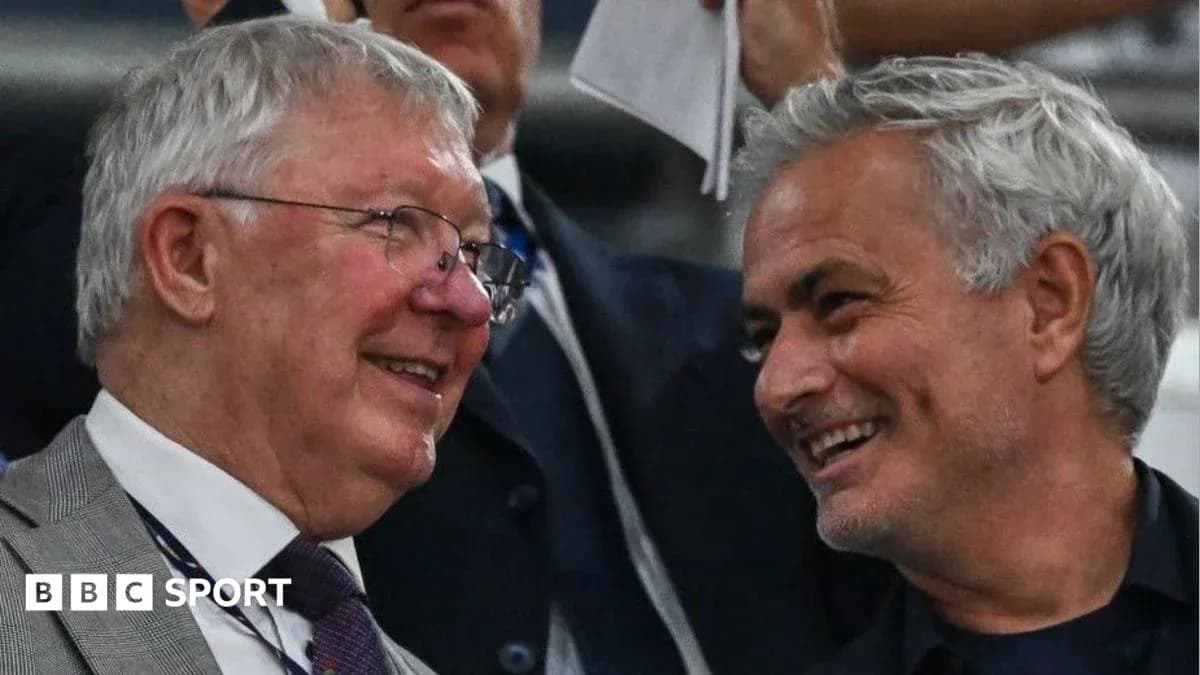
There are moments in football history that feel like myth until someone finally pins them down on camera.
For Manchester United in 2013, that moment is Jose Mourinho in tears on the end of a phone, telling Sir Alex Ferguson he could not become his successor.
A decade on, the story that has swirled around Old Trafford corridors and boardrooms is laid bare in a new Netflix documentary on Mourinho’s career, released on 11 August. For those who lived it, the phrase they still reach for is the same: “sliding doors”.
The deal that was done – until it wasn’t
By the spring of 2013, this was not some vague flirtation. United were deep into the process of making Mourinho the man to follow Ferguson.
Weeks of talks had already unfolded in Madrid and London. Ferguson, who liked Mourinho and admired him, had stunned the Portuguese by revealing he would step down at the end of the 2012-13 season. From there, everything accelerated.
Negotiations moved quickly to the detail. Terms were discussed. An agreement, insiders say, was reached.
Then, in a matter of days, it was gone.
Ferguson recalls the pivotal call in the documentary. “One night, he phoned me and he was crying and he says: ‘Alex, I can't take it. I've given my word to Chelsea and I'm not going to break my word’.”
Mourinho pointed to his family. He had a home in London, had promised to return after his first Chelsea exit in 2007, and retained a strong relationship with owner Roman Abramovich. Those close to United at the time remain unconvinced that family was the only factor, but the outcome was the same.
For a brief window, United believed they had landed the ideal successor. Then the door slammed shut.
Inside Old Trafford, many still see that reversal as a defining fork in the club’s modern history.
A club on the brink of upheaval
The summer of 2013 was never just about replacing a manager. Ferguson was going, but so was chief executive David Gill, a hugely respected operator and Ferguson’s long-time ally.
United’s hierarchy knew they were not simply managing a succession. They were dismantling a unique power structure.
Ferguson had been a one-man institution, exerting control over almost every aspect of the football operation. The next era would demand a different model, with power shared and processes formalised, all while the team remained competitive.
The belief inside the club was that Mourinho had the shoulders – and the ego – to walk into that storm and thrive. His record at the top level, his confrontational certainty, his appetite for the biggest stages: everything suggested he would not just accept the challenge of succeeding Ferguson, but relish trying to surpass him.
When Mourinho stepped away and Pep Guardiola confirmed his commitment to Bayern Munich, United had to pivot. They turned to David Moyes.
Moyes shared some of Ferguson’s old-school traits. Hard work, discipline, a long-term eye. What he did not share was experience of managing at the absolute elite level. United still unveiled him as “The Chosen One”.
He wasn’t.
Mourinho arrives – but too late
Three years later, United finally got Mourinho. Louis van Gaal had just won the FA Cup, beating Crystal Palace at Wembley, but he was dismissed 48 hours later. Mourinho walked in as the next man charged with restoring order to the post-Ferguson chaos.
By then, both manager and club had changed.
Of the 18 players who started 10 or more Premier League games in Ferguson’s 2012-13 title-winning season, only six – David de Gea, Phil Jones, Wayne Rooney, Chris Smalling, Michael Carrick and Antonio Valencia – did the same under Mourinho in his first campaign. The dressing room he inherited was very different to the one he might have taken over in 2013.
So was Mourinho. He had returned to Chelsea and won the league again, but his second spell ended badly. By December 2015, he was out, leaving a side languishing in 16th place, a point above the relegation zone, and a cloud hanging over his reputation.
At United, his record still splits opinion. On one hand, he delivered the Europa League and EFL Cup in his first season and secured Champions League qualification twice. He still describes finishing second in 2017-18 – 19 points behind Manchester City – as one of the best achievements of his career. The 81 points United collected that year remain their highest Premier League total since Ferguson retired.
On the other hand, the internal fires burned. Mourinho clashed with players, most notably record signing Paul Pogba. He publicly lamented the club’s refusal to back his wish to sell Anthony Martial. By the time he left, the sense of turmoil was hard to ignore.
The lingering belief inside and around United is that the story would have looked very different if he had walked through the door in 2013 instead.
The what-ifs of 2013
Those who were there insist Mourinho would have attacked the job of following Ferguson with conviction, not caution.
Where Moyes hesitated in the transfer market, Mourinho would have driven deals over the line. Thiago Alcantara, whose move from Barcelona had been agreed in principle, is held up as the clearest example. Under Mourinho, figures insist, that transfer would have been completed.
The messy pursuit of Marouane Fellaini is another sore point. United eventually signed the Belgian from Everton for £27.5m on deadline day, having failed to trigger a lower release clause earlier in the window. Those close to the aborted Mourinho plan are adamant: Fellaini would not have been bought.
Mourinho had even provided United with his thoughts on a range of potential signings, including Italy midfielder Daniele de Rossi. There was a clear blueprint, at least in his mind, for how to reshape the squad.
The expectation is that he would not only have recruited aggressively but also extracted more from the players Ferguson left behind. Most observers now accept that Ferguson coaxed the absolute maximum from that final title-winning group, that they overperformed in 2012-13. The subsequent collapse to seventh place under Moyes was sharp and shocking.
Even the players have struggled to fully explain the drop-off. The prevailing view is that Mourinho’s force of personality would have driven them harder, kept standards higher, and delayed the decline.
A phone call that still echoes
In the documentary, Ferguson recounts Mourinho’s tearful explanation with the clarity and expression of a man who understands exactly how big that moment was.
United thought they had their man. They thought they had their bridge from one empire to the next.
Instead, a promise to Chelsea, a family base in London, and a single emotional phone call rewrote the script.
The cost of that decision is still being counted at Old Trafford. The question that hangs over the club is simple: from that sliding door in 2013, have they ever truly found their way back?
Related News
Carlos Alcaraz Urges an End to Matches Ending in the Early Hours
Carlos Alcaraz Criticizes Late US Open Finish After 3:30 a.m. Match
Jannik Sinner Set for ATP 500 Return in Beijing with Novak Djokovic Also Competing
Meet Iva Jovic: The American Tennis Prospect Making Waves
Flavio Cobolli Shares Insights on Practice Session with Jannik Sinner Ahead of Comeback

Till vs Romero: Fight Details, Undercard, and Viewing Info for This Weekend