
Manchester United Dominates Rosenborg 5-0 in Trondheim
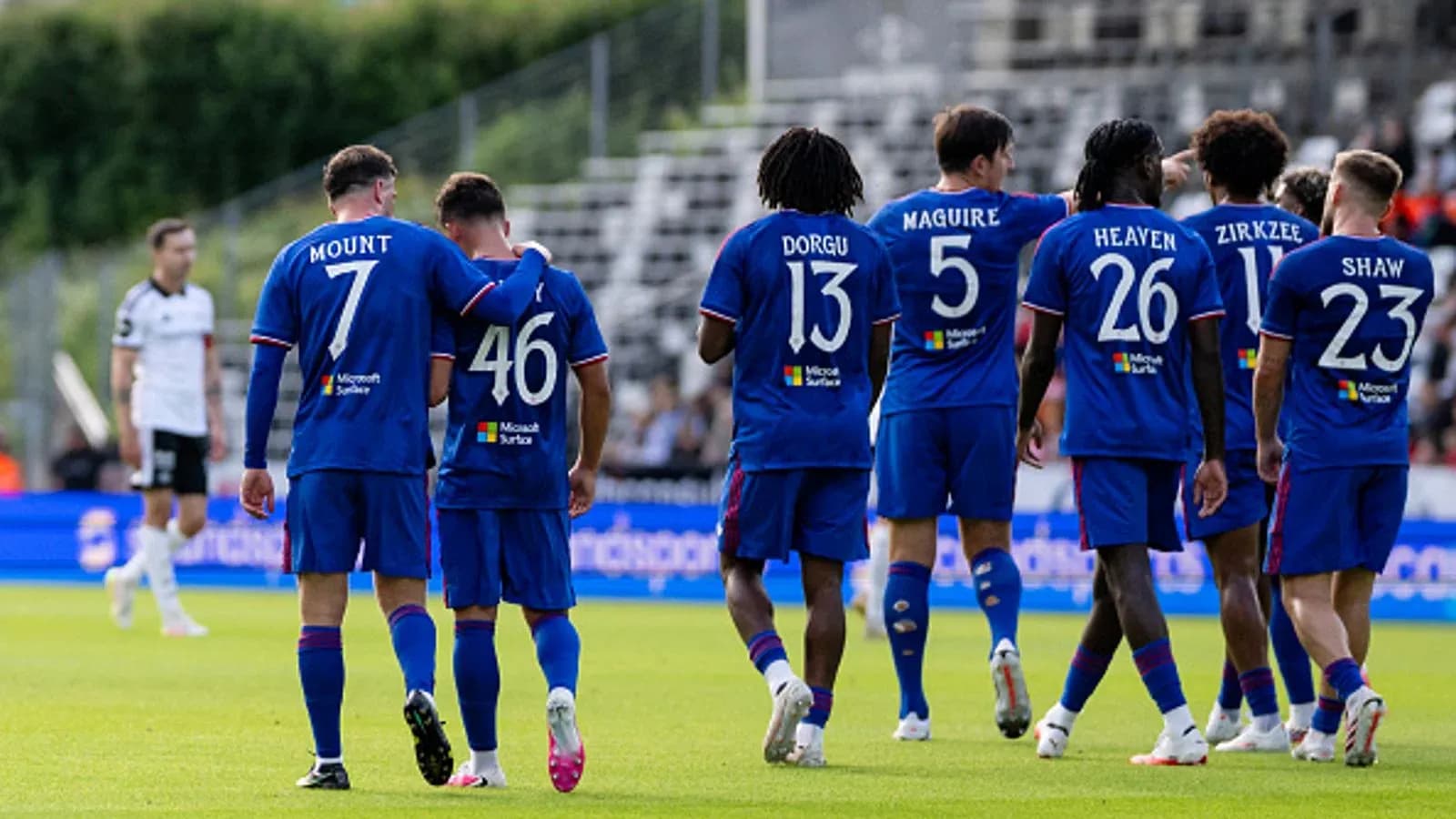
Manchester United hit five past Rosenborg in Trondheim, but the scoreline only tells part of the story. This was the night Michael Carrick’s Manchester United started to look like his team, not just a clever caretaker act extended into a new season.
Six days after losing to Wrexham, United arrived in Norway with questions about fitness, fluency and direction. They left with a 5-0 win, a standout display from Joshua Zirkzee, a clutch of academy kids announcing themselves – and one teenage prodigy who never made it off the bench.
A new face to ‘Carrick-ball’
Carrick’s early success at Old Trafford was built on the break. United were devastating in transition last season: third in fast breaks per game from his first match – that 2-0 win over Manchester City – to the end of the campaign, joint-top for goals from fast breaks per 90 minutes, and second in expected goals from those situations.
They were less convincing when the game slowed down. Thirteenth in possession share, 11th in average possession duration. The same old post-Ferguson complaint: fine when the pitch opens up, far less comfortable when opponents sit in.
Rosenborg, 13 games into their league season, should have been able to lean on that weakness. Fitter legs, sharper rhythm, the sort of side that can keep the ball and force a rusty Premier League club to chase. On paper, United were supposed to survive on counters again.
Instead, a United side without Bruno Fernandes or Matheus Cunha took the ball and kept it. They pulled Rosenborg around, dragged them into areas they didn’t want to defend, and did it with a control that has rarely been associated with this team in recent years.
At the heart of it stood Zirkzee. The Dutch forward didn’t just offer an out-ball; he made the ball stick. He linked, bounced passes, turned on the half-turn and gave United a platform high up the pitch. From there, the rest of the team stepped forward and played.
The transitions are not gone. United’s second and fourth goals came straight from that familiar surge from back to front. The difference in Trondheim was that it felt like a choice, not a crutch. With Carrick now permanent, this looked like the first clear glimpse of a more possession-minded version of his football – and a hint at why a midfielder like Youri Tielemans appealed so much.
Zirkzee’s night, and his ceiling
This was Joshua Zirkzee as his supporters have always imagined him. Loose shoulders, velvet touch, ruthless end product. United’s No 11 has taken his share of criticism since arriving in 2024. Too languid for a No 9, not sharp enough to dislodge Fernandes as a No 10. A luxury player without a defined home.
In Trondheim, he found one.
He dropped in as a sponge for possession, knitted moves together and then burst into life in the final third. Across 60 minutes, he produced two goals: one laid on, one finished with outrageous composure.
The assist set the tone. The goal stole the show.
Zirkzee played a slick give-and-go with substitute Harry Amass, glided into the box and then went to work. A feint, then another, sent two defenders the wrong way. The goalkeeper stepped out to close him down and was treated to the same trickery, wrong-footed and left stranded as Zirkzee rolled the ball into an empty net.
It was a moment that would have graced any stage. It capped a performance that will fuel calls for him to play a bigger role next season.
But here comes the cold water. The tempo suited him. Rosenborg, for all their match sharpness, do not play at Premier League speed. The doubts about whether Zirkzee can cope with the relentlessness of English football remain. Benjamin Sesko still looks the more natural choice to lead the line when fit, the more obvious reference point for Carrick’s attack.
What Zirkzee showed in Norway may instead be a preview of how Carrick wants to use Sesko: a focal point who can link play, drop in, then explode into the box. Zirkzee earned his applause in Trondheim. Whether he’s earned a promotion in the pecking order is another matter entirely.
Carrington’s kids step into the light
If Zirkzee provided the highlight reel, the academy provided the feel-good story.
United’s identity has always leaned heavily on youth. In Trondheim, that tradition felt alive again.
Shea Lacey started as the No 10 and grew into the game. The 19-year-old has flickered on the first-team radar before – he almost scored a spectacular goal in a 2-2 draw with Burnley – but this was his most complete outing in senior company. He found pockets of space, showed maturity on the ball and finished the opener with real calm. United’s fans voted him player of the match, and it was hard to argue.
The noise around Lacey had quietened over the past year. Once the brightest light in the youth ranks, he slipped out of the headlines. Performances like this are a reminder that the talent hasn’t gone anywhere. There is still the makings of a serious first-team contributor there.
Amass, on at half-time, delivered a different kind of statement. His loan spell at Sheffield Wednesday started brightly before injuries cut it short, but here he looked like a full-back ready to restart his climb. He timed his run for his goal superbly, arriving in a dangerous area from deep, and finished with the confidence of a winger. He also defended his flank with discipline and used the ball sensibly.
United want another left-back. They have made no secret of that. But nights like this force a question: should Amass be trusted as Luke Shaw’s permanent understudy rather than blocked again?
Jacob Devaney and Ethan Williams added their own memories to the night with goals they will never forget. For them, this may be the peak or the beginning; either way, they can always point back to Trondheim.
The quiet revelation, though, was Jaydan Kamason.
The 19-year-old right-back did get caught out positionally at times, especially off the ball. When he had it, he was electric. Two assists came from his ability to whip low, dangerous crosses into the box, the kind of deliveries that torment defenders and goalkeepers alike. His footwork, too, belonged more to a winger than a full-back.
Carrick’s trust in him was telling. Kamason played more minutes than many of the other youngsters, a clear sign that the staff see something substantial in him. On this evidence, they are right to.
The missing wonderkid
For all the academy joy, one name never left the teamsheet.
JJ Gabriel, 15 years old and already a headline-maker around Carrington, travelled with the squad and instantly became the story for a section of the fanbase. They wanted a glimpse, a cameo, a moment to say they saw him before everyone else did.
They got nothing.
Gabriel sat on the bench in his fluorescent bib and watched. No late run-out. No token appearance. No footage for the compilation clips.
Does that mean expectations should be reined in? Not automatically. Carrick had hinted before the game that Gabriel would get minutes during pre-season, and there are more friendlies to come. This felt more like careful management than a snub.
United have seen what happens when a teenager is thrown into the storm too early. They have also seen what can grow when the timing is right. For now, Gabriel remains the story waiting to be written.
On a crisp night in Trondheim, United found fluency, ruthlessness and a new edge to Carrick’s football. The scoreline will fade. The questions it raised about style, selection and the next generation will not.
Related News

UFC 332 Preview: Natalia Silva vs. Wang Cong Fight Card, Odds, Start Time, and Details
Andy Roddick Responds to Andre Agassi’s Comments on Alexander Zverev at the Laver Cup

Knicks Prepare for Flexible Roles in Title Defense

Rui Hachimura Swaps Lakers Fans to Clippers in Surprising Jersey Exchange

Who Will Be the NBA's Next First-Time All-Stars? Top Picks and Long Shots for 2027

How Strong Is Your Team at Home? Check Out the 2026 Brasileirão Home Standings