
Marc Cucurella: A Key Signing for Real Madrid's Success
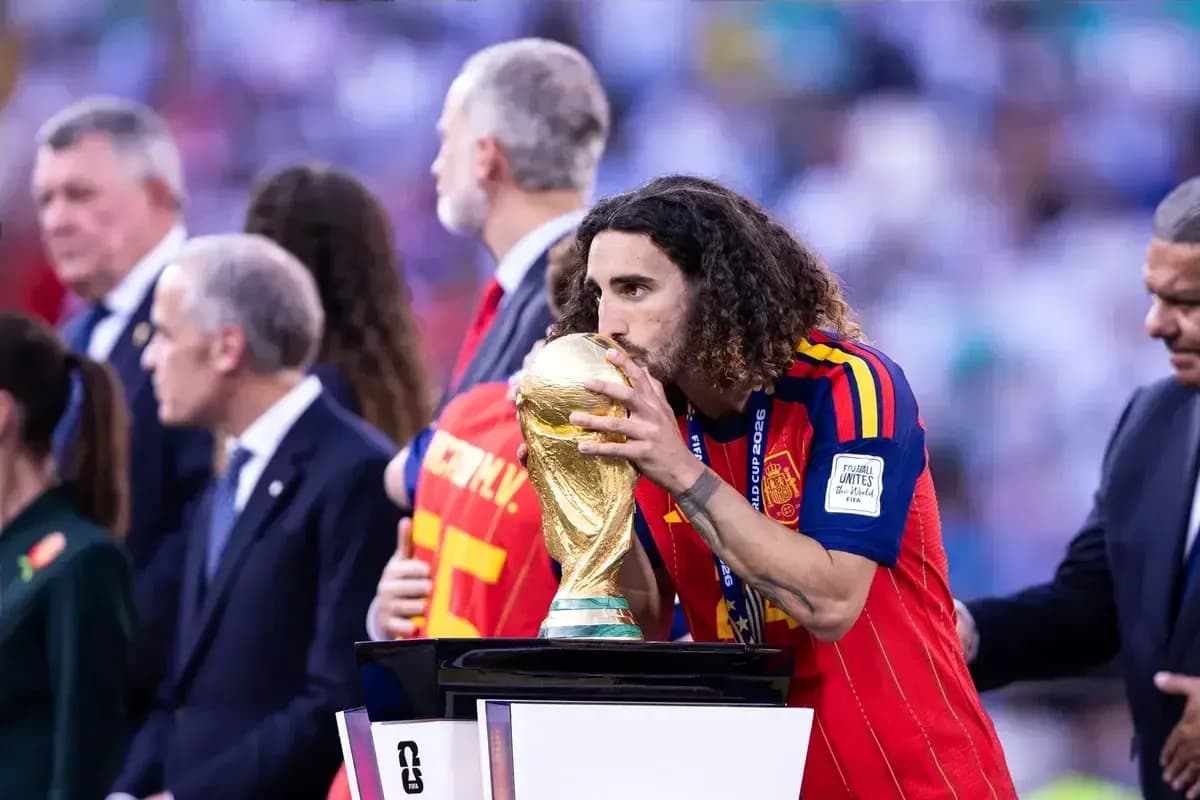
Real Madrid bought a left-back. They ended up buying a slice of World Cup glory, a financial asset on the rise, and a quiet solution to a looming UEFA headache.
Marc Cucurella’s arrival in Madrid this summer already looks like one of those rare deals that makes sense from every angle. Not in theory. In practice.
From zero Spain caps in Madrid to a world champion
Before Cucurella signed, Luis de la Fuente’s Spain squad for the 2026 World Cup did not contain a single Real Madrid player. Not one. For a club that has long seen itself as the natural backbone of La Roja, it was an awkward snapshot of the present.
Then came Cucurella.
His transfer instantly gave Madrid representation in a Spain side that went on to win the biggest prize of all. When Spain lifted the World Cup, a Real Madrid player lifted it with them. The club, which had watched a generation of its own miss out on that stage, suddenly had a hand on the trophy again.
The impact didn’t stop with the medal. Cucurella’s performances in the tournament resonated with fans around the world. He was voted into the FIFA World Cup Best XI selected by supporters, one of three Madrid players to make that list. His reputation, already strong, took another step up.
So did his price.
A €60m asset almost overnight
Within days of the World Cup, Cucurella’s valuation on Transfermarkt climbed to €60 million. Real Madrid had barely finished presenting him at the Bernabéu when the market effectively told them they were sitting on a significantly more valuable asset than the one they had just acquired.
This is the sort of move elite clubs dream of: sign before the explosion, watch the value rise while the ink on the contract is still drying.
But his worth to Madrid is not just a number on a website or a name on a fan-voted XI. It is structural.
Solving UEFA’s homegrown puzzle
Cucurella arrives as a top-level left-back, capable of locking down a flank at Champions League level. That alone would justify the deal. Yet Real Madrid also needed him for a more bureaucratic, but no less important, reason.
UEFA rules are clear: from a 25-man squad, at least eight must be locally trained. For Madrid, that means players developed either in their own academy or at any club in Spain between the ages of 15 and 21.
Mundo Deportivo highlighted the significance of Cucurella’s signing in this context. With him in the squad, Madrid hit that crucial quota. No last-minute juggling. No awkward registration choices. No risk of falling short of regulations.
Cucurella ticks the box in full. He came through Barcelona’s youth academy, continued his development at Eibar and Getafe, and only then made the leap abroad to Chelsea. His football education is entirely Spanish. On UEFA’s paperwork, he is exactly what Madrid needed: locally trained and Champions League-ready.
A very modern Madrid transfer
Strip this deal back and it looks simple: Real Madrid needed a left-back and signed a World Cup-winning, fan-approved, €60m-rated one.
Look closer and it becomes something sharper. Cucurella gives Madrid a starter on the pitch, a compliant name on a UEFA form, a presence in a World Cup-winning Spain, and a rapidly appreciating asset on the balance sheet.
For a club that demands both prestige and precision in the market, this is the kind of signing that changes not just a position, but the picture.
And if this is the standard for their squad building now, the real question is not what Cucurella does for Madrid today, but how far this kind of thinking can carry them in Europe over the next few seasons.
Related News

UFC 332 Preview: Natalia Silva vs. Wang Cong Fight Card, Odds, Start Time, and Details
Andy Roddick Responds to Andre Agassi’s Comments on Alexander Zverev at the Laver Cup
Knicks Prepare for Flexible Roles in Title Defense
Rui Hachimura Swaps Lakers Fans to Clippers in Surprising Jersey Exchange

Who Will Be the NBA's Next First-Time All-Stars? Top Picks and Long Shots for 2027
How Strong Is Your Team at Home? Check Out the 2026 Brasileirão Home Standings