
Martin O’Neill Confirmed as Celtic Manager Again
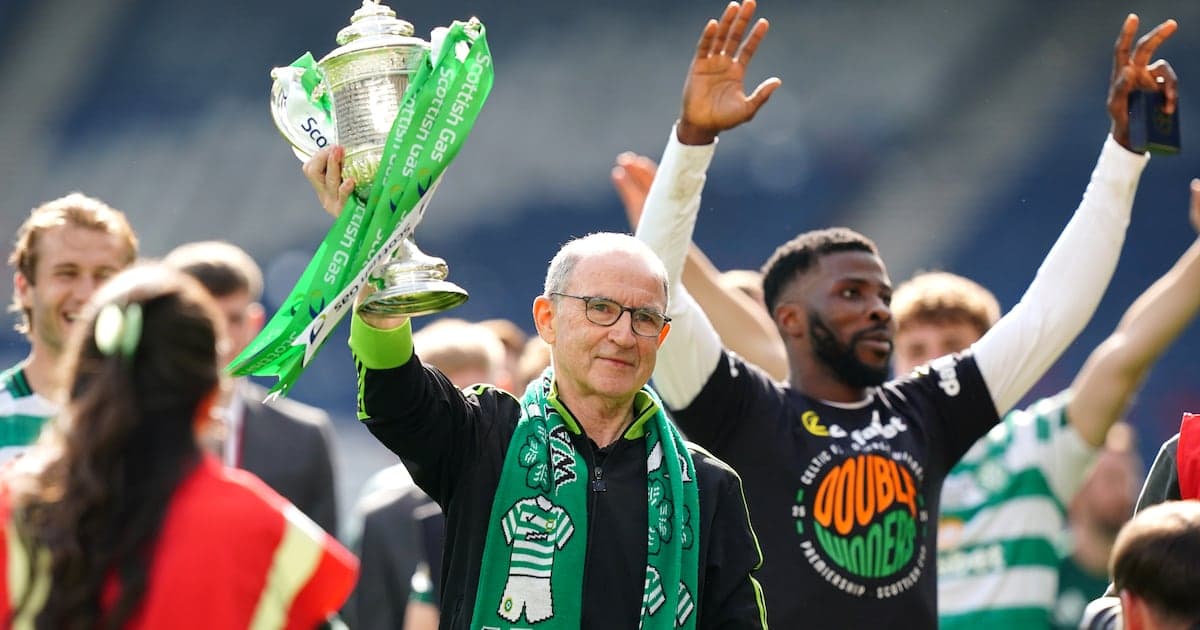
Martin O’Neill is set to be confirmed as Celtic’s permanent manager once again, after the 74-year-old agreed a one-year deal to stay in Glasgow – with an option for a second season that underlines the club’s faith in a familiar figure.
He returns not as a romantic throwback, but as the man who just delivered a domestic double during his second interim spell of a chaotic campaign. When Celtic needed stability, O’Neill walked back through the door and immediately steadied the place. Now they are ready to hand him the keys.
O’Neill again, Keane pushed aside
For a time, it looked as though Celtic might go in a very different direction. Robbie Keane had moved to the forefront of the board’s thinking and even held talks this week with Dermot Desmond, the club’s principal shareholder. The former Republic of Ireland striker has been eager to step into a major job, and the conversations were serious.
Then the backlash hit.
A section of the Celtic support reacted furiously to the idea of Keane taking charge, pointing directly to his managerial spell in Israel with Maccabi Tel Aviv. His subsequent move to Ferencvaros in Hungary, and resignation at the end of May, did little to soften those concerns. The noise grew too loud to ignore. Keane’s candidacy faded.
The club turned back to the man who had just delivered trophies.
A familiar bond rekindled
O’Neill took time after the Scottish Cup final win over Dunfermline to consider whether he wanted the job beyond the caretaker role. He asked for space. He had earned it.
Yet inside Celtic Park, there was always a quiet confidence that the Northern Irishman would not walk away. He had rediscovered the old connection with the support, felt the pull of the touchline again, and seen a squad still responsive to his voice. The new contract, understood to carry an option for a second year, reflects a shared belief that this is more than a short farewell tour.
The symmetry is striking. This decision comes 26 years after Desmond first persuaded O’Neill to leave Leicester City for Glasgow. That initial appointment changed the modern history of the club. Under O’Neill, Celtic ripped up the domestic order: three Scottish titles, three Scottish Cups, two Scottish League Cups, and a surge back onto the European stage.
The high point – and the heartbreak – came with the run to the 2003 Uefa Cup final, where Celtic fell to José Mourinho’s Porto in Seville. That team, built around power, intensity and belief, still shapes how many supporters judge every side that has followed.
Now, remarkably, the architect of that era is back in permanent charge.
From crisis to control
This latest chapter began in turmoil. Brendan Rodgers resigned last October, leaving Celtic scrambling for a solution mid-season. O’Neill stepped in on a short-term basis, a trusted firefighter asked to contain the blaze.
Celtic then tried to move on quickly. Wilfried Nancy was brought in to replace O’Neill, a bold, modern appointment that was supposed to usher in a fresh identity. Instead, it unravelled almost immediately. Eight games, and it was over. Nancy’s tenure was not just short; it was disastrous.
The club turned again to O’Neill. The effect was instant. He tightened the shape, simplified the approach, and restored some of the edge that had gone missing. The Premiership title, wobbling under pressure, was dragged over the line. The Scottish Cup followed, and with it a sense of order.
Those trophies have now been converted into a contract.
The weight of history, the demands of now
O’Neill does not return as a nostalgia act. The expectations are ruthless and clear: keep Celtic on top domestically and make them competitive in Europe. The fans remember what his teams once did on the continent. So does he.
The board, having flirted with a riskier appointment in Keane and been burned by the short-lived Nancy experiment, have chosen certainty. They know exactly what O’Neill brings: authority, clarity, and a proven ability to handle the unique pressures of Glasgow.
He knows exactly what he is walking back into: a club that measures success in titles, cups and European nights, not in patient rebuilds or gentle transitions.
Two decades on from his first revolution, Martin O’Neill gets another crack at Celtic. The trophies have already started to flow again. The real question now is how far he can push them this time.
Related News

Anthony Joshua Names Murat Gassiev as Next Opponent if He Defeats Tyson Fury
UFC 332: Start Time and Fight Highlights for Natalia Silva vs. Wang Cong
Court McGee Opens Up About Choosing UFC 332 as His Final MMA Fight
WBC Orders Lightweight Title Unification: William Zepeda vs Jadier Herrera
BCCI Pension List: Monthly Payments to Retired Indian Cricketers in 2025

Why Fury vs Joshua Is Set for Cardiff, and Dua Lipa’s Unexpected Role