
MLS: From World Cup Obligations to Major League Ambitions
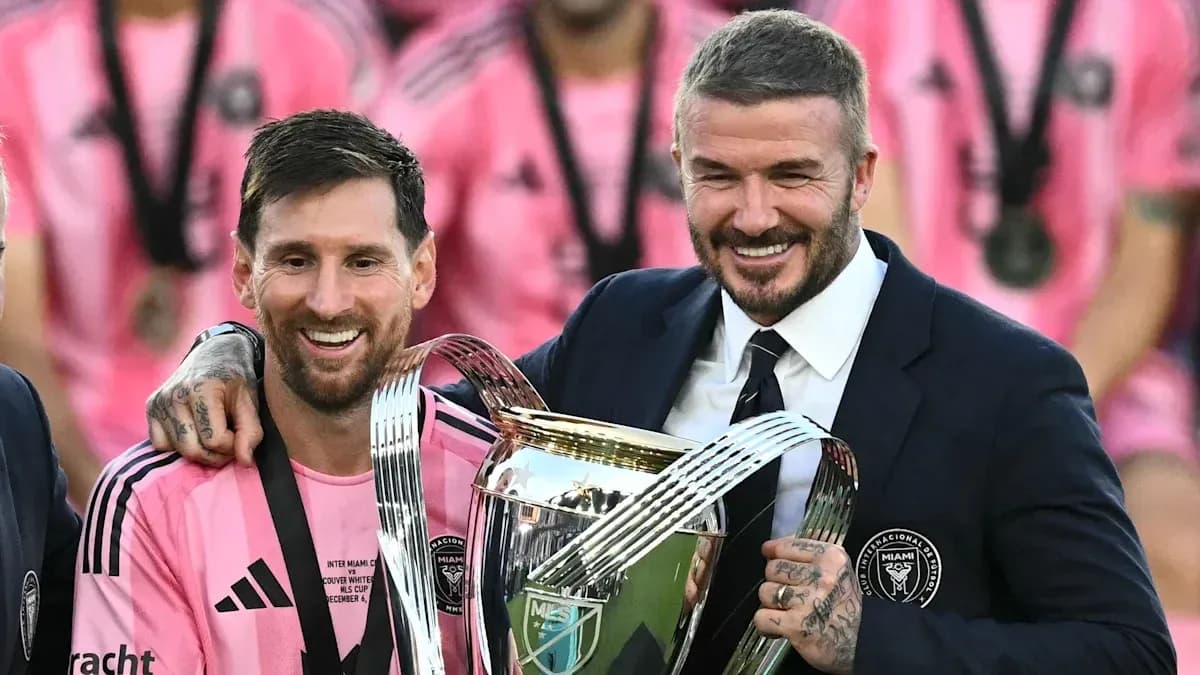
“Thanks world, we’ll take it from here.”
It’s a line delivered with a smile in Major League Soccer’s latest campaign, but the intent behind it is deadly serious. Lionel Messi, Son Heung-min, David Beckham and a cast of MLS faces look straight down the camera and tell the millions who fell for football during the World Cup: don’t switch off now. Stay. Watch us.
The league is even backing the rhetoric with tickets. New fans are being lured in with free seats as the regular season kicks back into gear, a clear signal from a competition that believes this World Cup boom can be more than a fleeting summer romance.
Dan Courtemanche has seen this movie before. The MLS executive vice-president joined in 1995, before the league had kicked a ball, when it was still an obligation tagged on to the United States’ successful bid to host the 1994 World Cup. Back then, there were 10 teams, no purpose-built stadiums and plenty of scepticism.
Thirty years on, MLS has 30 clubs and almost as many football-specific arenas. The league that was once a condition of hosting has become a product in its own right, and Courtemanche is in no mood to let this moment drift.
“The World Cup has now exposed millions of people to Major League Soccer,” he says. “We’re going to continue to capitalise on that momentum.”
The obvious question follows: can MLS now push its way into the same conversation as Europe’s elite?
From obligation to ambition
MLS exists because Fifa insisted it should. As part of the 1994 World Cup deal, the United States had to build a professional league. It did. Slowly. Awkwardly at times. But relentlessly.
The growth curve since that first season has been steep. The infrastructure tells one story; the audience another.
Predictions of empty seats at this World Cup – driven by high ticket prices and old clichés about American indifference to football – were swept aside by packed stadiums and surging TV numbers. Even after the USA exited in the last 16, the country kept watching.
The US team’s defeat by Belgium at that stage delivered the most-watched football game on a single network in US history, with more than 33 million tuning in to Fox. England’s last-16 win over Mexico went even higher: a combined 45 million viewers across English and Spanish coverage on Fox and Telemundo, the biggest football audience the country has ever seen.
Those figures sit in the same rough neighbourhood as the NFL’s regular-season blockbusters. They do not yet touch the Super Bowl – the 2025 edition drew 127.7 million viewers across English and Spanish broadcasts and streaming, many of them there for Kendrick Lamar’s half-time show as much as the sport – but they no longer look like an entirely different sport’s numbers either.
MLS wants to close that gap. Not just in eyeballs, but in status.
“I think we’re looked at as the top, one of the top leagues commercially,” commissioner Don Garber said at a league event on the World Cup legacy and MLS’s future. “We’ve cracked that code. Now we’ve got to crack the rest of it.”
Beyond the ‘retirement league’ label
On the pitch, MLS is no longer the distant outpost it once was. Forty-five players from the league went to the 2026 World Cup, including two who started in the final for Argentina: Messi and Rodrigo de Paul.
The old jibe is familiar. MLS as the retirement home, the soft landing spot for European legends cashing in after the real work is done. Beckham did it. Messi has done it. The reputation stuck.
Courtemanche insists it is now out of date. The average age of new international arrivals is 23.8 years, players who see MLS as a stepping stone to Europe rather than a farewell tour from it. They still dream of the Champions League, but they are happy to launch that journey in Los Angeles, Atlanta or Miami.
The league is also reshaping itself to fit better into that global ecosystem. From 2027, MLS will switch to a summer-to-spring calendar, mirroring Europe’s major competitions and smoothing the path for transfers in both directions.
Underneath the first teams, there is a heavy bet being placed on youth. Every club runs an academy. Development leagues sit beneath the senior level. The idea is clear: if MLS wants to be taken seriously, it must produce as well as import.
On a matchday in Los Angeles, that ambition looks like this: LA Galaxy host a viewing party for the USA’s win over Bosnia-Herzegovina, a big screen showing the national team. Yet dozens of children barely glance up. They are too busy playing their own games on three small pitches, darting away from tackles, swapping positions, occasionally sprinting to the screen only when the roar of a goal ripples through the crowd.
In a culture of tightly scheduled childhoods, these are rare pick-up matches. The standard is high. Some of the kids wear MLS academy badges.
Eight-year-old Landon – named after US great Landon Donovan – is one of the standouts, grinning as he moves from goalkeeper to forward. His mother, Jen Wing, is a coach. Her children attend MLS camps and play for travel teams back home in New Jersey. Landon is clear about where he wants this to lead.
He wants to be a professional. He wants MLS. And he wants LAFC.
The pay-to-play problem
Beneath the optimism, there is a stubborn American reality: access costs money.
At the elite end, MLS academies do what their European counterparts do – train and develop young players for free. The problem lies in the long road to that door. To be seen by an MLS academy in the first place, families often pay thousands of dollars in private coaching and travel-team fees. It is a familiar pattern across US youth sports, and it locks out talent that cannot afford the journey.
Critics argue that until MLS breaks that “pay-to-play” culture, it will never truly compete with Europe’s talent pipelines.
League officials push back with their own message: the system is evolving. Development leagues are being tweaked, scholarships exist at every club, and the search for better ways to reach young players is constant.
Garber frames it as a work in progress rather than a flaw set in stone. MLS, he says, must keep improving at producing players who can feed the men’s national team and raise the level of the domestic game – “more and more… better, bigger, stronger, faster, all those things that give you energy to think of a better future”.
Stars on the pitch, stars in the boardroom
If development is one pillar of MLS’s future, celebrity is another. Messi remains the league’s biggest magnet, the player who can turn an ordinary regular-season fixture into a global event with a single team-sheet.
But the star power does not stop at the touchline. More than two dozen entertainers and athletes hold stakes in MLS clubs. Will Ferrell at LAFC. Reese Witherspoon at Nashville SC. Matthew McConaughey at Austin FC. Magic Johnson at LAFC. Their presence pulls cameras, sponsors and casual fans towards a league that once had to beg for attention.
The financial numbers show how far it has come.
When Seattle Sounders joined MLS in 2009, Drew Carey was part of the ownership group that paid a $30m expansion fee. The club is now valued at more than $900m. Beckham’s 2007 contract with LA Galaxy included an option to buy an expansion team for $25m. He exercised it. Inter Miami CF, the club he now owns, has been valued by experts at more than a billion dollars.
This is no longer a niche venture. It is a serious business, with serious money at stake.
The pull of Friday night lights
Yet MLS still fights its own country for oxygen.
American football remains the cultural heavyweight. Brian Udovich sees the impact of that divide up close. His 12-year-old son Croil plays in an MLS Next Level league in Southern California, but he has watched promising youngsters drift away from soccer as they hit their teenage years.
The reason is rarely tactical or technical. It is theatre.
On Friday nights, high-school American football owns the stage. Names in lights on the scoreboard. Marching bands. Cheerleaders. Packed stands and a sense of civic ritual. Soccer, by contrast, is usually tucked away on Saturday mornings, parents in folding chairs on the touchline, no fanfare beyond the whistle.
“It just means so much more to other cultures than us,” Udovich says of football in its global form. The implication is clear: in the United States, the emotional hierarchy still favours helmets over shin pads.
Michael Bradley, now coaching New York Red Bulls, recognises that cultural gap. The United States does not have the century-deep football history of Europe or South America. For a long time, that bred an inferiority complex – a suspicion that the sport might never truly stick.
The World Cup has shifted that mood. Bradley talks about a different kind of pride now, a sense among fans that this is their game too, not just something borrowed from elsewhere.
And he is certain of one thing.
“We don’t have the long, storied football history that other countries do,” he told the BBC, “but… I think we can all unequivocally say in 2026, football is not going anywhere.”
The world has handed the ball over. MLS insists it is ready to run with it. The next few seasons will reveal whether that confident slogan – “We’ll take it from here” – becomes a turning point, or just another clever line in a slick advert.
Related News
UFC 332 Preview: Natalia Silva vs. Wang Cong Fight Card, Odds, Start Time, and Details
Andy Roddick Responds to Andre Agassi’s Comments on Alexander Zverev at the Laver Cup

Knicks Prepare for Flexible Roles in Title Defense
Rui Hachimura Swaps Lakers Fans to Clippers in Surprising Jersey Exchange

Who Will Be the NBA's Next First-Time All-Stars? Top Picks and Long Shots for 2027

How Strong Is Your Team at Home? Check Out the 2026 Brasileirão Home Standings