
Jose Mourinho's Quest for a Leaner Squad at Real Madrid
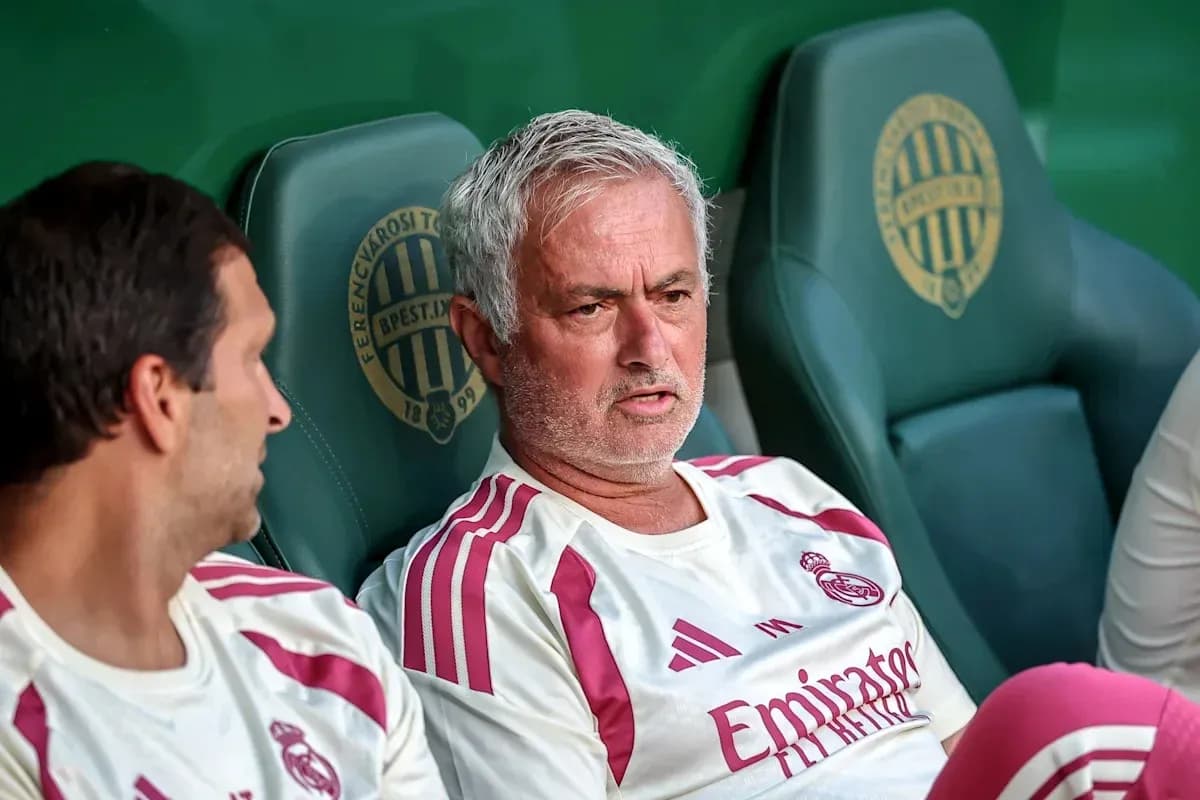
Jose Mourinho has never been one for clutter. Not in his dressing room, not in his squad lists, and certainly not in his plans.
So even with the summer transfer window still open and Real Madrid having spent €225 million to arm him for the new season, the Portuguese coach stepped off the pitch in Budapest and made his stance brutally clear.
“I want a short squad, 20 players plus those who are currently injured.”
Right now, he has 26.
A supercharged squad Mourinho thinks is too big
Real Madrid’s hierarchy have backed Mourinho aggressively. Six signings, six statements: Yan Diomande, Marc Cucurella, Denzel Dumfries, Ibrahima Konate, Bernardo Silva and Carlos Espi. Between them, a €225 million outlay designed to harden the spine, sharpen the flanks and give the manager the tactical elasticity he craves.
The plan had one more name on it. Rodri. He was supposed to be the final piece, the controller in midfield. Instead, the Manchester City man turned Madrid down and chose Barcelona. That rejection has closed the door, at least for now, on Madrid dipping back into the market for another midfielder.
Even without him, the numbers are heavy. Three long-term injuries – Eder Militao, Ferland Mendy and Rodrygo – sit outside Mourinho’s working group. Strip them out and he still has 23 fit outfield options. That is three more than he wants.
For a coach who likes clarity and hierarchy, that is a problem.
Versatility over volume
Mourinho’s argument is simple: if your players can do more than one job, you don’t need 25 of them.
Arda Guler and Bernardo Silva can drift across the frontline, drop into midfield, and link phases. Jude Bellingham offers the same kind of tactical freedom, able to operate as an attacking midfielder, an advanced eight, or something in between. Dumfries, traditionally a right-back, has already been pushed into more advanced roles in pre-season as Mourinho tests the limits of his squad’s flexibility.
With that kind of profile, a smaller group makes sense. What he wants to avoid is the dead weight – players who see no path to regular minutes, who train knowing they will not play. In Mourinho’s experience, that is how tension seeps into a dressing room, how training sessions lose edge and focus.
He is determined not to let that happen at Valdebebas.
Camavinga on the market, but waiting for a buyer
One of the most striking names on the potential exit list is Eduardo Camavinga.
Madrid are open to generating income from the French midfielder. So far, though, the market has not responded. No significant offer has arrived this summer, no proposal strong enough to truly test the club’s resolve or the player’s wishes.
Camavinga, for his part, has made it clear he would like to stay at the Santiago Bernabeu. That stance could be tested if a top-level club comes forward with a concrete project and a convincing role. Until then, the situation remains in limbo: a player the club would consider selling, but with no serious bid on the table.
Endrick stays, Mendy stalls
Endrick’s name had also been circulating as a possible departure on loan. The idea was straightforward: send the Brazilian out to gain minutes and rhythm in a less pressurised environment.
Mourinho has shut that down. He wants Endrick with him, learning the demands of his system from day one.
That decision has shifted the spotlight firmly onto Ferland Mendy. Left-back is now an overcrowded zone, and Mourinho’s trust in Mendy is undermined by the defender’s long injury history. From the club’s perspective, this is a position they would like to rationalise. One too many bodies, one too many question marks.
There is a problem, though: Mendy does not want to go. He has no intention of leaving Madrid, no matter how complicated his role becomes. Until that changes, the logjam at left-back remains.
Asencio’s injury complicates the clean-up
Raul Asencio is another player whose future hangs in the balance.
The academy graduate is adamant he can convince Mourinho he belongs in this project. His pre-season reflected that belief: hard running, total commitment, a clear attempt to show he can compete with the new arrivals and the established names.
Then came the setback. A rectus femoris muscle injury, six weeks on the sidelines, and a major dent in both his momentum and his market value. Any club considering a move now faces the prospect of signing a player who cannot help immediately and whose fitness must be reassessed.
Madrid would be open to a good offer. Mourinho would also consider a new centre-back if Asencio were to leave, keeping the balance of his squad intact. But as long as the defender insists he wants to stay – and as long as that injury clouds the picture – the scenario is stuck.
A squad built to contend, but still too crowded
So Madrid find themselves in a curious position. They have spent heavily, upgraded key positions, and given Mourinho a squad that, on paper, looks ready to challenge on all fronts.
Yet the coach still sees excess. Too many players in certain roles, too few clear exits, and a tight time frame to reshape the group into the lean, competitive unit he prefers.
The club would welcome offers for Camavinga, Mendy or Asencio if the right proposals arrive. They may yet move for another centre-back if one of those pieces falls into place.
There is also the very real possibility that nothing happens – that no bids come, no minds change, and Mourinho begins the season with a squad three names heavier than he wants.
If that happens, the real contest will not just be with Barcelona or the rest of Europe. It will be inside his own dressing room, where minutes, roles and status will be fought over every single day.
Related News
Carlos Alcaraz Urges an End to Matches Ending in the Early Hours
Carlos Alcaraz Criticizes Late US Open Finish After 3:30 a.m. Match
Jannik Sinner Set for ATP 500 Return in Beijing with Novak Djokovic Also Competing

Meet Iva Jovic: The American Tennis Prospect Making Waves
Flavio Cobolli Shares Insights on Practice Session with Jannik Sinner Ahead of Comeback

Till vs Romero: Fight Details, Undercard, and Viewing Info for This Weekend