
Myles Lewis-Skelly: From Left-Back to Arsenal Midfield Star
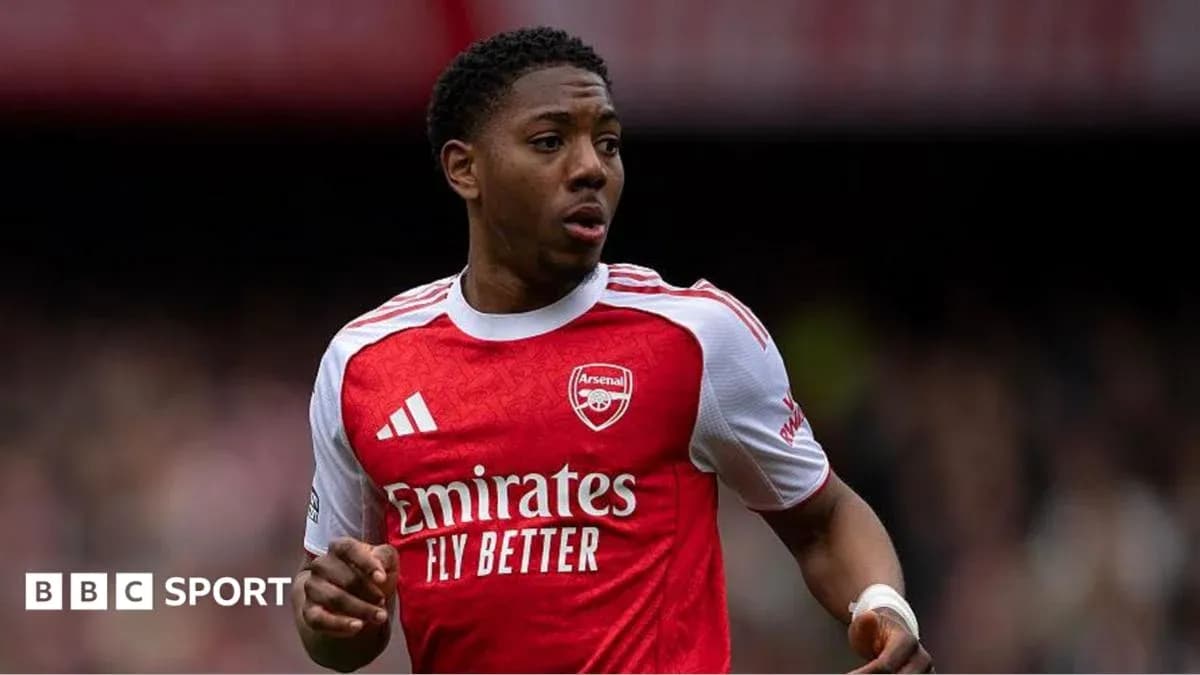
Myles Lewis-Skelly has never taken the easy road into Arsenal’s first team. He’s had to squeeze through gaps, not stroll through open doors.
At 19, his rise has been fast and, at times, chaotic. The 2024-25 season threw an injury crisis at Mikel Arteta’s squad, and where others saw a problem, Lewis-Skelly saw a crack of light. Dropped in at left-back – a position that isn’t even his own – he didn’t just cope. He thrived, quickly emerging as one of the standout young full-backs in the Premier League.
That surge of form carried him all the way to Wembley. In March 2025, on his England debut, he became the youngest player ever to score on his first appearance for the national team, opening the scoring in a 2-0 win over Albania. A few months later, Arsenal put a five-year contract in front of him. They knew what they had.
Yet the most intriguing part of his story is that he has built this reputation from a borrowed role.
A midfielder hiding in plain sight
Lewis-Skelly is Hale End through and through, schooled as a midfielder, and he has never really hidden how he sees himself. Full-back gave him a doorway into the senior side, but in his mind, the middle of the pitch is home.
Even from left-back, the clues were obvious. He didn’t just hold the touchline; he drifted infield, slipped into tight pockets, protected the ball in crowded spaces and then exploded away from pressure. Those were midfield actions, not the habits of a traditional defender. His ability to invert into central areas and carry the ball past opponents already belongs among the best in the division.
His first full campaign ended on a high. The second one asked harder questions.
Riccardo Calafiori, a £42m signing in 2024, returned to full fitness and re-established himself. The Italian’s range, his unpredictability on the ball and his importance to Arsenal’s attacking patterns made him difficult to dislodge. Arteta then added Piero Hincapie from Bayer Leverkusen, initially on loan and now permanently. Two older defenders, both international-level, both trusted.
Minutes for Lewis-Skelly dried up. Arteta admitted he had been “tough” on the teenager. The pathway that had seemed so clear suddenly looked crowded.
The late-season twist
The opening came from an unexpected place. As Martin Zubimendi’s form dipped towards the end of last season, Arteta finally turned to Lewis-Skelly not as an emergency left-back, but as what he has always wanted to be: a central midfielder.
The chance arrived against Fulham with four Premier League games left. Lewis-Skelly grabbed it with both hands. He impressed so much that he started all but one of Arsenal’s remaining fixtures, anchoring a run-in that ended with the Premier League trophy lifted and a narrow defeat to Paris St-Germain in the Champions League final.
From squad option to key piece in the title charge, in the space of a few weeks. This time in his own position.
That kind of impact does not just change a season. It alters boardroom conversations.
“Pure profit” and a complicated reality
Modern football rarely allows a fairytale to exist on its own. Every academy success story now comes with a spreadsheet attached.
As a homegrown player, any transfer fee for Lewis-Skelly would be booked as “pure profit” in the accounts. It’s a cold phrase, but a powerful one in an era of financial regulations and spending limits. Arsenal, having spent around £250m last summer, know they must sell smartly to keep investing. Trading is not a luxury; it’s part of their model.
Supporters hate that term. Especially when it’s applied to someone who has grown up at the club and clearly feels the connection. Lewis-Skelly knows exactly how he is spoken about in those circles. When Arsenal celebrated their title at Selhurst Park on the final day, he posted a picture with the Premier League trophy and captioned it, pointedly, “pure profit”.
The club had been open to listening to offers. Then came that late-season surge in midfield. Performances of that quality, in that position, have forced a rethink. Selling him now would not just be a financial calculation; it would be a sporting gamble.
And yet the midfield is about to get even more crowded.
Guimaraes, traffic in midfield and a window of opportunity
Arsenal are moving closer to completing a deal for Newcastle captain Bruno Guimaraes, a signing that could reach up to £80m. A player of that stature does not arrive to sit on the bench. For Lewis-Skelly, it could look like another barrier, another senior name dropped into the space he wants to occupy.
But timing matters. This season may still be his best chance yet.
The World Cup’s late finish has left Arsenal’s core midfielders short of pre-season minutes. Martin Odegaard, Declan Rice, Eberechi Eze, Zubimendi and Mikel Merino – a world champion with Spain – have yet to fully rejoin the squad. While they rest and reintegrate, Lewis-Skelly has been working.
He has started and impressed in pre-season friendlies against Girona and Real Betis, looking sharp, hungry and comfortable with greater responsibility. Against Betis, he operated at the base of midfield, the deepest-lying midfielder, dictating from behind the play. When Arsenal needed someone to drive them up the pitch, he stepped through the lines with the ball, shrugging off pressure and dragging the team forward.
The old left-back instincts have not vanished either. His understanding with Calafiori stood out. When the Italian surged forward on one of his trademark runs, Lewis-Skelly calmly slid across to cover the space at left-back, closing the door behind him.
“We just speak in the last few days about this connection that we have – we don’t need to speak,” Calafiori said afterwards. “I really like to play with him, a really good player.”
Those are the words of a teammate who trusts him, not a youngster tolerated on the pitch.
Manchester City, Wembley and a statement waiting to be made
In nine days, Arsenal face Manchester City in the Community Shield. It is not a trophy that defines a season, but it does often reveal a manager’s early thinking.
Lewis-Skelly looks well placed to start. Match fit, tactically versatile, and fresh from a pre-season in which he has been central rather than peripheral, he has put his case in front of Arteta as clearly as he can.
The question now is not whether he belongs at this level. He has shown that at full-back, at Wembley with England, and in the heart of Arsenal’s midfield during a title run-in.
The question is whether Arsenal are ready to let one of their own grow into the role he has been chasing since Hale End – or whether “pure profit” will speak louder than potential in a season that could define the next decade of his career.
Related News
Carlos Alcaraz Urges an End to Matches Ending in the Early Hours
Carlos Alcaraz Criticizes Late US Open Finish After 3:30 a.m. Match
Jannik Sinner Set for ATP 500 Return in Beijing with Novak Djokovic Also Competing

Meet Iva Jovic: The American Tennis Prospect Making Waves

Flavio Cobolli Shares Insights on Practice Session with Jannik Sinner Ahead of Comeback

Till vs Romero: Fight Details, Undercard, and Viewing Info for This Weekend