
Omar Marmoush Shines for Manchester City in Seoul
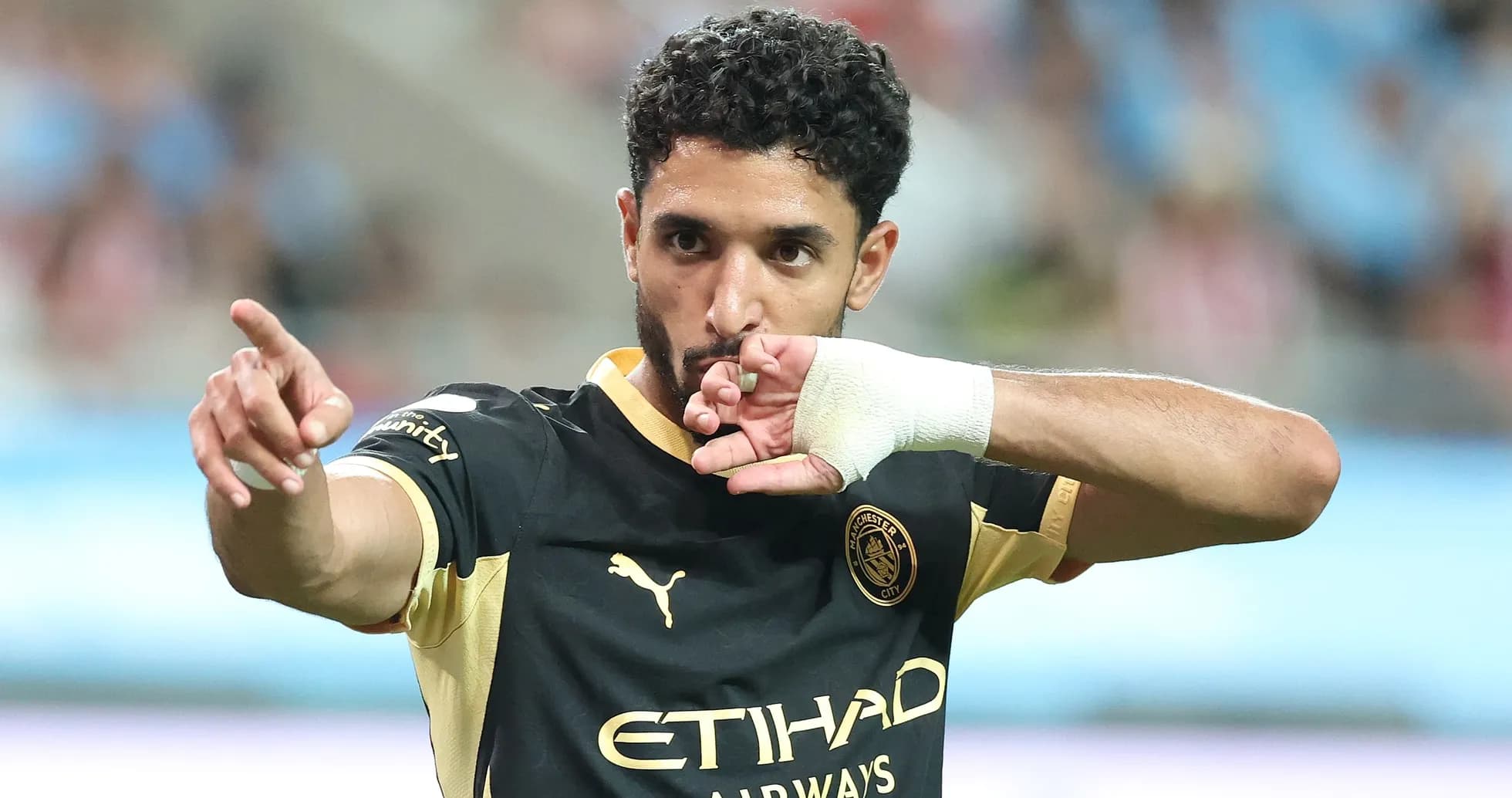
Omar Marmoush picked a timely moment to remind Manchester City exactly what he can do.
On a humid night in Seoul, with key names missing and pre-season rhythms still awkward, the Egyptian forward cut through the noise. Two ruthless finishes, a 3-1 win over Atletico Madrid, and a clear message to the people who decide his future.
This is what a goalscorer looks like when he’s given a stage.
Marmoush makes his point
Marmoush’s brace wasn’t about fitness or sharpness or “minutes in the legs.” It was about instinct. The same penalty-box instinct that persuaded City to bring him in from Eintracht Frankfurt in January 2025.
Since then, his Manchester story has stalled. At 27, a player entering his supposed prime has been reduced to a supporting role: 22 Premier League starts, another 15 off the bench, and long stretches watching Erling Haaland and others do the job he believes he can do.
In Seoul, he played like a man tired of waiting.
Every run had purpose, every touch in the final third carried a hint of frustration being channelled in the right way. Friendlies can drift. This one didn’t for Marmoush. He treated it as an argument, and he made it convincingly.
A manager’s honesty – and a clear dilemma
Enzo Maresca didn’t try to hide the reality afterwards. There was no attempt to dress up Marmoush’s situation as anything other than what it is: a crossroads.
“The answer has to be similar to the one I answer about James Trafford,” Maresca said when asked about the striker’s future. “Players work every day, they want to play so when they don't play they are not happy. Omar did not play a lot last year so his desire is probably to play more minutes. It doesn't mean that he isn't going to play more minutes here but it's also his decision, and he needs to decide.”
No ambiguity there. City like him. City may well need him. But City cannot promise him what every forward craves: guaranteed starts.
The comparison with Trafford, who has just left for Leeds United in search of regular football, was telling. The goalkeeper chose the exit door. Marmoush now has to decide whether to fight for a bigger slice of the minutes in Manchester or follow a similar path.
Opportunity in a stripped-back squad
If he wants evidence that there could be a way through, he only has to look around this pre-season camp.
City’s tour of Asia has been stripped of star power. Erling Haaland, Rodri and Rayan Cherki are not here. England internationals Elliot Anderson, Marc Guehi and Nico O'Reilly are also absent after their World Cup exertions. The usual hierarchy has been disrupted.
In that vacuum, Maresca has been able to look closely at those on the fringes, and some have clearly impressed him.
“I'm very happy,” he said. “Especially because the players since we started have been open-minded. They want to understand and want to learn why we do things. I know that when you join a new club you try to install new patterns or different ideas. The most important thing is we are getting better. The path is a huge path to improve things. But I can see we are trying what we do in training, and we are getting better at that.”
These are not throwaway pre-season platitudes. Maresca has stepped into Pep Guardiola’s vast shadow with his own ideas, his own patterns, his own demands. Players who adapt quickly will climb the ladder. Those who don’t will be left behind, regardless of reputation.
Marmoush, at least on this evidence, is listening. And executing.
A decision that can’t be dodged
The question now is not whether he can score at this level. He has done it in Germany, he has shown flashes in England, and nights like this in Seoul underline his quality.
The real issue is role. Is he content being the man who steps in when Haaland rests, when injuries bite, when rotation opens a door? Or does he want to be the main act somewhere else, every week, every stadium, every pressure moment?
City will not stand still for him. Haaland will return. The World Cup contingent will filter back. Competition will harden. Maresca’s system will become more defined, and so will the pecking order.
For now, Marmoush has done the only thing he can: he has forced the conversation. He has reminded the hierarchy that there is a proven finisher already in the building, one who is not content to fade into the background.
The goals in Seoul might not decide his future on their own. But they ensure one thing: whatever choice comes next, it will not be made in ignorance of his talent.
Related News
Carlos Alcaraz Urges an End to Matches Ending in the Early Hours
Carlos Alcaraz Criticizes Late US Open Finish After 3:30 a.m. Match
Jannik Sinner Set for ATP 500 Return in Beijing with Novak Djokovic Also Competing

Meet Iva Jovic: The American Tennis Prospect Making Waves
Flavio Cobolli Shares Insights on Practice Session with Jannik Sinner Ahead of Comeback

Till vs Romero: Fight Details, Undercard, and Viewing Info for This Weekend