
Pep Guardiola Leaves Manchester City After Ten Years of Success
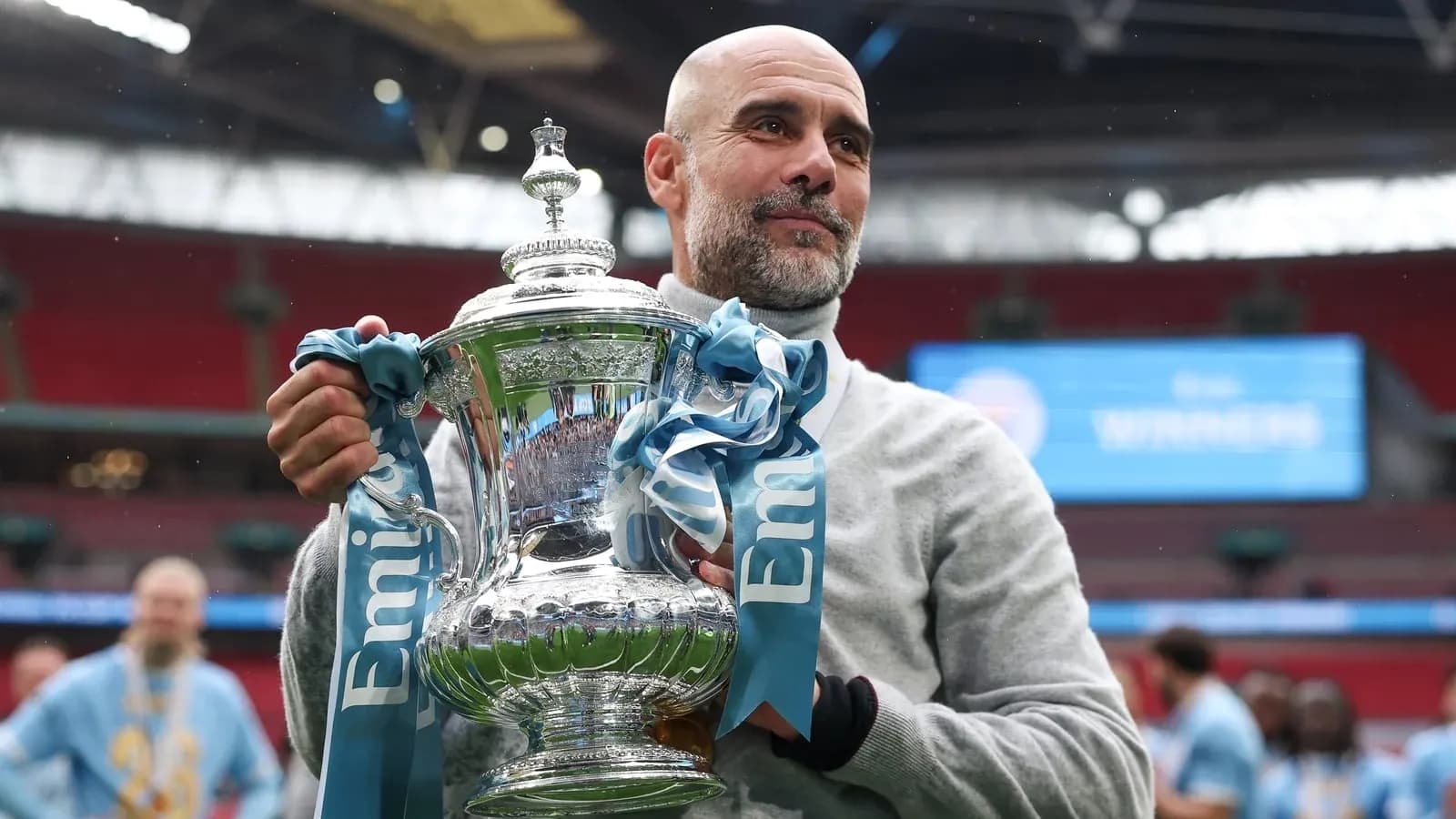
The Pep Guardiola era at Manchester City will end on Sunday. Ten years after he walked into the club as the most coveted coach of his generation, he will walk out after the Premier League game against Aston Villa, leaving behind a body of work that has reshaped English football.
City confirmed that Guardiola will step down at the end of the season, drawing a definitive line under one of the most successful managerial reigns the country has seen. His contract was due to run until the summer of 2027, but an agreement has been reached for him to leave 12 months early.
He goes with 20 trophies in his luggage. Six Premier League titles. The Champions League. Three FA Cups. Five Carabao Cups. A Club World Cup. A treble in 2023. A domestic treble in 2019. The 100-point Premier League season in 2018 that bent the division to his will.
For once, the numbers only tell part of the story.
“It’s my time”
In a long, emotional farewell message, Guardiola reached back to the moment it all started.
“When I arrived, my first interview was with Noel Gallagher. I walked out thinking, ‘OK… Noel is here? This will be fun. And what a time we have had together.
“Don’t ask me the reasons I’m leaving. There is no reason, but deep inside, I know it’s my time.
“Nothing is eternal, if it was, I would be here. Eternal will be the feeling, the people, the memories, the love I have for my Manchester City.”
He signed off in typically unfiltered fashion: “Noel…I was right. It has been so f****** fun. Love you all.”
The message carried the tone of a man who knows he is closing a chapter at exactly the point he chooses, not when the game chooses it for him.
From coup to colossus
When City landed Guardiola in 2016, it felt like a statement of intent. They did not just hire a manager; they hired a footballing ideology.
He arrived in Manchester already weighed down with medals. Two Champions League titles and three LaLiga crowns with Barcelona. Three Bundesliga titles with Bayern Munich. A coach whose teams did not just win, they dictated.
At City, that philosophy took root and then spread. His sides pressed, passed and probed with a relentlessness that forced the rest of the league to adapt or be left behind. The domestic dominance was sustained, not fleeting. Title races became tests of endurance, of who could live with City’s pace over 38 games.
The peaks stand out even in a decade of near-constant winning. The 100-point campaign in 2017–18, when City rewrote the record books. The domestic treble in 2019, sweeping up every major English trophy. The 2023 treble, when the Premier League, FA Cup and Champions League finally aligned to complete the club’s long pursuit of European glory.
This season, he signs off with a domestic cup double. Hopes of a seventh Premier League title only died in the penultimate game on Tuesday, a 1-1 draw at Bournemouth that finally took the race out of their hands.
What comes after Pep?
Guardiola will not disappear from the City orbit. He is set to take on a role as a global ambassador for the City Football Group, a position that keeps his influence within the wider project he helped elevate.
Inside the club, the question is more immediate: who dares follow that act?
His former assistant Enzo Maresca, out of work since leaving Chelsea in January, has emerged as the favourite to succeed him. Maresca knows the City structure, understands the demands of the football, and will inevitably be measured against the towering standard his old boss leaves behind.
City’s chief executive officer Ferran Soriano captured the scale of that legacy in a single line: “Pep’s legacy is extraordinary and its true impact will be better assessed by Manchester City historians of the future.”
That assessment will take years. The impact is already visible.
A decade ago, appointing Guardiola felt like a coup. Now, his departure feels like the end of an era that has defined what success looks like in English football. On Sunday, against Aston Villa, the Etihad will say goodbye to the man who turned Manchester City into a machine, an idea, and, for a long stretch, the team everyone else had to chase.
The trophies will stay in the cabinet. The question now is whether anyone can keep the machine running at the same terrifying speed without the architect on the touchline.
Related News
Carlos Alcaraz Calls for Change After Laver Cup Court Conditions
Alexander Zverev Secures Laver Cup Victory for Team Europe with Straight-Set Win Over Learner Tien
Novak Djokovic Shares Fitness Update Before China Open Return After US Open Upset
Shubman Gill's Captaincy Record Across All Formats: Tests, ODIs, T20Is, and IPL
Kuldeep Yadav Named Player of the Match Over Virat Kohli Despite Century in IND vs WI 1st ODI
India Advances to Asian Games 2026 Cricket Semi-Finals After Rain Washout Against Afghanistan