
Andrea Pirlo's Italy Coaching Dream Ends Amid Political Storm
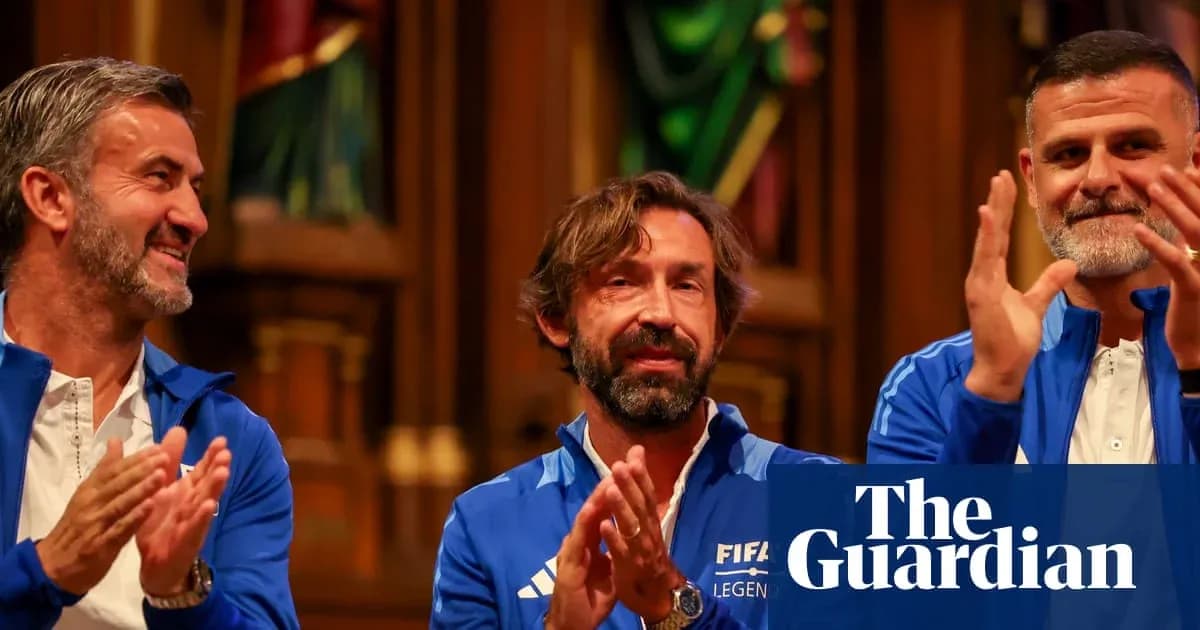
Andrea Pirlo’s Italy dream is over before it ever really began.
The World Cup-winning playmaker confirmed he is no longer in contention to become national team coach, with his commercial ties to a Russian betting company at the heart of a political storm that has spilled well beyond football.
Pirlo out of the running
On Monday, Pirlo took to Instagram to reveal the news. He wrote that he “heard last night that I’m no longer the candidate for the Italy national team job,” drawing a line under weeks of speculation that he would be the man to lead the Azzurri out of their current crisis.
Pirlo has been serving as an ambassador for Fonbet, a Russian betting firm. That role, he has repeatedly argued, is tied to his work in the United Arab Emirates and, in his words, is “exclusively for commercial and sports purposes”. He has rejected any political reading of the partnership, saying that doing so means “attributing beliefs to me that I have never expressed and don’t belong to me.”
The explanation did little to cool the reaction in Rome.
Political backlash over Russian link
Several Italian politicians publicly questioned how a prospective Italy coach could represent a Russian company at a time when the country has firmly backed Ukraine in the war with Russia. The debate quickly moved from sport to ethics, from tactics to geopolitics.
Pina Picierno, vice-president of the European Parliament, delivered one of the sharpest rebukes. “After yet another defeat and another missed World Cup qualification, Italian football desperately needed a cultural, ethical and managerial revolution. The choice of Andrea Pirlo goes in the exact opposite direction,” she wrote on social media, framing the appointment as a symbol of the game’s wider malaise.
Ignazio La Russa, president of the Senate and a senior figure in prime minister Giorgia Meloni’s party, also voiced serious reservations. Speaking to Ansa, he did not hide his scepticism. “I am speaking only because you called me: God help us. Of course I am an Italy fan and Pirlo was a great champion, but as a coach, it is a leap in the dark.”
Carlo Calenda, leader of the Azione party, went further still. “Anyone who is or has been promoting Russia after 2022 should not hold national office,” he said, drawing a hard line that left little room for compromise around Pirlo’s Fonbet role.
The pressure built quickly. The political noise became impossible to ignore.
Maldini’s support not enough
Inside the Italian football federation, there had been influential voices arguing Pirlo’s case. Paolo Maldini, newly installed as FIGC technical director, backed his former international teammate and saw in him a figure who could modernise the national side.
It was not enough. The controversy around Fonbet and the broader question of what the Italy coach should represent in the current climate created too much friction. For a federation already under fire after another qualification failure, taking on a political storm on top of a sporting crisis proved a risk too far.
Pirlo, currently coach of Dubai United and ready to walk away from that role for the Azzurri job, now finds the door closed.
A search that keeps slipping away
Pirlo’s withdrawal is only the latest twist in a search that has already exposed the FIGC’s limits. The federation first tried to land two of the game’s giants: Pep Guardiola and Carlo Ancelotti. Both pursuits went nowhere, leaving Italy looking for a different kind of solution after Gennaro Gattuso’s departure by mutual consent in April, a split that followed the humiliation of missing a third straight World Cup.
Turning to Pirlo was a bold, romantic choice. A bet on vision and identity rather than a proven track record at elite international level. Now that option has vanished as well.
The carousel spins back to familiar faces. Roberto Mancini, who delivered the Euro 2020 title before leaving in turbulent circumstances, is again in the conversation. So is Antonio Conte, the hard-driving tactician whose intensity once dragged an unfancied Italy side deep into Euro 2016.
The federation must now decide: reach back to a past it knows, or take another gamble in a landscape where every appointment is scrutinised not just for its footballing logic, but for what it says about Italy’s values beyond the pitch.
Related News
UFC 332 Preview: Natalia Silva vs. Wang Cong Fight Card, Odds, Start Time, and Details
Andy Roddick Responds to Andre Agassi’s Comments on Alexander Zverev at the Laver Cup
Knicks Prepare for Flexible Roles in Title Defense
Rui Hachimura Swaps Lakers Fans to Clippers in Surprising Jersey Exchange

Who Will Be the NBA's Next First-Time All-Stars? Top Picks and Long Shots for 2027
How Strong Is Your Team at Home? Check Out the 2026 Brasileirão Home Standings