
Real Madrid's Midfield Crisis Deepens as Rodri Chooses Barcelona
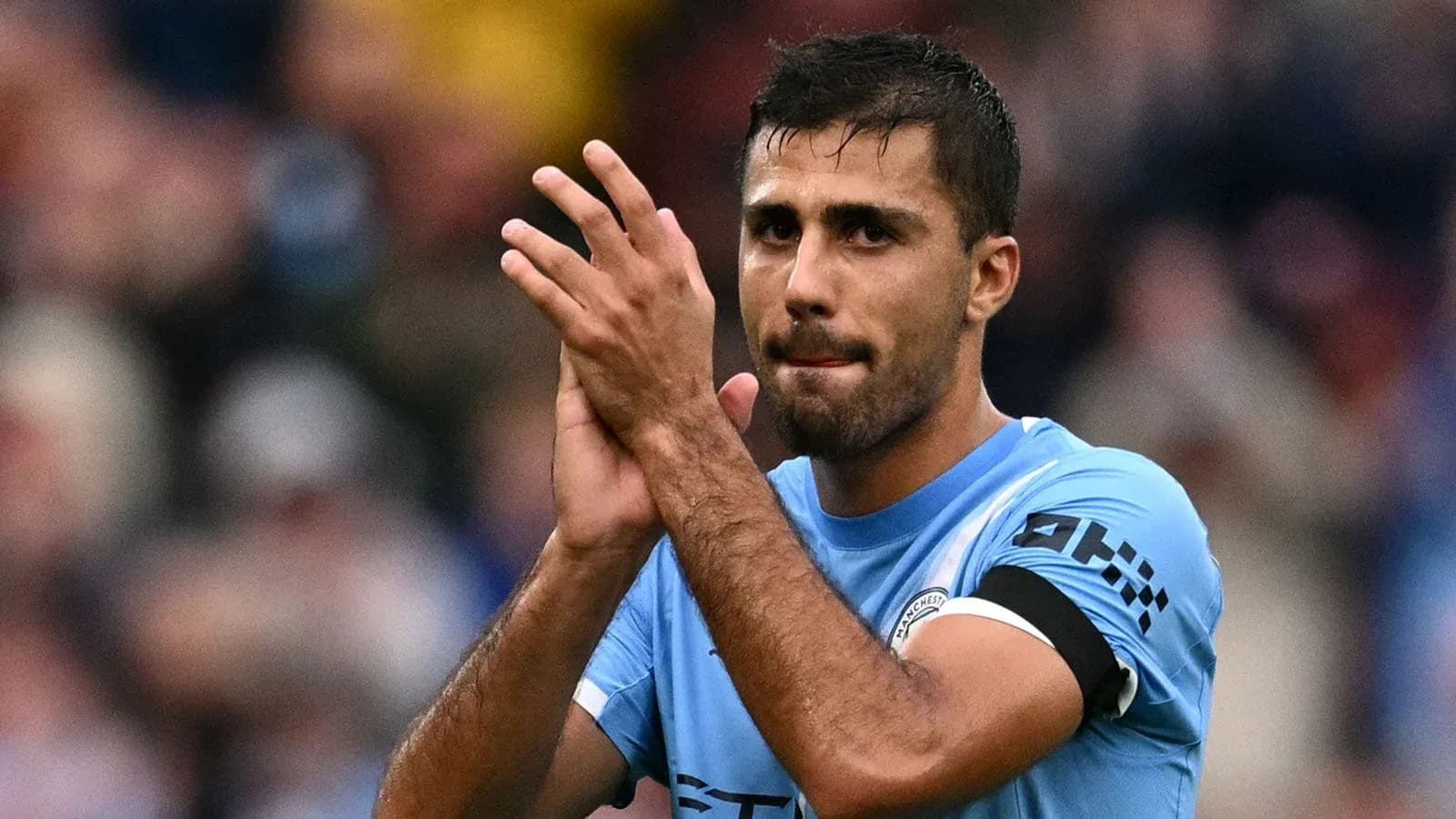
Two months ago, Florentino Perez stepped behind a microphone and lit the fuse. The Real Madrid president, locked in a fierce election battle, promised a blockbuster signing, “a player of the calibre of Cristiano Ronaldo or Kaka”, and a bid of at least €150 million to prove it.
The number was real. The statement was deliberate. The message was clear: Real Madrid would flex their muscle again.
But the market told a different story.
Michael Olise never left Bayern Munich. The heavily trailed, officially confirmed €150m offer for Atletico Madrid’s Julian Alvarez went nowhere. The only truly heavyweight arrival was Yan Diomande from RB Leipzig for €125m, another forward in a squad already overloaded with attacking glamour.
The pattern is impossible to miss. Olise. Alvarez. Diomande. All designed to thrill the Bernabeu, all pointed towards the front of the pitch. And yet, for two years now, the most obvious hole in this squad has been in the middle of it.
Since the break-up of the legendary trio Toni Kroos, Luka Modric and Casemiro, Real have lacked a true holding midfielder of international class. A conductor. A shield. A reference point. The transfer window still has time to run, and they may yet find one, but every euro sunk into another forward only sharpens the question around the club’s priorities.
Rodri slips away
The answer was supposed to be Rodri.
Born in Madrid, forged at Atletico, polished into the world’s best holding midfielder at Manchester City, he had already opened the door in public. Back in the spring, he made it clear that his past at the Metropolitano would not prevent him from crossing the divide. Others had done it. He could too.
Real were convinced. Inside Valdebebas, they believed Rodri could transform a titleless season into the launchpad for Jose Mourinho’s new era. He was the cornerstone, the piece that made sense of everything behind Kylian Mbappe, Vinicius Junior and Diomande.
Then came the twist that cuts deepest in Madrid: Rodri said no.
His agent, Pablo Barquero, has now confirmed that the player rejected Real’s offer. All signs point instead to Barcelona, who are moving to bring the World Cup’s standout performer from Manchester to Catalonia.
For Real, it is more than a failed transfer. It is a humiliation. The one player they identified as essential to their rebuild is heading to the Camp Nou.
Barca land a coup in the middle of the storm
Barcelona, meanwhile, are poised to pull off a signing that stings Madrid from every angle.
On the pitch, Hansi Flick gains the elite holding midfielder his team has been crying out for, a long-term replacement for the again seriously injured Frenkie de Jong. Off it, Barca steal the man Real saw as the solution to their structural imbalance.
Rodri will walk into a dressing room packed with familiar faces, the same Spanish core with whom he has just become world champion. The chemistry is ready-made. The fit is obvious.
And the symbolism is brutal.
This is not just another skirmish in a rivalry that has run for decades. It is another flashpoint in a conflict that now spans everything from transfers to referees, from courtrooms to Ballon d’Or ceremonies, echoing the poisonous intensity of the early 2000s and Luis Figo’s infamous switch from Barcelona to Madrid.
Back then, one transfer changed the temperature of an entire era. Rodri’s move will not reach that level of shock, but it pours fuel on a fire already raging.
Rivalry without limits
The backdrop could hardly be more charged.
The Negreira scandal has been smouldering since early 2023, shaking trust in Spanish refereeing and dragging Barcelona into criminal proceedings. Real Madrid chose not just to comment but to act, joining the case as a private prosecutor. Since then, every contentious whistle in a Clasico has been filtered through the prism of suspicion.
One mud-slinging exchange has followed another. After Real entered the proceedings, Barca president Joan Laporta hit back, labelling Madrid the “club of the regime”, historically favoured by referees and still enjoying that privilege today.
The fallout shattered what remained of institutional cordiality. Perez and Laporta had once worked in tandem on the Super League project, aligned in a battle with UEFA and the established order. That alliance is now rubble. The traditional pre-Clasico presidents’ lunch has disappeared. Real have, on several occasions, refused to grant Barcelona’s hierarchy the usual place of honour in the VIP box.
On the pitch and in the boardroom, every gesture carries meaning.
The Alvarez saga only sharpened the edges. After Perez’s public promise of a record transfer, Real issued a statement confirming a €150m bid for the Atletico striker, which their neighbours rejected. Barca, long serious suitors for Alvarez, were left looking flat-footed. By making the offer public, Real appeared to drive up the price for a player they did not end up signing, while complicating Barcelona’s pursuit.
Then came the 2024 Ballon d’Or row. Real boycotted the gala in protest after Rodri beat Vinicius Junior to the award. The midfielder became a symbol of grievance in Madrid, the player who denied their star the crown.
Now that same Rodri is heading to Barcelona. The red rag of two years ago is about to wear Blaugrana.
Real’s midfield void, Barca’s growing swagger
Strip away the politics and the noise, and the footballing reality is stark.
Real Madrid still do not have a natural organiser behind their front line of Mbappe, Vinicius and Diomande. As it stands, Mourinho will again lean on Aurelien Tchouameni and Fede Valverde to hold the centre, even though recent seasons have underlined that neither is a pure holding midfielder capable of dictating tempo and balance at the very highest level.
Barcelona, by contrast, are close to locking in the one profile they lacked most. Flick’s team, who have humiliated Real twice in succession in La Liga, are about to add the world’s premier pivot to a side already brimming with confidence and Spanish champions.
The power dynamic in midfield, once unquestionably Madrid’s domain in the Kroos-Modric-Casemiro era, is shifting.
What comes next for Perez and Mourinho?
For Real Madrid, Rodri’s rejection lands like a slap in the face, delivered from Manchester via Barcelona.
The club that prided itself on always getting its man has watched a Madrid-born, world-class midfielder choose their greatest rival instead. The club that poured another nine-figure sum into an attacker still walks into the new season without the anchor their system cries out for.
There will be another chapter in this feud. There always is. The legal battles will grind on, the accusations will keep flying, the next controversy will not be far away.
The real question hangs over the pitch: how do Perez and Mourinho fix a midfield that just lost the one player who could have redefined it?
Related News
Carlos Alcaraz Urges an End to Matches Ending in the Early Hours
Carlos Alcaraz Criticizes Late US Open Finish After 3:30 a.m. Match
Jannik Sinner Set for ATP 500 Return in Beijing with Novak Djokovic Also Competing
Meet Iva Jovic: The American Tennis Prospect Making Waves
Flavio Cobolli Shares Insights on Practice Session with Jannik Sinner Ahead of Comeback
Till vs Romero: Fight Details, Undercard, and Viewing Info for This Weekend