
Real Madrid Dominates Rayo Vallecano 4-1 in La Liga Clash
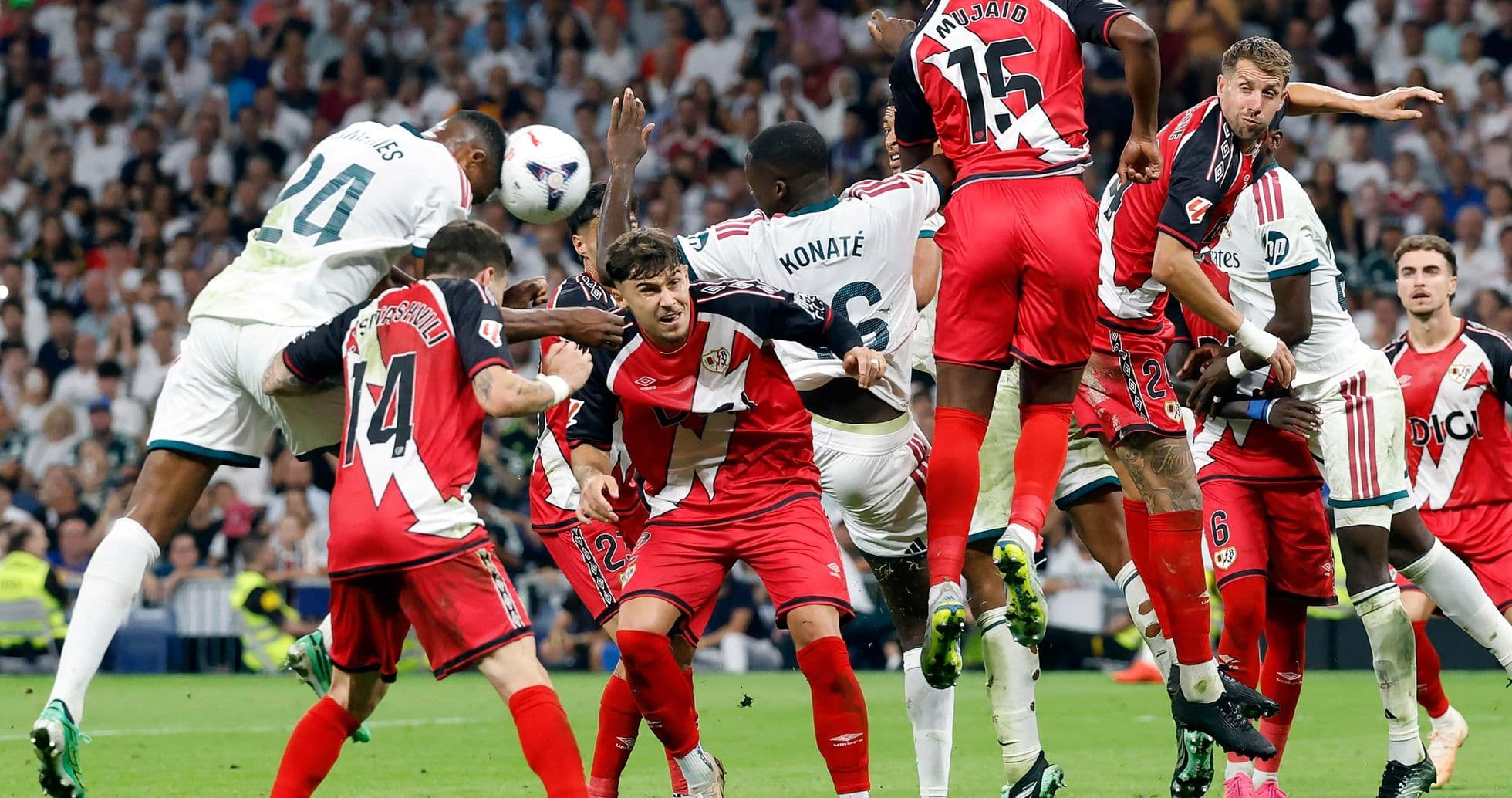
Under the lights of the Bernabéu, this was billed as a test of early‑season identities as much as a La Liga fixture. Real Madrid, second in the table with 12 points and a goal difference of 10 after five matches, arrived as a side already defined by attacking excess: 14 goals in total this campaign, with an especially ruthless streak at home where they had scored 12 and conceded only 2 across three outings. Rayo Vallecano, 16th with 4 points and a goal difference of -6, came in as a team living on the edge—dangerous going forward with 8 goals in total, but fatally open, having allowed 14 overall and a punishing 11 on their travels.
Final Score: Real Madrid 4 - 1 Rayo Vallecano
The final 4–1 scoreline felt like the logical extension of those numbers. Real Madrid’s seasonal DNA is clear: high‑tempo, front‑loaded home performances under José Mourinho, built on a 4‑2‑3‑1 that maximises the vertical power of Kylian Mbappé and Vinícius Júnior, and the all‑court intelligence of Jude Bellingham. Rayo, for Beñat San José, are something more volatile: also a 4‑2‑3‑1 here, but one that relies on the individual punch of Sergio Camello and the creative metronome of Unai López to offset structural fragilities.
Injury and suspension shaped both squads before a ball was kicked. Real Madrid were without Eder Militao (hamstring), Ferland Mendy (hip) and Rodrygo (knee), forcing Mourinho to lean fully into a new‑look back four. D. Dumfries and Álvaro Fernández flanked an improvised central pairing of Ibrahima Konaté and Antonio Rüdiger in front of T. Courtois. The absences nudged Madrid even further towards proactive dominance: if the defensive spine is patched together, the best protection is to keep the ball and pin the opponent back.
Rayo’s list was even more brutal. A. Batalla (broken calfbone), Luiz Felipe (hamstring), R. Nteka and I. Palazon (muscle injuries), plus Fran Pérez and Jorge de Frutos suspended after red cards, stripped San José of depth and two of his more aggressive wide presences. That context matters: a side that already concedes an average of 3.7 goals on their travels and has yet to keep a clean sheet this season was forced into the Bernabéu with a weakened rotation and a back line that has been repeatedly exposed.
Discipline trends only deepened the tactical divide. Heading into this game, Real Madrid’s yellow cards were spread, but there was a notable spike between 46–60 minutes and 61–75 minutes, each accounting for 25.00% of their cautions. That suggests a side that tightens the screw physically as the second half opens, pressing higher and counter‑pressing more aggressively. Rayo, by contrast, see 40.00% of their yellows between 61–75 minutes and 30.00% between 76–90 minutes, a profile of a team that increasingly fouls as matches slip away. Their red‑card pattern is even more telling: half of their reds arrive in the 76–90 window, the other half in an unspecified late range. Under sustained pressure, this is a group that frays.
Within that frame, the “Hunter vs Shield” duel at the top of the pitch always looked decisive. Mbappé arrived with 6 league goals and 1 assist, having taken 29 shots with 21 on target, and dribbled past opponents 20 times from 31 attempts. He is not just a finisher; he is Madrid’s accelerant, the man who turns transitions into chaos. Against a Rayo defence that, away from home, had already conceded 11 goals and whose heaviest defeat on their travels was 5–2, the mismatch was stark. Every time Mbappé ran at F. Lejeune and P. Ciss, the numbers said the same thing: Rayo’s back four are used to defending large spaces and they rarely get away with it.
Sergio Camello, though, brought his own hunter’s profile. Also on 6 goals and 1 assist, with 10 of his 11 shots on target, he has been one of La Liga’s most efficient finishers so far. His duel was with a Madrid defence still settling, and with Courtois as the last line. The tactical plan was clear: use Álex García’s runs and G. Tsitaishvili’s drifting to drag Konaté and Rüdiger wide, then let Camello attack the inside channels. In isolation, that plan had logic. But Rayo’s inability to compress the game behind him meant Camello’s work came mostly as isolated flashes rather than sustained waves.
The “Engine Room” battle was just as tilted. Madrid’s double pivot of F. Valverde and Bernardo Silva, with Y. Diomande as an advanced controller and Bellingham roaming as a free 8/10, gave Mourinho a four‑man carousel between the lines. Bellingham, with 3 goals, 2 assists and 12 key passes already this season, is the league’s most complete midfielder. He has also blocked 3 shots and made 2 interceptions, underscoring how much he contributes to Madrid’s counter‑press. Across from him, Unai López is Rayo’s brain: 3 assists, 12 key passes, 11 tackles and 4 successful blocks speak to a player trying to be both creator and firefighter. But the load is too heavy; Rayo’s structure leaves him extinguishing fires more often than igniting attacks.
Madrid’s season‑long penalty story added another layer of menace. They had been awarded 2 penalties in total, scoring 1 and missing 1, a 50.00% conversion rate that underlines both their ability to force desperate defending and the lingering question of execution from the spot. With Vinícius having already won a penalty this season and drawing 19 fouls, Rayo’s late‑game indiscipline in the box was always a live risk.
Statistically, the prognosis before a ball was kicked pointed exactly where the night ended. Real Madrid’s home average of 4.0 goals for and 0.7 against, combined with Rayo’s away average of 1.3 for and 3.7 against, sketched a game in which Madrid would both out‑create and out‑finish their visitors. Rayo’s refusal to sit in, and their commitment to a 4‑2‑3‑1 that pushes Unai López high, guaranteed they would carry some threat through Camello, but also that they would be repeatedly exposed in transition.
A 4–1 home win, then, is not just a scoreline; it is the season’s underlying numbers made flesh. Madrid’s attacking core—Mbappé, Vinícius, Bellingham—continue to bend the league to their rhythm, while Rayo’s brave but brittle identity leaves them permanently on the brink. For one side, this felt like another stride towards a title challenge. For the other, it was a reminder that without defensive recalibration, even the sharpest hunter cannot outrun a leaking shield.
Related News
Real Sociedad vs Atletico Madrid: A Clash of Identities
Real Madrid Dominates Rayo Vallecano 4-1 in La Liga Clash
Atletico Madrid vs Real Madrid Stats: Head-to-Head Record Before Match
Levante vs Barcelona: Tactical Analysis of La Liga Clash

Sevilla vs Barcelona Stats: Head-to-head Record and Past Meetings
Barcelona vs Racing Santander Predicted Lineups: Team News and Insights