
Real Sociedad vs Atletico Madrid: A Clash of Identities
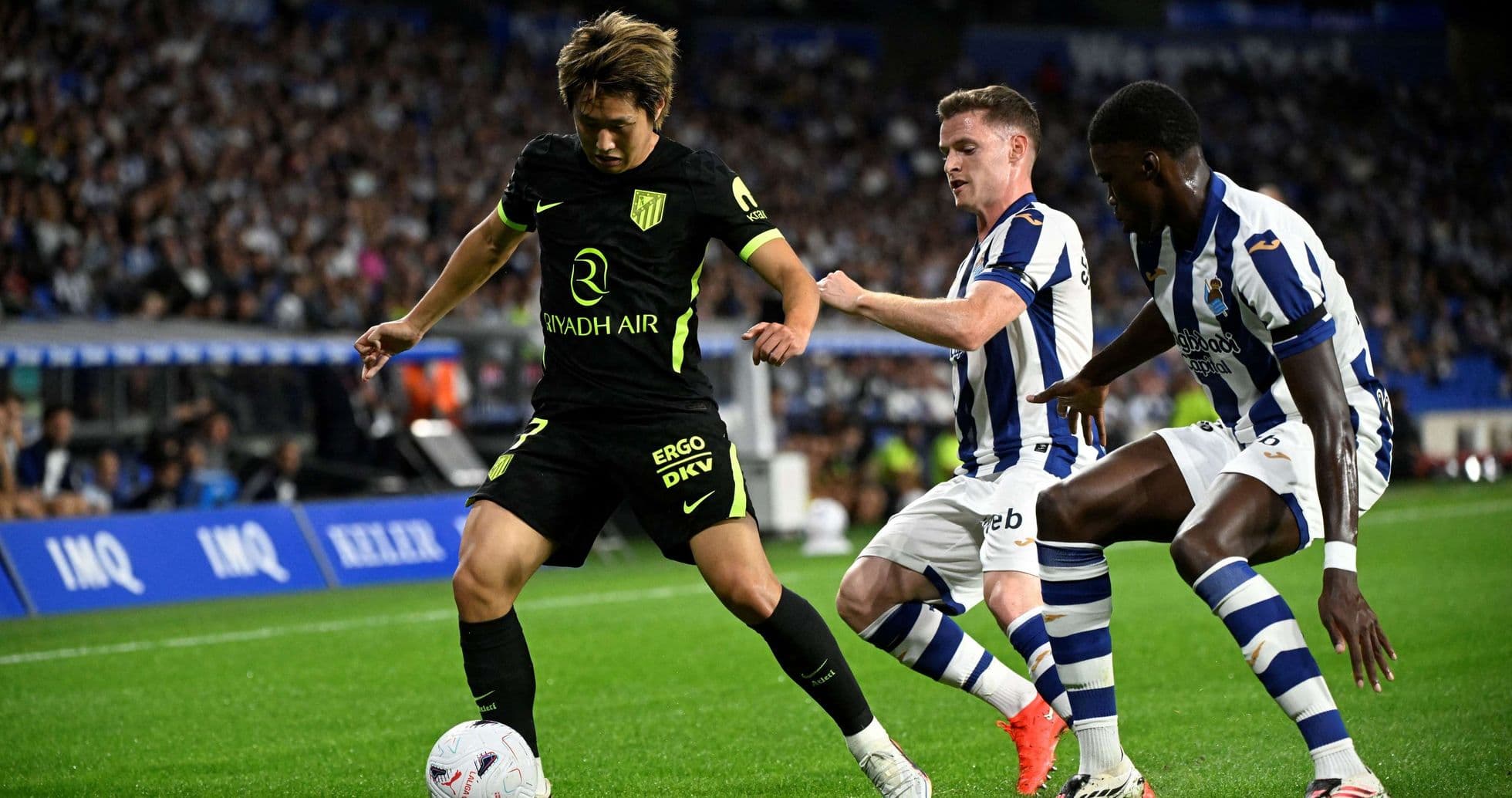
Under the Basque evening lights at Reale Arena, this was billed as a test of identities as much as a contest of points: Real Sociedad, trying to rediscover their sharp, possession-based edge, against an Atletico Madrid side quietly reshaping itself into a more expansive, multi‑layered machine. By full time, the scoreboard read 0–3, and the gap in clarity between the two projects felt wider than the raw numbers.
I. The Big Picture – Two Trajectories Crossing
Heading into this game, Real Sociedad sat 12th in La Liga with 7 points from 6 matches. Overall they had scored 6 and conceded 11, giving them a goal difference of -5. At home, the numbers painted a team still searching for balance: 1 win, 1 draw, 1 defeat at Reale Arena, with only 2 goals scored and 4 conceded. Their overall attacking average stood at 1.0 goals per game, dropping to 0.7 at home, while they were allowing 1.8 goals per match in total and 1.3 at home.
Atletico Madrid arrived in San Sebastian with a far more convincing early-season profile. Fifth in the table on 10 points from 5 matches, they had scored 10 and conceded 6 overall, for a goal difference of +4. Both at home and on their travels they were averaging 2.0 goals for per game, while conceding 1.2 overall and 1.3 away. It is a statistical profile that speaks of control: enough firepower to hurt you, enough defensive stability to ride out pressure.
The tactical shapes underlined those trends. P. Matarazzo again leaned into Real Sociedad’s 4‑2‑3‑1, a structure he has used in 4 league matches this season, trusting it to restore rhythm after a mixed run of LLWDWL. Diego Simeone, by contrast, went with a 3‑4‑2‑1, the least-used of Atletico’s setups so far but one that maximises his current squad strengths: three centre-backs, aggressive wing-backs, and two creative midfielders floating behind a mobile forward.
II. Tactical Voids – Absences and Discipline
The absences told their own story before a ball was kicked. Real Sociedad were without Jon Martín, suspended after a red card, and also missed A. Odriozola and I. Zubeldia through injury. That stripped Matarazzo of two natural defensive rotation pieces and a young centre-back who had already shown his capacity to read danger and win duels. It is no coincidence that he turned to a back four featuring J. Aramburu, Luken Beitia, M. Sarr and Sergio Gómez, a line with technical ability but less collective continuity.
Atletico had their own missing pieces: J. Alvarez, P. Barrios and A. Sorloth were all out with muscle injuries. Yet Simeone’s squad depth allowed him to compensate, especially in attack and midfield, where G. Simeone, Lee Kang‑In and Álex Baena could all step into decisive roles.
Disciplinary trends hinted at how the midfield battle might tilt. Real Sociedad’s Y. Herrera and J. Aramburu are already among the league’s most carded players, each on 3 yellows. The team’s yellow-card timing is spread, but there is a clear intensity spike between 16–30 minutes and 46–75 minutes, with 21.43% of yellows in each of those windows, and a red card already arriving in the 61–75 minute band this season. Atletico, for their part, tend to accumulate yellows in the late first half and early second (22.22% in both the 31–45 and 46–60 ranges), and their only red so far has come in the 76–90 window. This is a clash of two sides who ramp up aggression around the same phases – fertile ground for a fractious midfield duel.
III. Key Matchups – Hunter vs Shield, Engine Room vs Enforcer
The most intriguing attacking axis for Real Sociedad lay between Luka Sučić and Mikel Oyarzabal. Sučić, already with 2 league goals from midfield and 13 shots (5 on target), started as the central creative hub in the 4‑2‑3‑1. His profile – 211 passes at 89% accuracy, 5 key passes, 5 successful dribbles from 9 attempts – suggests a player capable of breaking lines both with the ball at his feet and with vertical passing. Oyarzabal, despite not yet scoring, has 2 assists, 6 key passes and 4 shots on target from 6 attempts. Together, they were tasked with unlocking an Atletico defence that had conceded only 6 goals in 5 matches.
Opposite them stood a back three anchored by D. Hancko, one of La Liga’s standout early-season defenders. Hancko has already delivered 2 assists, 361 passes at 90% accuracy, 8 interceptions and 3 successful blocks, while winning 21 of 30 duels. In open play, his ability to step out, intercept and then immediately progress the ball makes him both shield and launchpad. The Hunter vs Shield narrative here was less about a single striker and more about whether Sučić and Oyarzabal could drag Hancko and his partners into uncomfortable zones between the lines.
In Atletico’s attacking third, Álex Baena and G. Simeone were the twin threats behind A. Lookman. Baena, with 3 goals and 1 assist in 5 appearances, is operating at a high level: 144 passes at 84% accuracy, 10 key passes and 8 shots (4 on target). G. Simeone adds 2 goals and 1 assist, but his value goes beyond numbers – 52 duels contested, 27 won, and 11 tackles with 2 blocks show a forward who presses and defends as intensely as he attacks.
Their primary foil in the “engine room” was Y. Herrera. Across 6 appearances, Herrera has 1 goal, 226 passes at 87% accuracy, 9 tackles and 51 duels (25 won). He is Real Sociedad’s heartbeat and their chief disruptor, but his 8 fouls committed and 3 yellow cards underline the fine line he walks. Against a technical pair like Baena and Lee Kang‑In, Herrera’s timing in the 16–30 and 46–75 minute bands – where Real Sociedad’s yellow-card rates peak – was always going to be decisive in either breaking Atletico’s rhythm or handing them dangerous set-piece situations.
IV. Statistical Prognosis – Why 0–3 Felt Inevitable in the Numbers
Even before kick-off, the statistical undercurrents pointed towards an Atletico side better equipped to control the key zones. On their travels they were scoring 2.0 goals per match and conceding 1.3, while Real Sociedad at home were averaging just 0.7 goals for and 1.3 against. That symmetry suggested that even if Real Sociedad managed to hold Atletico to their away defensive norm, they were unlikely to match the visitors’ attacking output.
Real Sociedad’s broader pattern – only 1 clean sheet in 6 league matches, and 3 fixtures in which they failed to score – contrasted sharply with Atletico’s 2 clean sheets and just 1 game without a goal. Atletico’s penalty record also hinted at a ruthlessness in big moments: 1 penalty awarded, 1 scored, 100% conversion, with no misses to undermine confidence.
The tactical layering of Atletico’s 3‑4‑2‑1 amplified those statistical edges. Marc Pubill and Álex Grimaldo provided width high up the pitch, pinning back Barrenetxea and Gonçalo Guedes and limiting Real Sociedad’s ability to counter through the wings. Marcos Llorente and M. Hjulmand controlled the central lanes, screening transitions before they could reach Sučić in advanced pockets. Behind them, Hancko’s composure and progressive passing allowed Simeone’s side to bypass Real Sociedad’s first press and feed Baena and Lee Kang‑In between the lines.
For Matarazzo, the reliance on a back four missing Zubeldia and Jon Martín, and a double pivot of Herrera and Carlos Soler, left the team stretched between the need to protect Álex Remiro and the desire to support Oyarzabal. With Real Sociedad already conceding 1.8 goals per game overall and 2.3 on their travels, the defensive fragility was a known issue; Atletico’s ability to hit the same 2.0 goals-for average both home and away suggested they would find the spaces they needed.
Following this result, the 0–3 scoreline feels less like an aberration and more like the logical intersection of form, structure and mentality. Real Sociedad’s 4‑2‑3‑1 still offers a clear identity, but without key defensive leaders and with discipline always close to the edge, it struggles against elite, multi‑channel attacks. Atletico Madrid, by contrast, showed at Reale Arena that their evolution under Simeone is real: a side still built on defensive steel, but now layered with creators like Baena and Lee Kang‑In, carriers like Llorente, and a back line led by Hancko that can both defend and dictate.
In a league where margins at the top are thin, this night in San Sebastian felt like a snapshot of two projects at different stages of their cycle – one consolidating, one still searching for its best version.
Related News
Real Sociedad vs Atletico Madrid: A Clash of Identities
Real Madrid Dominates Rayo Vallecano 4-1 in La Liga Clash

Atletico Madrid vs Real Madrid Stats: Head-to-Head Record Before Match
Levante vs Barcelona: Tactical Analysis of La Liga Clash

Sevilla vs Barcelona Stats: Head-to-head Record and Past Meetings
Barcelona vs Racing Santander Predicted Lineups: Team News and Insights