
Roberto Mancini Returns as Italy Coach Amid Crisis
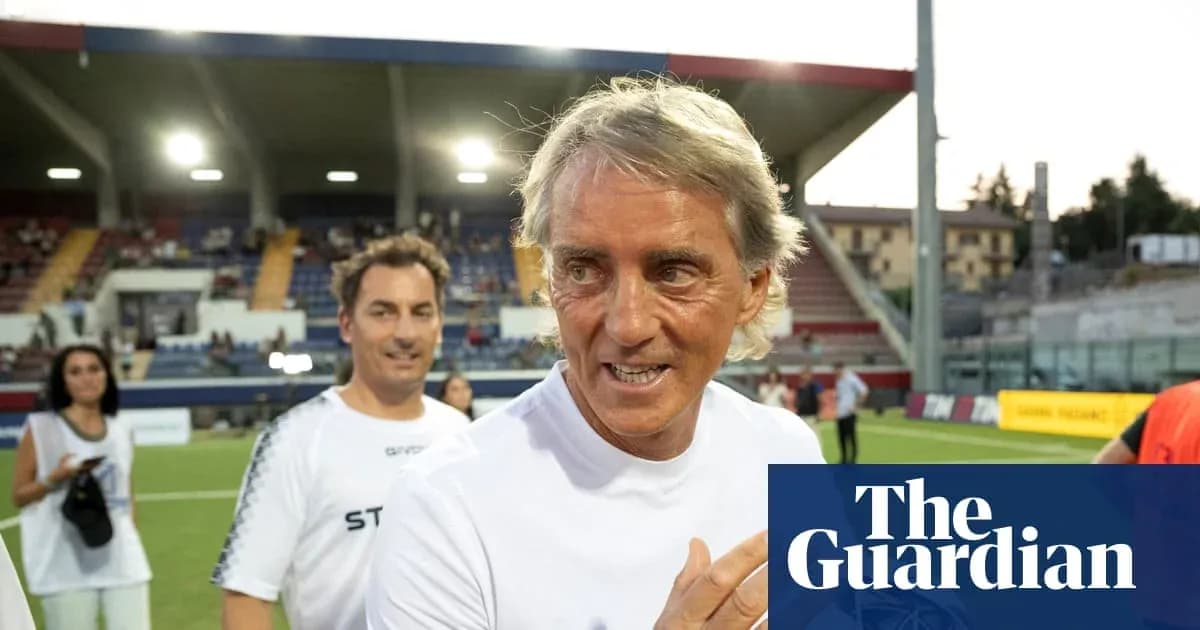
Roberto Mancini is Italy coach again. Five years after walking away, the man who took the Azzurri to the summit of Europe has been handed the national team for a second time, in a move that underlines both the scale of the crisis and the lack of better options.
FIGC president Giovanni Malagò confirmed the return on Tuesday, also revealing that Claudio Ranieri will step in as technical director.
“Mancini is the coach,” Malagò said. “I believed that the best person to become head coach was Roberto Mancini.”
No fanfare. Just a blunt admission that, when Italian football needed a reset, it went back to the last man who made the country believe.
From Wembley Glory to World Cup Failure
Mancini’s first spell with Italy was a rollercoaster compressed into 58 games.
He rebuilt a broken side after the 2018 World Cup failure, stitched together a new core, and turned them into European champions. The image of Italy lifting the Euro 2020 trophy at Wembley in 2021, after a penalty shootout victory over England, felt like a rebirth for a fallen powerhouse.
Then came the crash.
Italy missed out on the 2022 World Cup, a second straight absence from the biggest stage. The glow from Wembley faded quickly as qualifying stumbles piled up, and a sluggish start to Euro 2024 qualifying deepened the sense of drift. By 2023, Mancini was gone, his legacy complicated: a European champion who still couldn’t drag Italy back to the World Cup.
Now he returns to the same job, with the same expectations, but far less credit in the bank.
Ranieri Steps Upstairs
Alongside Mancini’s comeback, Claudio Ranieri’s appointment as technical director adds another heavyweight to the federation’s new structure.
Ranieri, a veteran of dugouts across Europe and a title winner with Leicester City, will oversee the broader technical direction while Mancini handles the touchline. It is an experienced pairing, one that leans heavily on reputation and know-how at a time when Italian football feels short of both.
The message is clear: this is not a long-term experiment. This is a move to steady the ship.
Turmoil Behind the Scenes
The decision comes after a chaotic spell inside the FIGC.
Former technical director Paolo Maldini and his adviser Leonardo resigned on Monday. Their exits followed the collapse of Andrea Pirlo’s proposed appointment as head coach, blocked because of the former midfielder’s ties to a Russian betting firm.
The fallout was swift and brutal. Maldini and Leonardo walked away, stripping the federation of two high-profile figures and exposing deep fractures in its decision-making.
Before Mancini, the FIGC had aimed even higher. Pep Guardiola was sounded out as the first-choice candidate but turned the job down last month, a reminder of how far Italy has fallen in the global pecking order.
With Guardiola out, Pirlo blocked, and internal resignations piling up, the federation turned back to the man it knew best.
Gattuso Out, Mancini In – Again
Mancini replaces Gennaro Gattuso, who left in April after Italy failed to qualify for a third consecutive World Cup. That statistic alone would once have been unthinkable. For a country that once measured itself by semi-finals and finals, three straight absences mark a generational failure.
Gattuso never truly escaped that shadow. His tenure ended with Italy stuck in the same rut: big name, big expectations, small returns.
Mancini inherits that burden once more. He does so with a résumé that still commands respect: club spells at Inter, Fiorentina and Manchester City, where he delivered City’s first Premier League title in 2011-12, remain part of his armour.
But the job is no longer about reputation. It is about repair.
Italy have already lived one Mancini cycle: rebirth, triumph, and collapse. The question now is whether the sequel can avoid the same brutal ending, or whether this second act is simply the last throw of the dice for a giant still searching for itself.
Related News

Wilfred Ndidi’s Marriage Reportedly Ends as He Enters New Relationship
Cristiano Ronaldo's Top 5 Most Valuable Cars in His Extraordinary Collection
Ben Whittaker’s Challenge to Prove Eddie Hearn’s Bold British Boxing Bet
Peter Handscomb on the Challenge of Facing Indian Bowlers
How to Watch UFC 332: Silva vs. Wang Live on CBS and Paramount+ This Saturday
Raul Rosas Jr. Shares His Thoughts on the Shocking UFC Vegas 121 Finish Against Raoni Barcelos