
Rodri Joins Barcelona: A Major Blow to Real Madrid
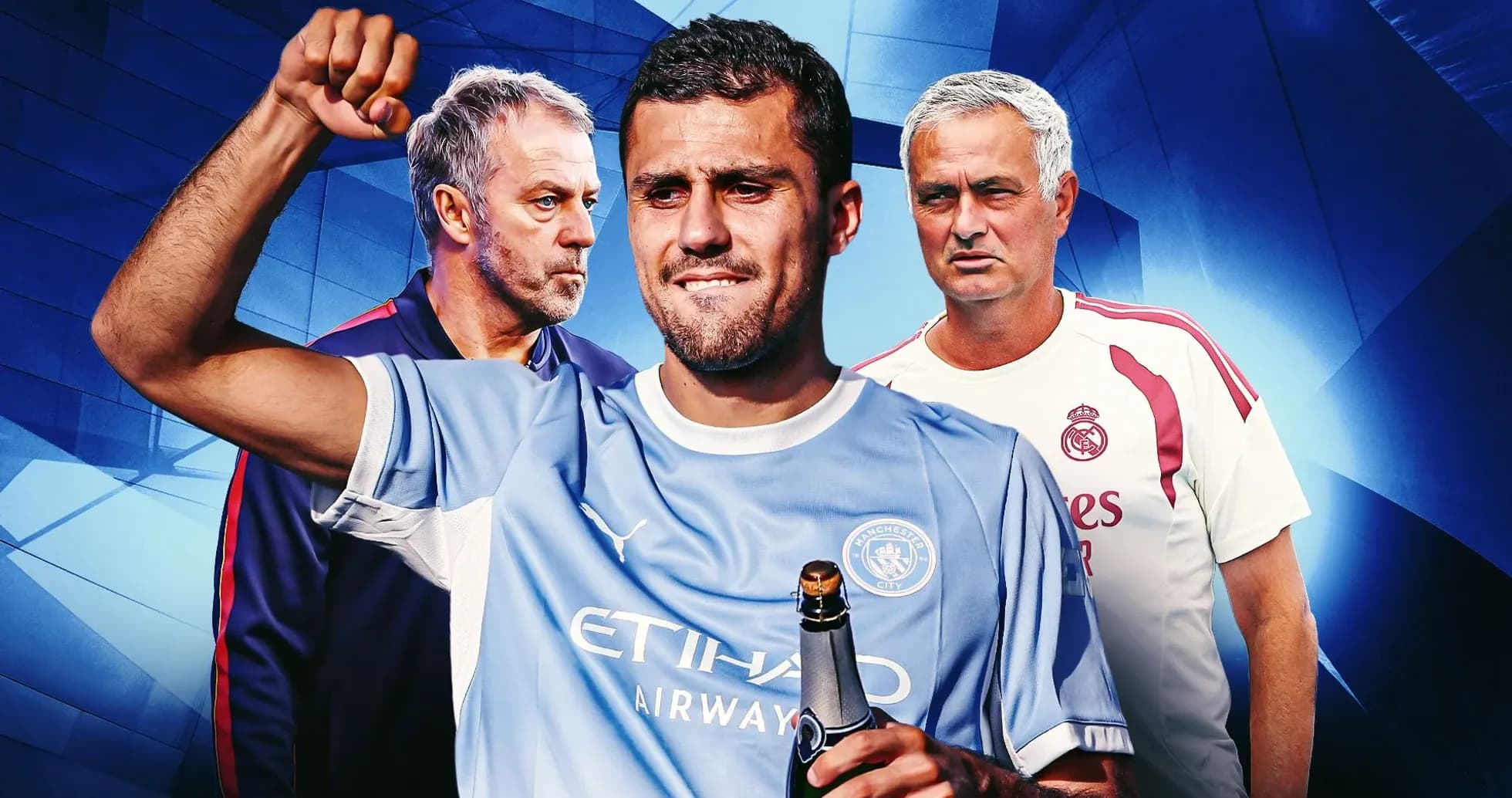
The best defensive midfielder on the planet does not come onto the market often. When he does, and at a cut price, the superclubs are supposed to pounce with ruthless efficiency. This time, in the middle of a fractured post-Guardiola summer, Real Madrid blinked. Barcelona did not.
Manchester City, boxed in by Rodri entering the final 12 months of his contract, are understood to be willing to accept as little as £60 million for the 2024 Ballon d'Or winner. For a player of his influence, that is not a fee, it is an invitation. Both sides of the Clasico divide knew it.
End of an era in Manchester
Rodri has been flirting with the idea of coming home for months. The language has grown bolder, the hints heavier. With Pep Guardiola gone and an era at the Etihad clearly over, the emotional ties that kept him in Manchester have loosened. John Stones, Bernardo Silva, others in that inner circle all seem to be standing at the same crossroads. For Rodri, at 30, this is likely his last big move at the absolute peak.
He still has two or three elite years in his legs, provided his body holds and his brain — that extraordinary, metronomic game intelligence — continues to do most of the running. Spain’s World Cup triumph, his Golden Ball, his control of games on the biggest stage all pushed him beyond the status of “top midfielder” into something closer to irreplaceable.
Naturally, Real Madrid moved first. Or at least, they thought they had.
Madrid hesitate, Barca pounce
Madrid reignited their long-standing interest after the World Cup, believing they were in pole position to land the Spain anchor they have never quite replaced in the post-Casemiro years. The fit looked obvious: a ready-made upgrade on Aurelien Tchouameni and Eduardo Camavinga in the holding role, a player who could lock down La Liga and dictate Champions League ties from deep.
Then Barcelona walked into the room.
The Catalans, initially on the periphery of the chase, surged to the front earlier this week. While Madrid failed to find agreement with City and could not settle personal terms with the player, Barca moved fast. They spoke to Rodri. They opened a line with City. They made it real.
The timing could hardly be more convenient for them. Frenkie de Jong’s serious knee injury — a torn medial collateral ligament suffered on World Cup duty, with a four-month absence expected and surgery still possible — has left a gaping hole in midfield. When a player of Rodri’s calibre suddenly becomes attainable in that context, hesitation is not an option.
The response from Rodri was immediate. And decisive.
The Busquets heir chooses Camp Nou
It emerged quickly that Rodri’s preference was Barcelona. The project at Camp Nou, under Hansi Flick, appeals to him: a ball-playing, possession-heavy side built to dominate matches, not merely manage them. Several Spain team-mates already form the core of the squad. The blueprint is familiar. So is the role.
Rodri has long been spoken of as the closest thing the modern game has produced to Sergio Busquets. Same serenity. Same angles. Same ruthless, understated control of tempo. Dropping him into a Barcelona midfield with Pedri, De Jong and Gavi feels less like a signing and more like the restoration of an old idea.
His agent, Pablo Barquero, removed any remaining doubt. Speaking to Cadena SER, he made the player’s stance clear: out of respect for Real Madrid, who had behaved impeccably, Rodri had informed them that his decision was to join Barcelona.
That single admission detonated across Spain.
Chaos in the capital
The Spanish media did what it always does when a Clasico transfer battle explodes: it fractured into competing truths.
One version claims Madrid had an agreement with City, only to try and shave down the fee at the last minute, stalling the deal and allowing Barca to slide in. Another says Rodri simply grew tired of waiting for Madrid to commit and flipped to Barcelona, with reports suggesting Los Blancos were only prepared to go as high as £34m — a figure City were never going to accept.
There are more incendiary angles. Some insist Rodri never truly wanted Madrid at all, using their interest as leverage to flush out Barcelona. Others report that Real had an identical proposal on the table, but still failed to close. The most sensational suggestion of all is that City and Barca are quietly aligned, trying to smoke Madrid into overpaying.
Inside the Bernabeu, the fallout has been ugly. Jose Mourinho, according to reports, has been left furious by the collapse of a deal he believed was his. The story goes that he unleashed a blistering phone tirade at chief scout Juni Calafat, only to be told he would have to live with the midfield already at his disposal.
Whether every detail of those accounts stands up is almost secondary. What matters is the feeling: Madrid, the club that usually gets what it wants in the market, have been beaten to a generational midfielder by Barcelona — and for what looks suspiciously like a bargain.
A sliding door moment in La Liga
Rodri himself had not hidden his openness to Madrid. During the March international break, he spoke warmly about a return to Spain, to La Liga, to Madrid as a city. Asked specifically about Real, he did not equivocate: you do not turn down one of the world’s best clubs.
And yet, somehow, they have contrived to let him slip away.
The sporting cost could be brutal. Rodri is not just a marginal upgrade; he is the kind of midfielder who shifts a title race on his own. Put him at the base of Madrid’s midfield and they likely erase the fine margins that have left them second in La Liga too often for their liking. Replace Tchouameni or Camavinga with Rodri in the biggest games and the entire shape of the side changes.
Instead, he is poised to become the cornerstone of Barcelona’s next cycle.
At Camp Nou, he will arrive as the conductor-in-chief, a maestro with a proven track record of orchestrating title wins from deep. He did it at City, year after year. He did it for Spain at the World Cup. Dropping that level of authority into a team already chasing a third straight league crown is ominous for the rest of Spain.
His presence does more than steady Barcelona’s domestic ambitions. It strengthens their hand in Europe, where they have been chasing ghosts since their last Champions League triumph 12 years ago. With Rodri anchoring midfield, their structure, their control, their ability to suffocate elite opponents all move up a tier.
A bruised ego at the Bernabeu
For Madrid, this is not just a missed signing. It is a hit to the ego.
They had already absorbed the humiliation of surrendering the league title in a meek Clasico defeat in May. Now they must watch the player many regard as the finest midfielder in the world walk into their rival’s dressing room for a fee that, in their own accounting, will look like a steal.
This is the kind of transfer that lingers. Every time Rodri drops between centre-backs to start an attack, every time he kills a counter with a single interception, every time Barcelona close out a tight game with the ball, the question will hang in the air in Madrid: how did they let this happen?
As Barcelona quietly build around the Busquets heir they have craved for years, Real are left staring at a midfield that suddenly feels one world-class piece short — and a title race that might just have tilted across the divide.
Related News
Carlos Alcaraz Urges an End to Matches Ending in the Early Hours
Carlos Alcaraz Criticizes Late US Open Finish After 3:30 a.m. Match
Jannik Sinner Set for ATP 500 Return in Beijing with Novak Djokovic Also Competing
Meet Iva Jovic: The American Tennis Prospect Making Waves
Flavio Cobolli Shares Insights on Practice Session with Jannik Sinner Ahead of Comeback
Till vs Romero: Fight Details, Undercard, and Viewing Info for This Weekend