
Rodri's Rise: From Doubts to Dominance in World Football
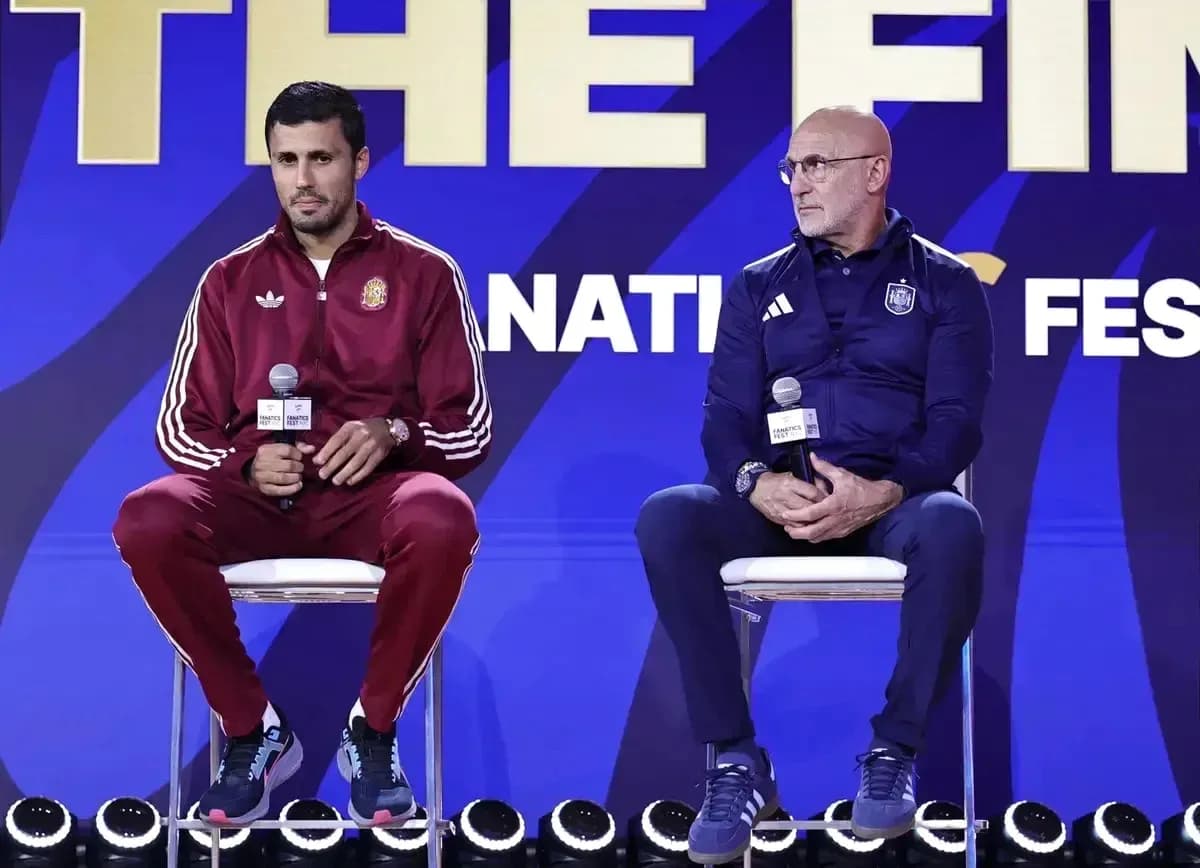
Luis de la Fuente didn’t just defend Rodri. He drew a line in the sand.
Questioning Spain’s midfield metronome during the World Cup, he said, was “an insult to one’s footballing intelligence” – a brutal, unambiguous verdict from a coach who has just watched his playmaker dominate the biggest stage of all.
This was not a throwaway soundbite. It was the culmination of a month in which Rodri, carrying the weight of injury doubts and selection debate, turned a sceptical murmur at home into global acclaim abroad.
From doubts to dominance
Rodri arrived in North America under a cloud. The 2024 Ballon d'Or winner had endured a disrupted build-up, his recent injury history prompting questions over whether Spain should opt for a more explosive, more “dynamic” profile in midfield.
He answered with numbers, authority and a World Cup winners’ medal.
Across Spain’s seven matches, the Manchester City midfielder dictated everything: a 93.4% passing accuracy as La Roja conceded just one goal all tournament and beat Argentina in the final. When the dust settled, he walked away with the Golden Ball as the competition’s outstanding player, adding it to his Ballon d'Or and Champions League crown in a personal honours list that now reads like the CV of a generational great.
If the debate before the tournament was whether he should start, the only discussion now is where he ranks among the finest midfielders the game has seen.
De la Fuente’s uncompromising verdict
De la Fuente had spent the tournament bristling at what he viewed as misplaced criticism from within Spain. Each press conference carried a version of the same message: trust Rodri.
After lifting the trophy, he chose to say it one last time, and louder.
“With all due respect – and without wishing to offend anyone – I said that doubting Rodri was, quite obviously, an insult to one's footballing intelligence,” he told Spanish TVE, as relayed by ESPN.
Then came the hierarchy. Clear, unapologetic.
“He is the best player in the world in his position, bearing in mind that we have Martín Zubimendi behind him, who is also one of the greats, surely the second best in the world. Rodri brings clarity, vision, balance. Rodri is an inspiration for us.”
Clarity. Vision. Balance. For Spain, those are not abstract qualities. They are the structure of the team. Every attack, every reset, every moment of control in a tense knockout tie ran through the No. 16.
The criticism that followed him into the World Cup did not survive the group stage. By the final, it looked absurd.
The Etihad tension
All of this unfolds against a backdrop that will make Manchester City deeply uneasy.
Rodri’s World Cup masterclass has not just reinforced his standing; it has intensified the spotlight on his club future. Real Madrid are understood to have reached a personal agreement with the player, with the two clubs still apart on a fee in what has become one of the defining transfer sagas of the summer.
City have set their price. Madrid have their valuation. The gap between the two is currently the only thing stopping the best holding midfielder in the world from walking into the Bernabéu and reshaping the balance of power in Europe.
Every time De la Fuente calls Rodri “the best in the world in his position,” it doubles as a warning to the Premier League champions. This is not a replaceable cog. This is the system.
For City, the equation is brutal in its simplicity: lose Rodri, and you don’t just lose a midfielder. You lose your reference point in possession, your insurance without the ball, your guarantee of control when games threaten to spin away.
For whoever wins the race – if anyone does – the prize is obvious. You build around him. You give him the ball, and you let the rest of the team breathe.
Spain have just shown, on the grandest stage, what that looks like. The question now is whether Manchester City are prepared to find out what life looks like without him.
Related News
Carlos Alcaraz Urges an End to Matches Ending in the Early Hours
Carlos Alcaraz Criticizes Late US Open Finish After 3:30 a.m. Match
Jannik Sinner Set for ATP 500 Return in Beijing with Novak Djokovic Also Competing
Meet Iva Jovic: The American Tennis Prospect Making Waves
Flavio Cobolli Shares Insights on Practice Session with Jannik Sinner Ahead of Comeback
Till vs Romero: Fight Details, Undercard, and Viewing Info for This Weekend