
From European Glory to World Cup Frustration: The Roshn League's Journey
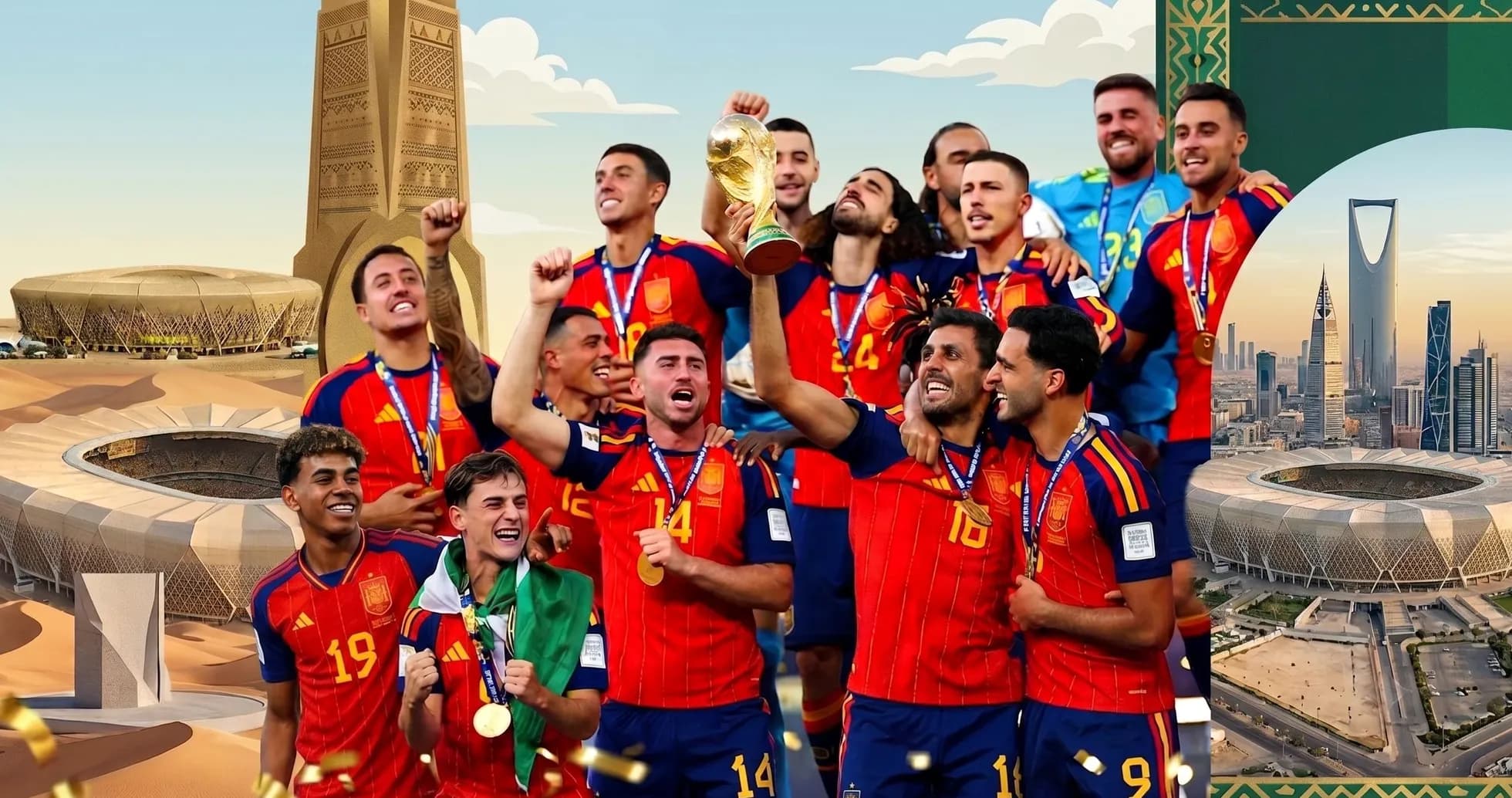
Two summers ago, the Saudi Roshn League could point proudly at the winners’ podium. When Spain ended their long wait for a European crown at Euro 2024, two of the league’s own – Nacho Fernandez of Al-Qadisiyah and Aymeric Laporte of Al-Nassr – stood in the middle of the celebrations.
Fast forward to 2026, and Spain are world champions again. The Matadors have gone from continental kings to rulers of the planet. Yet this time, the Saudi league is watching from the outside.
Not one member of Luis de la Fuente’s World Cup-winning squad plays in the Roshn League.
From shared glory to distant admiration
The contrast is stark. In 2024, Saudi clubs could hang banners and cut highlight reels featuring their own European champions. Now, as Spain lift the World Cup after edging Argentina with a single, decisive strike in the final, the Roshn League’s role is reduced to a series of near-misses and what-ifs.
Spain’s squad in North America was a machine: tactical control, defensive authority, and a ruthless efficiency in key moments. It was also packed with players who had, at various points, been linked with moves to Saudi Arabia. None of those deals materialised. None of those players now wear Saudi colours.
The most glaring case sits right at the heart of Spain’s triumph.
Aymeric Laporte, once the defensive pillar Al-Nassr thought they had secured for the long term, is now a world champion again – but as an Athletic Bilbao player. Just a season after leaving Saudi Arabia, he anchored Spain’s back line alongside Pau Cubarsi, forming a barrier that opponents rarely breached and driving De la Fuente’s side all the way to the title.
For Al-Nassr, the timing could hardly have been more painful.
Laporte’s spell in Riyadh fizzled out under a cloud. Italian coach Stefano Pioli sanctioned the defender, banished him to train alone, and excluded him from the final matches of the season. The mood at the club, Laporte later admitted, had become “difficult”, with constant changes in management and coaching staff unsettling the dressing room. A year later, he is parading the World Cup trophy in Spanish red, not yellow and blue.
He is not alone. Across Spain’s squad, several names had appeared on Roshn League wish lists, only for negotiations to stall or proposals to collapse at the last hurdle. Had even a couple of those transfers gone through, Saudi clubs would now be boasting about housing freshly crowned world champions.
Instead, the league is left with a different kind of story: 49 Roshn League players at the World Cup, but not a single one in the team that climbed to the very top.
The near-miss era
Those failed moves now take on a different shade. The “final step” in negotiations – the last phone call, the final contract tweak, the player’s hesitation over a new league – proved decisive. It is that thin line which separated Saudi clubs from the right to say: a player under our roof just became a world champion.
The World Cup winners’ dressing room is full of players who flirted with the idea of a Saudi move. The Roshn League had the money, the ambition, and the platform. What it did not get was the signature.
Yet while the champions slipped through their fingers, the tournament still delivered something substantial for Saudi clubs – both in prestige and in hard cash.
Counting the World Cup dividends
On the balance sheet, the World Cup was a lucrative venture for the Roshn League. According to French newspaper L’Equipe, FIFA’s club benefits programme paid out 4,300 euros per day for every player involved in the tournament, from 1 June to 19 July 2026. The total pot: 305.3 million euros.
In that race, Saudi clubs held their own.
Al-Hilal led the way, sending more players to the World Cup than any other Saudi side: 12 in total. That alone guaranteed a healthy slice of FIFA’s compensation money. On the pitch, their full-back Theo Hernandez stayed with France all the way to the third-place match. He missed out on the bronze medal, but his deep run extended Al-Hilal’s earnings and kept their badge visible at the business end of the competition.
Just behind them, Al-Ahli and Al-Nassr shared second place among Saudi clubs with nine World Cup representatives each. Al-Ahli had the added satisfaction of seeing Ivan Toney help England secure a historic bronze. The striker’s contribution to Gareth Southgate’s side will echo back in Jeddah when he returns with a medal in his luggage and a heightened profile.
Money, though, was only part of the reward.
Al-Qadsiah, who once basked in Nacho Fernandez’s Euro 2024 glory, sent six players to this World Cup. Their Mexican forward Julian Quinones lit up the tournament: four goals and a decisive assist in just five matches. Performances like that do more than boost a club’s accounts. They change how a player is viewed, how a club is perceived, how a league is judged.
Prestige without the crown
So the Roshn League exits this World Cup with an odd mix of pride and frustration.
Pride, because 49 of its players were on the biggest stage of all, some of them starring, some of them returning with medals, all of them carrying the league’s name into living rooms around the world.
Frustration, because when Spain lifted the trophy, none of the men in red had a Saudi club on their résumé.
The global shop window has done its job. The question now is whether Saudi clubs can turn that exposure, and the World Cup windfall, into something more tangible before the next major tournament kicks off – or whether the story of near-misses and almost-signings will repeat itself when the next generation of world champions is crowned.
Related News
UFC 332 Preview: Natalia Silva vs. Wang Cong Fight Card, Odds, Start Time, and Details
Andy Roddick Responds to Andre Agassi’s Comments on Alexander Zverev at the Laver Cup
Knicks Prepare for Flexible Roles in Title Defense
Rui Hachimura Swaps Lakers Fans to Clippers in Surprising Jersey Exchange

Who Will Be the NBA's Next First-Time All-Stars? Top Picks and Long Shots for 2027
How Strong Is Your Team at Home? Check Out the 2026 Brasileirão Home Standings