
Spain's Journey: From Entitlement to Confidence Ahead of World Cup
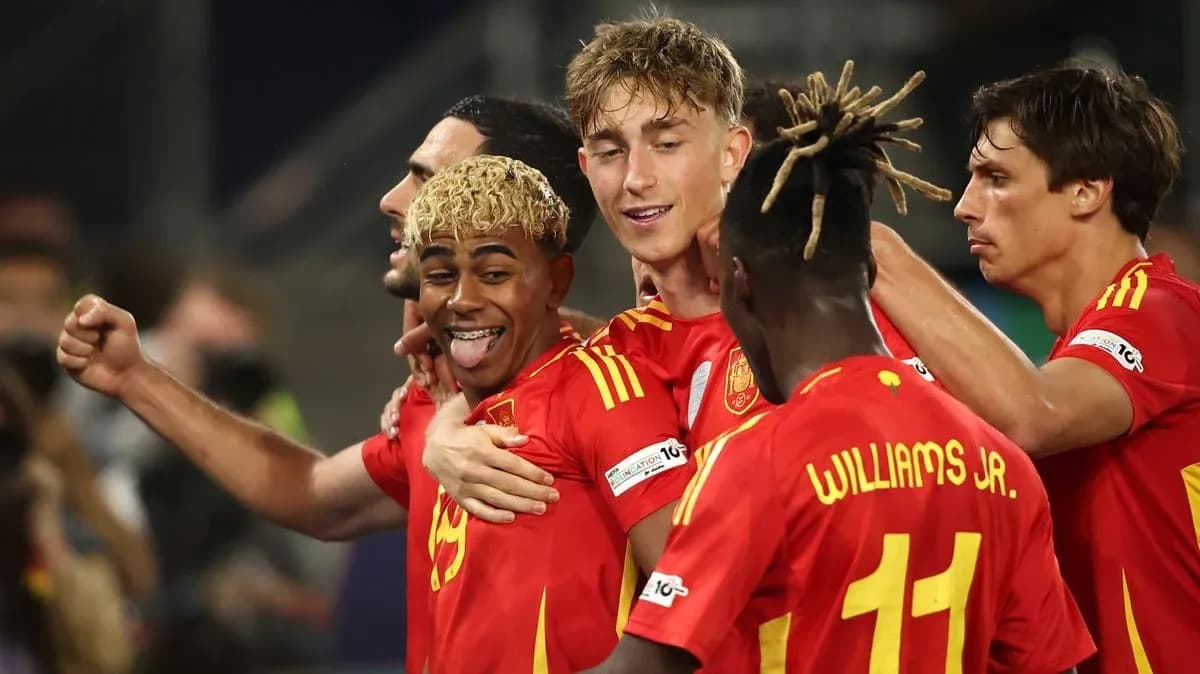
There was a time when Spain walked into every tournament as if the trophy already had their name etched on it. From 2008 to 2012, La Roja didn’t just win; they rewrote the sport. Euro, World Cup, Euro. A dynasty of dizzying dominance that left everyone else chasing shadows and asking the same question: how do you beat perfection?
Then it collapsed. Hard.
The fall from that golden era dragged Spain through a decade of false dawns and painful resets. World Cup failures, European disappointments, managers in and out, and a fanbase forced to swallow the idea that the country of tiki-taka might just be… ordinary again.
Heading into the 2026 World Cup, the mood could not be more different. This is not swagger. It’s not arrogance. It’s something far more dangerous: calm, calculated belief.
They have reason.
Fresh from ripping through Euro 2024 – Croatia, Italy, Germany, France, England all brushed aside – Luis de la Fuente’s side arrive in North America with the assurance of a team that knows exactly what it is. No identity crisis, no tactical confusion, no generational civil war. Just a “beautifully structured” machine, as Spanish-American journalist and ITV World Cup presenter Semra Hunter puts it, tuned for another deep run on the biggest stage of all.
From Spoiled to Steeled
The old Spain lived under a suffocating ultimatum: win or you’re a disgrace. That weight is gone. The relationship between the stands and the dressing room has changed.
“I don't think it's that extreme anymore,” Hunter says of the once-toxic ‘win or bust’ culture. Fans, she argues, have finally understood how absurdly spoiled they were between 2008 and 2012. Back then, there was a sense of invincibility, a belief that Spain were untouchable. When that illusion shattered after 2012, the crash was brutal.
The scepticism peaked before Euro 2024. De la Fuente arrived under a storm cloud. “Going into the Euros, fans were super critical of Luis de la Fuente. There was almost no hope,” Hunter recalls. That doubt, though, lit a fire. The players walked into Germany with a chip on their shoulder and left with the trophy, having been “consistently the best team”.
Now the dynamic is healthier. The public trusts this side again, but the demand has softened. It’s no longer “win it or you’re failures”. It’s: we believe in you, now show us how far you can go.
The Wingers Spain Can’t Afford to Lose
To go all the way this summer, Spain need their two most electric weapons fully charged. Right now, that’s the one dark cloud over camp.
Lamine Yamal and Nico Williams are not just exciting wide men; they’re two of the most unique wingers in world football. Both are nursing hamstring issues. Both are central to Spain’s ceiling.
Yamal, still only 18, suffered his injury in April. He is expected to make the World Cup, but no one can say what version of him will turn up on opening day. Hunter is in no doubt about his importance.
“They are two of the most special, unique wingers in world football at the moment and they give Spain an edge they wouldn't have without them,” she says. Yamal, in particular, brings chaos. “Lamine Yamal provides so much unpredictability; he's a destabilising force. We've even seen him starting to evolve into the Messi role a little bit, coming more inside. He's capable of conjuring up a moment of brilliance when the going gets tough.”
On the opposite flank, Williams was arguably Spain’s standout performer at Euro 2024 before a hamstring problem in May. The diagnosis is more reassuring. “Thankfully, that one doesn't seem to be as bad, and he should be back to fitness to start training,” Hunter notes.
Spain can function without them. The structure is strong enough. But can they terrify elite opponents without both at full tilt? That’s another question. “Spain can win without them because of the team's structure, but they really need both at full tilt to go all the way,” Hunter insists.
The title picture might hinge on two hamstrings.
Midfield: Where Spain Still Live Like Royalty
If there is one area where Spain still look like the old empire, it’s the middle of the pitch. Rodri, Pedri, Gavi, Dani Olmo, Martin Zubimendi, Mikel Merino, Fabian Ruiz. It’s not a depth chart; it’s a luxury problem.
Hunter is clear: two names are inked in, everyone else fits around them.
“As long as Rodri and Pedri are fit and firing, they are non-negotiable starters,” she says. Rodri is the metronome and the shield, the Manchester City brain who dictates everything. Pedri brings the silk and imagination between the lines, the man who makes the geometry work.
Beyond them, the options shift depending on the opponent and the game state. “Gavi provides more of the bite, the aggression, and the physicality. Dani Olmo is someone who can break through the lines, score goals, and practically play as a forward.”
Spain have not escaped this World Cup build-up unscathed, though. Barcelona’s Fermin Lopez, who delivered a staggering 30 goal contributions this season, has been ruled out with a broken foot after surgery. “Fermin Lopez is a big loss. He's somebody who probably could have been a breakout player for Spain, but he underwent surgery and won't make it in time,” Hunter says.
Yet even that setback barely dents the options. Versatility is baked into the Spanish game. “Luckily, Spanish players are so versatile. Even with Martin Zubimendi acting as a direct, like-for-like backup for Rodri, Spain is completely spoiled for choice.”
The midfield is not just strong. It’s an ecosystem.
The Old Wound Up Front
For all the elegance in midfield, Spain’s most familiar flaw remains glaring. The country that mass-produces playmakers still can’t seem to churn out a ruthless, old-school No. 9.
“Our biggest weakness is so obvious for me - we haven't had a proper, lethal 'fox in the box' striker who can put balls away first touch since the days of David Villa and Fernando Torres,” Hunter admits. It’s not a dig at anyone; it’s a structural reality. “No disrespect to Alvaro Morata but Spain just doesn't produce that kind of player. It's all about midfielders.”
Real Sociedad’s Mikel Oyarzabal, the man who scored the winner against England in the Euro 2024 final, is expected to lead the line. He is intelligent, technically sharp, and tactically disciplined. He will knit play, press, combine.
What he won’t do is terrify centre-backs in the way Spain’s midfielders do.
That’s the paradox of this Spain: so much control, so much craft, and yet still searching for that one cold-blooded finisher who turns dominance into inevitability.
A Nation of Whiteboard Romantics
The reason Spain can survive without that striker archetype lies in something deeper than any single generation of players. Football is not just a game in Spain; it’s a language.
“In Spain, football is a language,” Hunter explains. “From a very young age, players learn about tactics. Everybody fancies themselves a football philosopher in Spain, really. There's so much romance about it.”
This is the soil that produces Pep Guardiola, Mikel Arteta, Unai Emery, Xabi Alonso, Andoni Iraola. When they cross into the Premier League, they don’t just bring systems; they bring an obsession. “When Spanish managers go to the Premier League, they bring that tactical obsession with them. Players like Guardiola and Xabi Alonso were already managers on the pitch when they played.”
It’s a culture that prizes the collective. “They focus on the collective, on being collaborative, on the whole being more important than the individual. They're very humble, they're hardworking people. And I think that is reflected in their management style - and the players' playing style too.”
This World Cup squad is another expression of that philosophy: less about superstars, more about the machine.
The Road Through North America
On paper, Spain’s group offers a clear path. Cape Verde, Saudi Arabia and Uruguay stand between them and the knockouts.
“They should get through relatively comfortably,” Hunter says. Cape Verde are debutants, a great story but untested at this altitude. Saudi Arabia are organised and disciplined, but Spain’s technical superiority should tell.
Uruguay are different. “Uruguay will be the biggest test. They are intense, aggressive, streetwise, and technically more talented than people give them credit for. If they want to rough up Spain, they certainly can.”
That game will be a temperature check. Can this Spain handle a scrap as well as a chess match?
Hunter expects them not just to cope, but to set the tone for the rest of the tournament. “I see them getting seven to nine points, topping the group and advancing. Quite honestly, I think they will make it all the way to the final.”
Then she pushes all her chips in.
“I think it's going to be Spain to win it.”
From entitlement to humility, from collapse to reconstruction, Spain arrive at this World Cup not as the loudest team in the room, but as perhaps the most complete. If the wingers heal, if the midfield hums, if the old striker wound doesn’t reopen at the worst possible moment, La Roja might be about to start another era – this time with both feet firmly on the ground.
Related News

Wilfred Ndidi’s Marriage Reportedly Ends as He Enters New Relationship

Cristiano Ronaldo's Top 5 Most Valuable Cars in His Extraordinary Collection
Ben Whittaker’s Challenge to Prove Eddie Hearn’s Bold British Boxing Bet
Peter Handscomb on the Challenge of Facing Indian Bowlers
How to Watch UFC 332: Silva vs. Wang Live on CBS and Paramount+ This Saturday
Raul Rosas Jr. Shares His Thoughts on the Shocking UFC Vegas 121 Finish Against Raoni Barcelos