
Tampa Bay Rowdies Dominate Sporting JAX in USL League One Cup
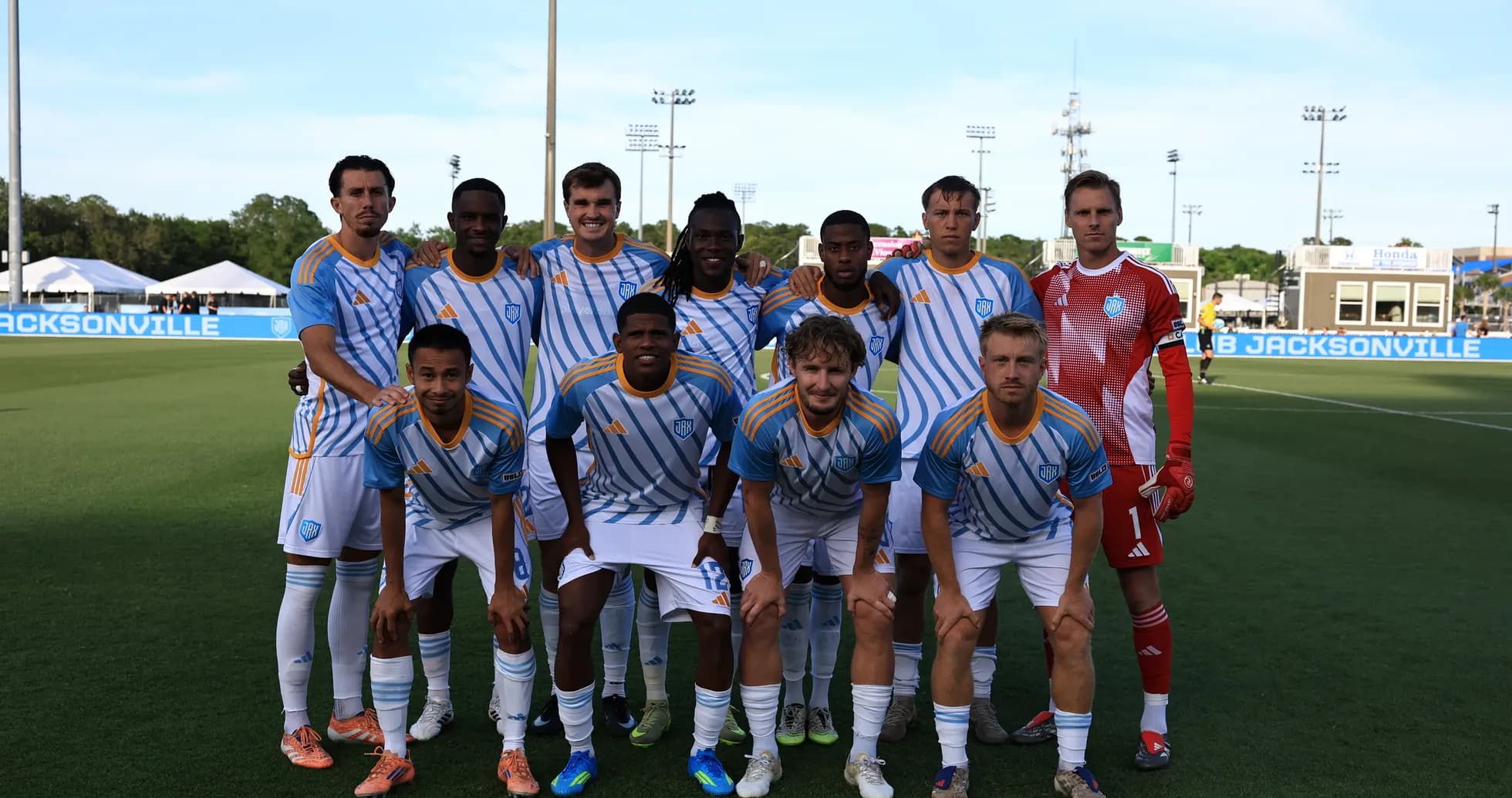
Under the Hodges Stadium lights, the USL League One Cup group stage delivered a sharp lesson in hierarchy. Sporting JAX, still feeling their way through a first cup campaign, ran headlong into a Tampa Bay Rowdies side that arrived with the swagger of group leaders – and left with a 2–0 win that never truly felt in doubt.
I. The Big Picture – contrasting identities in Group 7
Following this result, the table tells a blunt story. Tampa Bay Rowdies sit top of Group 7 on 9 points, with a goal difference of 7, built on 8 goals scored and just 1 conceded overall before this match. They came into Hodges Stadium already in full flow, with three wins from three in the competition and an attacking profile that is as ruthless as it is balanced: on their travels they had scored 6 goals and conceded only 1, averaging 3.0 away goals for and 0.5 against.
Sporting JAX, by contrast, are still constructing their competitive identity. Heading into this game they had played 4 matches overall in the cup, with 1 win, 1 draw and 2 defeats. Their total attacking output was modest – 3 goals in total, with a total average of 0.8 goals for per game – and heavily skewed towards their travels, where they had scored 3 times and averaged 1.5 away goals. At home, they had yet to score in the competition and had already conceded 3, averaging 0.0 goals for and 1.5 against at Hodges Stadium.
The full-time score of 0–2 felt like an extension of those season-long patterns rather than an anomaly: Tampa’s polished, playoff-bound machine versus a Sporting JAX side still paying a learning tax at home.
II. Tactical Voids – where the squads were stretched
The lineups underlined the different stages of development. Tampa Bay arrived with a clearly defined core under Dominic Casciato, even if the official formation was not listed. The spine of J. Waite, L. Wyke, B. Schaefer, M. Schneider and M. Micaletto gave the visitors a veteran feel, with the width and mobility of A. Rodriguez and C. Ostrem flanking a front line led by M. Myers and supported by L. Perez and S. Cruz.
On the bench, Casciato had genuine variety: R. Cicerone and E. Conway as impact forwards, G. Vivi Quesada and Pedro Becker as technical options between the lines, and Y. Leerman to lock things down late. This depth allowed Tampa to change the rhythm of the match without losing structure, an important factor in preserving leads and managing game states.
Sporting JAX’s XI, by comparison, looked more experimental and less settled. J. McGuire in goal sat behind a back line featuring W. Ackwei, A. Gomez, E. Dudley and E. Rito – a group still learning each other’s movements. In midfield, W. Kuzain and B. Soumaoro were tasked with holding the centre while T. Rose and J. Evans offered width and running lanes for E. Jaaskelainen and K. Sadlier.
The bench was thinner in terms of like-for-like quality. C. Olivares and L. Granitur provided attacking alternatives, with J. Rossiter, H. Neville and P. Elias covering defensive and midfield roles. But the sense was of a squad still being rotated and tested rather than one fine-tuned for a must-win group fixture.
Disciplinary trends across the campaign only deepened the tactical void. Sporting JAX’s yellow card distribution has a clear spike: 55.56% of their cautions arrive between 46–60 minutes, with another 22.22% in the 76–90 window. That profile hints at a side that struggles to manage intensity after half-time and again in the closing stretch, often forced into late, tired challenges when chasing games. Tampa Bay’s yellows are more evenly spread – 16.67% in both the 16–30 and 31–45 ranges, then 33.33% from 46–60 and another 33.33% from 76–90 – suggesting a team comfortable in tactical fouling and game management rather than one defending in panic.
III. Key Matchups – Hunter vs Shield, and the Engine Room
Even without explicit goalscoring charts, the “Hunter vs Shield” dynamic was clear. Tampa Bay’s attack, averaging 2.7 goals in total per game and 3.0 away, walked into Hodges Stadium against a Sporting JAX defence that had conceded 5 goals in total with a total average of 1.3 against – and 1.5 against at home. The matchup favoured Tampa before a ball was kicked, and the 0–2 scoreline simply confirmed that imbalance.
In practical terms, the Rowdies’ front unit of M. Myers, S. Cruz and L. Perez, supported by the late-arriving M. Micaletto, had numerical and qualitative advantages between the lines. With Sporting JAX often relying on E. Rito and T. Rose to push forward and provide width, spaces inevitably opened either side of B. Soumaoro and W. Kuzain. Tampa’s ability to find those pockets, then recycle possession through M. Schneider, kept Sporting JAX on the back foot.
The “Engine Room” duel was just as decisive. Tampa’s central trio, anchored by Schneider and Wyke, looked comfortable dictating tempo and breaking Sporting’s rhythm. For the hosts, Kuzain and Soumaoro were often forced into emergency work, which, combined with their overall disciplinary pattern, increased the risk of cards and disrupted any sustained build-up. Without a consistent link between midfield and the front two of Jaaskelainen and Sadlier, Sporting’s attacks became isolated and easy for Schaefer and N. Dossantos to manage.
IV. Statistical Prognosis – why the result fit the numbers
From a statistical perspective, this was always a tall order for Sporting JAX. Heading into this fixture, they had failed to score in 2 matches overall, both at home, and had kept just 1 clean sheet – on their travels. Their biggest home defeat, 0–2, and their biggest away defeat, 2–1, painted a picture of a side that rarely collapses but consistently gives opponents enough chances to take control.
Tampa Bay, meanwhile, had not failed to score in any of their 3 matches, had kept 2 clean sheets in total (one home, one away), and boasted a biggest away win of 1–4. Their defensive average of 0.3 goals against in total, combined with 2.7 goals for, would point any xG model firmly in their favour. Even without explicit Expected Goals data, the underlying shot and scoring patterns implied a likely Tampa win by one or two goals, with a strong probability of a clean sheet.
Following this result, the narrative of Group 7 hardens. Tampa Bay Rowdies look every inch a playoff-bound side, their squad depth and statistical profile aligning with their on-pitch control. Sporting JAX, still searching for their first home goal in the competition and carrying a negative total goal difference built on limited attacking output, are left with a different task: turning these harsh lessons into a clearer tactical identity, especially at Hodges Stadium, where the gap between ambition and execution was laid bare.
Related News
Louisville City Edges Detroit City in Penalty Shootout
Lexington vs Indy Eleven: USL League One Cup Showdown
Detroit City vs Louisville City: USL League One Cup Showdown
Lexington vs Indy Eleven: USL League One Cup Group Stage Preview

Detroit City vs Louisville City Match Preview

Lexington vs Indy Eleven: USL League One Cup Clash Insights