
Todd Boehly's Exit from Chelsea: A Diminished Legacy
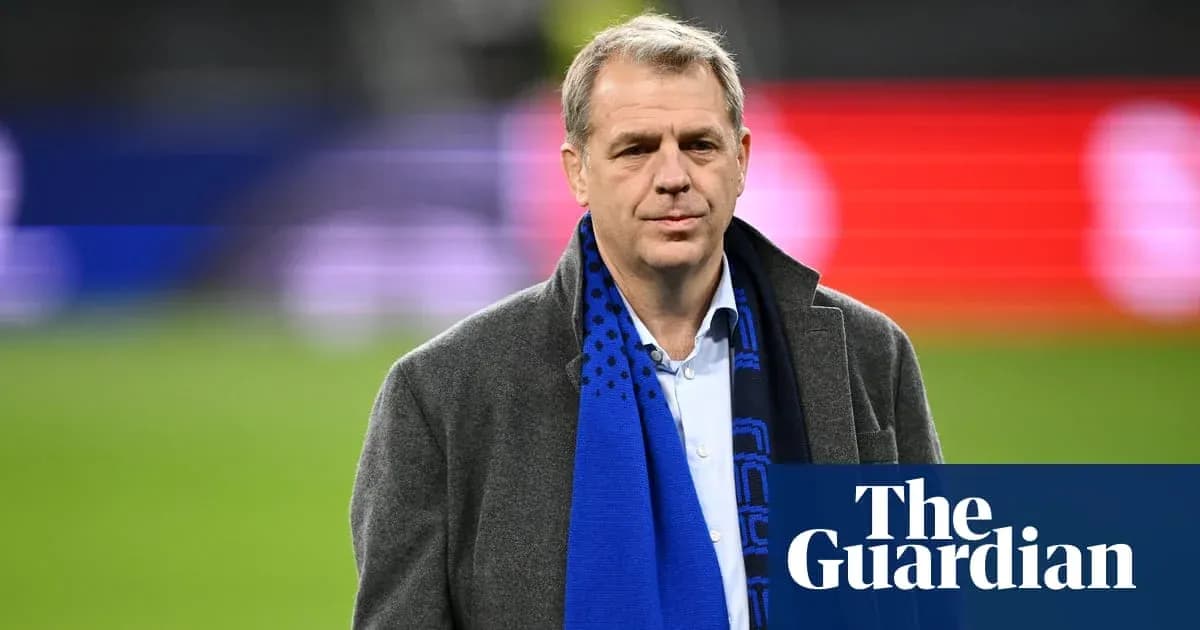
Todd Boehly arrived at Chelsea as the loudest voice in the room. He leaves it as a footnote.
Four years on from fronting the £2.5bn BlueCo takeover from Roman Abramovich, the American has stepped away from the club’s day‑to‑day picture, sold out of his stake and exited football as a diminished figure. Mark Walter has gone with him. The immediate impact at Stamford Bridge? Almost none.
Clearlake Capital, the US private equity firm founded by Behdad Eghbali and José E Feliciano, has long been the real power. It already held the majority and set the direction. Boehly, Walter and the Swiss billionaire Hansjörg Wyss shared a 38.5% stake, but in practical terms they had drifted towards irrelevance well before Wednesday night’s confirmation that Clearlake had bought the pair out and taken full control.
This split has been brewing for two years. Cracks inside the ownership group first surfaced in public when word emerged that Boehly had lost faith in his relationship with Clearlake and wanted a way out or a way up. He explored the latter. People close to him insisted he had investors lined up to back a full takeover. Inside Clearlake, that claim prompted eye‑rolling, not alarm.
Their counter was simple: buy him out. Another idea placed on the table was blunter still – Boehly could step down as chair, accept a reworked governance structure and stay on in a largely ceremonial capacity. No love lost, no disguises.
Nothing moved quickly. A truce followed and Clearlake simply carried on. Eghbali, increasingly visible, increasingly influential, drove the project. Only over the past year have Chelsea supporters really started to fix their anger on Clearlake for the post‑Abramovich turbulence. Feliciano has stayed in the shadows, recently popping up as an investor in the San Diego Padres. Eghbali has not had that luxury. He has been a regular presence and, at times, a lightning rod, targeted with abusive chants earlier this year.
Boehly, once, was the face of all this.
In the early months, Clearlake stepped back and watched as he appointed himself interim sporting director after the departures that followed Abramovich’s exit. He strode into the football operation as if it were an extension of a boardroom. How hard could it be?
Very hard, as it turned out. Agents liked him on a personal level but quietly questioned his grasp of the sport. There was a sense his inexperience could be played. Chelsea duly burned through roughly £300m on a scattergun collection of signings that never cohered. Raheem Sterling’s £325,000‑a‑week deal became the cautionary example of that first window’s excess.
The fallout was brutal. The squad looked bloated and unbalanced. The cost of those mistakes hung over the club, and the chaos deepened when Thomas Tuchel was sacked and replaced by Graham Potter at the start of the 2022‑23 season. Boehly then admitted he had pushed through the signing of Marc Cucurella from Brighton after hearing that Manchester City wanted the Spain left‑back. Copying a rival’s shopping list is not a long‑term recruitment strategy.
His fingers were well and truly burned. He morphed into a punchline: the avatar of Chelsea’s wild spending and muddled thinking. His off‑the‑cuff suggestion at a business conference that the Premier League should stage an All‑Star game did not help. Nor did confidently predicting Chelsea would beat Real Madrid 3-0 before a Champions League quarter-final in 2023. They did not.
Those close to him insist this was never supposed to be permanent. The plan, they say, was always to retreat once specialists were in place. The club’s strategy has undeniably shifted since that first, chaotic window. Chelsea have moved from one interim sporting director to a sprawling structure featuring Paul Winstanley, Laurence Stewart, Sam Jewell, Joe Shields and Dave Fallows. The focus has turned to long, incentivised contracts and the aggressive pursuit of young talent.
Eghbali has been the architect of that vision. The ride has still been rough. Under this ownership, Chelsea have reached the Champions League only once. Managers have spun through the revolving door. Inside Clearlake, the line is that the group has finally absorbed some hard lessons over the past year. Last summer’s business was tighter, more coherent. A serious head coach, Xabi Alonso, arrived. So did more established players.
Boehly, by then, had largely stepped into the background.
Talk of buyouts cooled until this past summer, when events in the United States jolted the situation. Walter, facing financial pressures, began liquidating assets. The clearest sign came when he sold his stake in the LA Lakers. From that point, the endgame at Chelsea was obvious.
Boehly and Walter are understood to have made a modest profit on their investment. Jonathan Goldstein, a key Boehly ally, has also left the board. Wyss, though, has not disappeared; he has rolled his money into a Clearlake vehicle and remains linked to the project.
The fundamentals at Chelsea do not shift with these exits. Day‑to‑day operations stay in the same hands. The leadership and the overarching strategy remain Clearlake’s. The one area where movement could now come is the stadium.
The Guardian revealed in September 2024 that Chelsea were in talks over a potential move from Stamford Bridge to Earls Court. The Earls Court Development Committee has its own plans for the site, which have planning permission but have stalled. Chelsea’s interest has not faded, but nor have they abandoned the idea of somehow navigating the more complex route of redeveloping Stamford Bridge itself.
Whatever route they choose, it will be taken without Boehly. In their parting statement, Eghbali and Feliciano said the American “will always be a part of the Chelsea story and family”.
Given how his reign unfolded, that was a generous reading of his legacy.
Related News
Owen Elding's Long-Awaited Call-Up to Ireland National Team

Nick Woltemade's Juventus Debut: A Turning Point
Todd Boehly's Exit from Chelsea: A Diminished Legacy

Manchester City vs Sunderland: Haaland Aims for Goals as Maresca's Team Dominates

Bournemouth v Liverpool: Goals, Form and Key Matchups
Alexander Isak: Liverpool Transfer Was an Easy Decision