
Tottenham's Draw with Leeds: Missed Chances and VAR Controversies
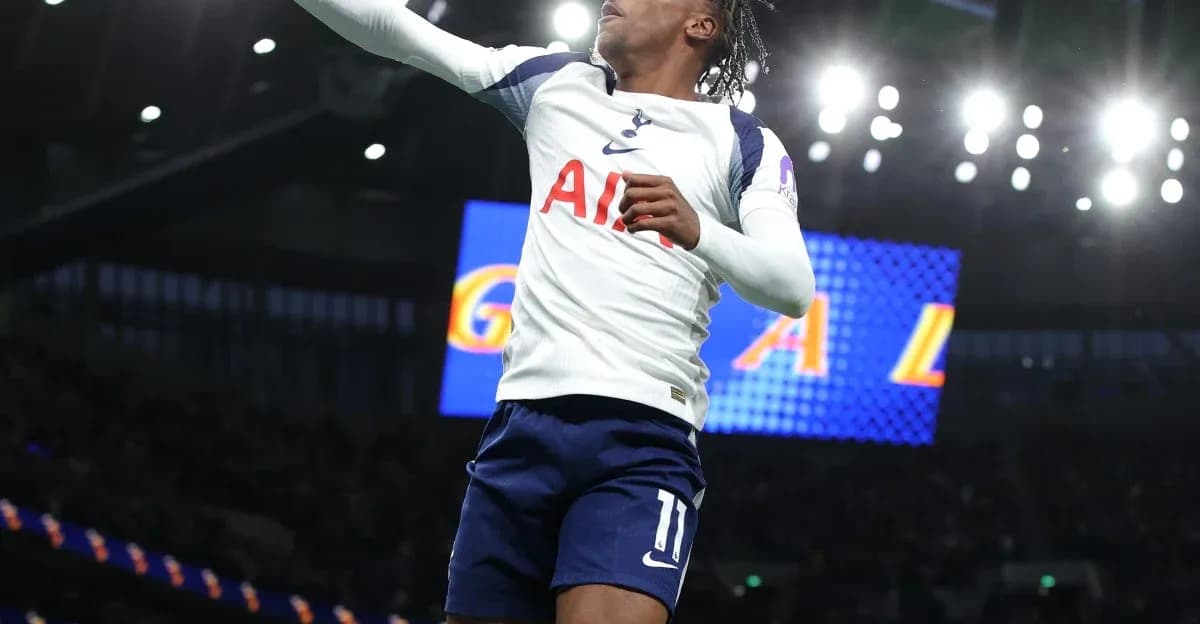
Tottenham feel the sting of a win that slipped away. At home, with the season tightening around them, they had Leeds United where they wanted them. They led. They created. They pressed. And still, they walked off with only a 1-1 draw and a familiar sense of regret.
This wasn’t a collapse. It was something more mundane and, for Spurs, just as maddening: a night when “ball not go goal.”
Tel’s thunderbolt, Tel’s torment
For 70 minutes or so, Mathys Tel looked like the story. And he was.
After a tense, scoreless first half in which Tottenham carved out the better chances but failed to land a punch, Tel produced the kind of moment that usually decides seasons. The ball broke to him, he set himself, and unleashed an outrageous rocket into the top corner. Exquisitely struck, perfectly placed. The sort of shot he attempts often, the sort that rarely finds its way into the postage stamp. This time it did.
The stadium erupted. Spurs had earned it. They had been the more dangerous side, even if the finishing from Randal Kolo Muani and Richarlison lagged far behind the buildup. The xG told its own story — 1.32 to 1.26 by the end — but at that stage it felt like Tottenham had finally tilted the match in their favour.
Then came the twist.
Leeds never went away. Well-organised, sharp, and very much not “on the beach,” they kept asking questions. And when a looping ball dropped into the Tottenham box, Tel tried to answer them at the wrong end.
Back to goal, inside his own area, he chose the spectacular again: an overhead clearance. He never saw Ethan Ampadu arriving. His boot caught the Leeds man in the head. Six long VAR minutes followed, the referee trudging to the monitor as the stadium simmered.
In the modern game, there was only one outcome. Intent doesn’t matter. Contact that high, in that area, is always going to be punished. The penalty stood. Dominic Calvert-Lewin stepped up and buried it. 1-1, and all of Tel’s earlier heroics suddenly felt fragile.
Unfortunate? Absolutely. But by the letter, and the spirit, it was the correct call.
Waste in front of goal
Tottenham will look back on the chances that went begging long before the controversy.
An unchanged XI from the win over Villa made sense. That performance had been one of their most coherent of the season. The idea was clear: same team, same intensity, same result.
The start backed that up. Pedro Porro slid a gorgeous ball in behind early on for Richarlison, who burst through only to let a heavy touch kill the move. It set the tone for his night. He never stopped running, never stopped pressing, but in front of goal he was wasteful, repeatedly snatching at moments that demanded composure.
Kolo Muani fared little better. There were flashes — a lovely touch to set up Richarlison for a chance that Pombo blasted over — but his influence faded as the game wore on. Spurs’ best first-half openings came from wide or from quick balls in behind, not from any real fluency through central midfield. The pattern was familiar: promising positions, half-chances, and no reward.
At the other end, Kinsky kept Tottenham alive. One save in particular, a sprawling, desperate stop in the first half, seemed to defy physics. Later, deep into stoppage time, he flung himself at Longstaff’s rocket and clawed away a shot that felt destined to end their season. That intervention, more than anything, preserved the point and, by extension, their advantage in the table.
Tottenham even survived a first-half scare when Leeds had the ball in the net, only for VAR to confirm an offside. Without that flag, they might well have faced another penalty, this time against Danso. The margins were thin all night.
Maddison’s return and a furious finale
If Tel was the central figure, James Maddison’s reappearance brought the emotional surge.
Late on, with the match stretched and the tension rising, Maddison stepped off the bench for his first minutes of the season. Rusty or not, his presence alone changed the mood. He knitted moves together, took the ball in tight spaces, and looked sharper than anyone had a right to expect after such a layoff.
Then came the incident that will dominate Tottenham conversations for days.
Deep into a bloated 13 minutes of stoppage time — a number that baffled just about everyone — Maddison drove into the Leeds box and went down under a challenge. From the stands and on the pitch, it looked nailed on. Spurs players appealed, the crowd roared, but the referee waved it away and VAR stayed silent.
Given the earlier decision against Tel, the contrast burned. The sense of injustice was immediate and raw. The handball call against Micky, given after he’d clearly expected a foul and grabbed the ball, had already stretched patience. The refusal to award Maddison a penalty snapped it.
Tottenham pushed to the end. Joao Palhinha almost slide-tackled the ball into the net in one chaotic scramble, a goal that would have lit up any season. It stayed out. So did everything else.
The table, the tension, and Stamford Bridge
Strip away the emotion and the table offers some comfort. A draw is not a disaster. Spurs remain two points clear of West Ham with two matches left and hold a strong advantage on goal difference.
The equation is simple: match or better West Ham’s result away at Newcastle, and Tottenham stay in front. The nightmare scenario is obvious too — a heavy defeat at Stamford Bridge next week, a West Ham win at St James’ Park, and suddenly that cushion vanishes.
History does not help. Spurs have won at Stamford Bridge in the league just once since 1990. It is a ground that has swallowed their optimism for decades.
This 1-1 against Leeds will not define their season, but it may shape its mood. The performance was not poor. The structure held, the effort was clear, and on another day, the finishing tells a different story.
Instead, they leave with a point, a sense of what might have been, and a trip across London that will test more than just their legs. With everything still in their hands, the question now is simple: can Tottenham turn “ball not go goal” into the ruthless edge that decides a season?
Related News
Carlos Alcaraz Urges an End to Matches Ending in the Early Hours
Carlos Alcaraz Criticizes Late US Open Finish After 3:30 a.m. Match
Jannik Sinner Set for ATP 500 Return in Beijing with Novak Djokovic Also Competing
Meet Iva Jovic: The American Tennis Prospect Making Waves
Flavio Cobolli Shares Insights on Practice Session with Jannik Sinner Ahead of Comeback
Till vs Romero: Fight Details, Undercard, and Viewing Info for This Weekend