
Tuchel’s Balancing Act: England’s World Cup Challenge Amid Transfer Distractions
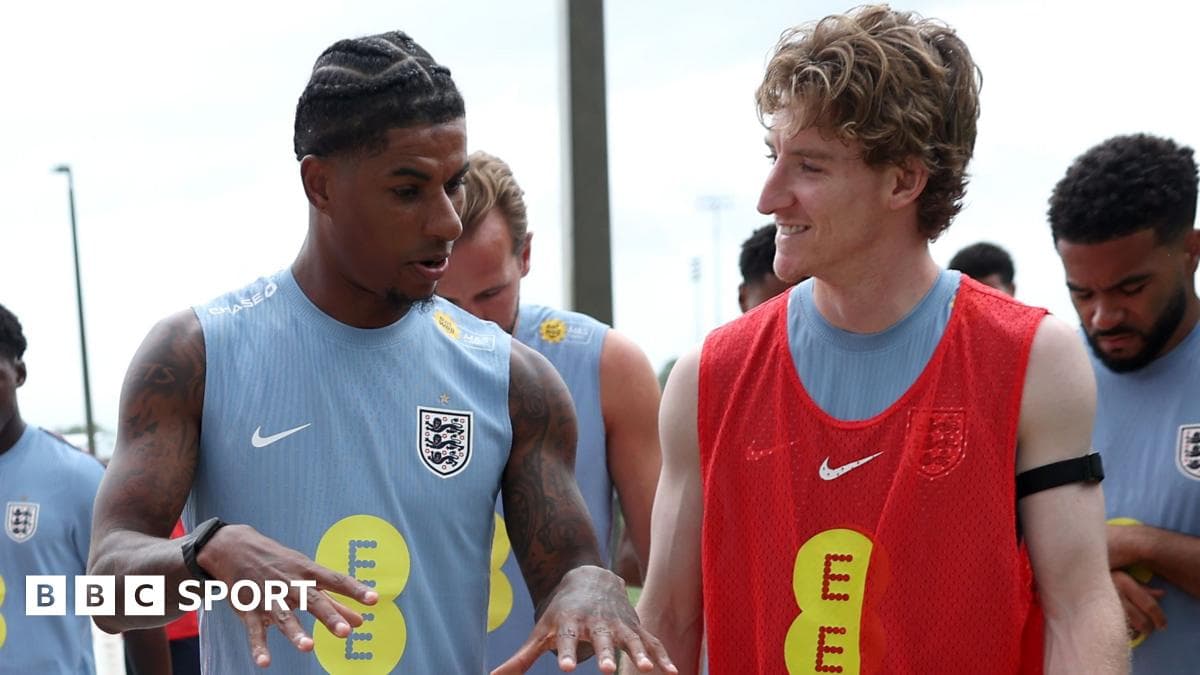
For most players, a World Cup is supposed to shrink the world down to one thing: the shirt on their back and the ball at their feet.
For England this summer, that world is crowded with agents, sporting directors and half-formed promises on the other end of a buzzing phone.
Thomas Tuchel has taken a 26-man squad to the United States to chase the biggest prize in the game. He has also, willingly or not, walked straight into the middle of one of the most volatile transfer windows in recent memory. Contracts, clauses, record fees – they all travel with England to West Palm Beach.
The football is only half the story.
Tuchel’s balancing act
Tuchel knows the reality. He has lived long enough in the sharp end of the club game to understand that you cannot simply tell a modern international to switch off his future.
"If I said to the players not to deal with it now, their telephone will still blow up," he said. The line was delivered with a shrug of experience rather than irritation. This is the job now.
He accepts the distraction because he has no choice. Clubs are circling, agents are calling, coaches are pitching projects. Some of those conversations will be happening between double sessions in the Florida heat.
"I can see the distraction if clubs want to sign you, and sporting directors, agents and coaches are trying to get you on the phone, of course it is a distraction," Tuchel added. Then came the caveat: "It's a reality, though."
His solution is simple in theory, messy in practice. England would always rather players sort their futures before a ball is kicked. Clarity brings calm. But the market rarely bends to a national manager’s timetable.
"It helps to have clarity around the player," Tuchel said. "The best thing we can have is clarity so if anyone has a chance to complete a change of club and a transfer we will not stand in their way. But it has to align, of course, with our schedule and our goals which is to be focused and prepared for matches."
Transfers are fine. Just not the day before a game. And never on a matchday. That is the line he is trying to hold.
Anderson and the weight of a record fee
Nowhere is the collision between club and country more obvious than in the case of Elliot Anderson.
The midfielder arrives in camp on the back of a standout season with Nottingham Forest, his reputation soaring, his future wide open. Both Manchester clubs are tracking him. Manchester City have already tested Forest’s resolve with an opening bid, knocked back earlier in the week. The 23-year-old is believed to favour a move to Etihad Stadium.
If that happens, it will not be a quiet deal. Any agreement could set a new record for a British player, eclipsing the £105m Arsenal paid West Ham for Declan Rice in 2023. That sort of number changes how the world looks at you. It can also change how you look at yourself.
For Tuchel, Anderson is an important piece in his midfield puzzle. For Forest, he is a once-in-a-generation asset. For City and United, he is a statement. All of those agendas converge on one player trying to keep his head clear enough to play a World Cup.
Rogers in demand
Morgan Rogers knows that feeling too. The Aston Villa attacking midfielder has just come through a marathon 2025-26 season: 55 appearances, 14 goals, 12 assists. Those numbers do not stay secret for long.
Arsenal and Manchester United are among the clubs pushing hardest, with Chelsea and Manchester City also heavily linked. It is a who’s who of the Premier League elite, all circling the same 23-year-old talent.
The price reflects the noise. Any club wanting Rogers will have to go beyond £80m, according to BBC Sport’s senior football correspondent Sami Mokbel. That figure hangs in the background every time he pulls on an England training bib.
For some, that sort of attention fuels performances. For others, it tightens the shoulders. England need the former. The market often delivers the latter.
Rashford, Gordon and Barcelona’s deadline
Not everyone has arrived in Florida with questions hanging over them. Anthony Gordon got his move early, swapping Newcastle United for Barcelona last month. He boards the England plane knowing exactly where he will play his club football next season. That certainty is priceless.
Marcus Rashford does not have that luxury.
The 28-year-old is on loan at Barcelona from Manchester United, with a clause that allows the Spanish club to make the move permanent for £26m. The deadline is 15 June – two days before England open their World Cup campaign against Croatia.
Barcelona want him. They also want to renegotiate the terms. That stand-off means there is a very real chance the deadline will pass without agreement, leaving Rashford in limbo as the tournament begins and talks continue around him.
A player who has already lived through the glare of Manchester United’s scrutiny now finds his future being haggled over in Catalonia while he tries to lock in on Croatia’s back line. Another tightrope for Tuchel to manage.
Stones walks away from a dynasty
At the other end of the career arc sits John Stones.
After a decade at Manchester City, the defender is leaving, stepping away from one of the most decorated spells any English player has enjoyed at a single club. Six Premier League titles. A Champions League. Two FA Cups. Five League Cups. The medal collection reads like a museum inventory.
Now he needs a new home.
For club recruiters, a player of that experience on the market is a rare opportunity. For England, it is another senior figure whose phone will not stay quiet. Stones will not be short of offers, and he will have to sift through them while anchoring a defence in the most intense environment international football can offer.
Tuchel insists England will help where they can, as long as business is done "privately, efficiently and quietly". The manager wants Stones’ future sorted, but not at the cost of a single training session’s focus.
This is nothing new for England
If this feels like an unusually noisy build-up, it is worth remembering England have been here before.
Ashley Cole spent the 2006 World Cup with an Arsenal exit saga swirling around him. The eventual swap deal that took him to Chelsea and sent William Gallas the other way dragged on so long that Cole’s medical had to be completed while he was on England duty in Manchester.
In 2010, Joe Cole flew to South Africa without a club after Chelsea released him. He insisted then that he had parked the decision with his agent to focus purely on England. "I just want to get my head down and try and train and play well. My future will sort itself out. It won't distract me," he said.
Sometimes it does work like that. Sometimes it does not.
The World Cup has always doubled as a shop window. James Rodriguez dazzled in 2014 and earned a move to Real Madrid. Enzo Fernandez rode his 2022 performances into a blockbuster transfer to Chelsea. Harry Maguire’s 2018 displays helped convince Manchester United to pay big money for him.
The same stage that elevates can also suffocate. Transfer talk can sharpen a player’s edge or blunt it. England’s history carries examples of both.
This summer, Tuchel must find a way to let his players shine in that window without letting them get lost in their own reflections. The phones will keep ringing. The offers will keep coming.
The question is whether England can keep their eyes fixed on the trophy while the rest of the world tries to buy their future.
Related News

UFC 332 Preview: Natalia Silva vs. Wang Cong Fight Card, Odds, Start Time, and Details
Andy Roddick Responds to Andre Agassi’s Comments on Alexander Zverev at the Laver Cup

Knicks Prepare for Flexible Roles in Title Defense

Rui Hachimura Swaps Lakers Fans to Clippers in Surprising Jersey Exchange

Who Will Be the NBA's Next First-Time All-Stars? Top Picks and Long Shots for 2027

How Strong Is Your Team at Home? Check Out the 2026 Brasileirão Home Standings