
UEFA Super Cup 2026: PSG vs Aston Villa Showdown
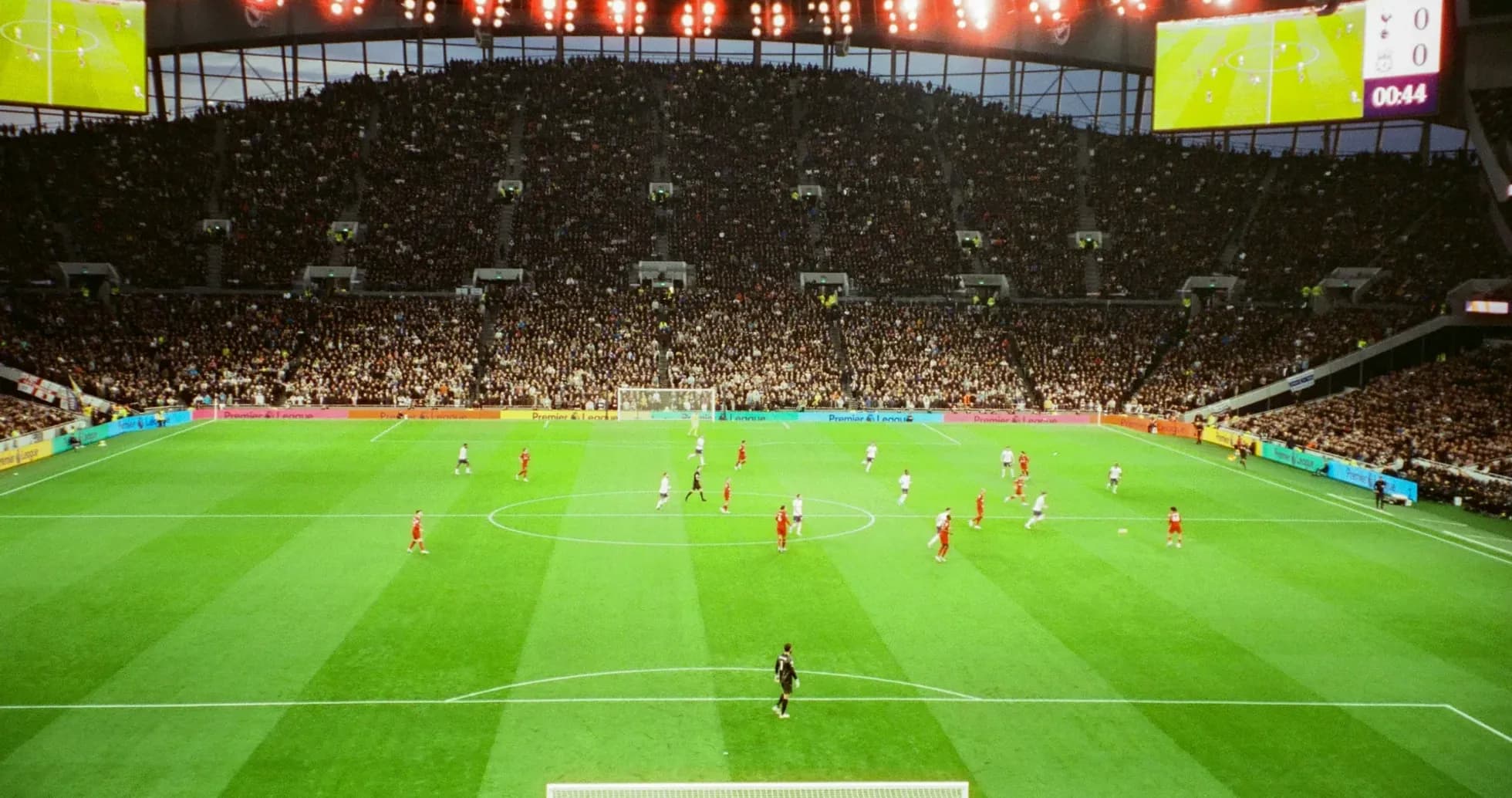
When the dust finally settles on the 2026 World Cup, the calendar leaves little room to breathe. Europe moves on fast. Next stop: the UEFA Super Cup.
In the Austrian suburbs, at Red Bull Arena near Salzburg, Paris Saint-Germain and Aston Villa will collide on Wednesday, Aug. 12 at 3 p.m. ET, a one-off showpiece that doubles as a curtain-raiser for the new European season and a sharp reminder of how much the landscape has shifted.
A very different PSG, a very different Villa
This is not the Super Cup of Lionel Messi and Cristiano Ronaldo. Both men helped define this competition in the past, both now orbit in different footballing universes — Messi with Inter Miami in MLS, Ronaldo with Al-Nassr in the Saudi Pro League. Their absence underlines how much this fixture has changed hands.
PSG arrive as back-to-back Champions League winners, a sentence that would have sounded fanciful not long ago. They retained their crown by edging Arsenal in a penalty shootout, a hardened, streetwise version of a club once accused of shrinking on the biggest nights.
Opposite them stand Aston Villa, whose Europa League triumph over Freiburg was more than just a 3-0 win. It ended a 44-year wait for a major trophy and dragged a proud English club out of its own history lesson and back into the present tense. The Villans didn’t just sneak past the German side; they bested them with authority to earn this shot at continental hardware.
The Super Cup itself has always been a barometer of eras. Conceived in 1973 by a Dutch sportswriter eager to test the great Ajax against the rest of Europe, it began as a two-legged contest before settling into a single, neutral fixture in 1998. The venue now roams across the continent; this time, the Alps provide the backdrop.
Star names missing, questions everywhere
The World Cup’s shadow still hangs over this match. Players are drifting back into club camps at different speeds, and both managers are juggling fitness, fatigue, and paperwork.
Ferran Torres, fresh from scoring Spain’s winning goal in the World Cup final, is reportedly in talks over a move from Barcelona to PSG. Until pen meets paper, though, he remains a spectator. He will not feature.
Achraf Hakimi, Morocco’s captain and one of PSG’s most influential players, is also expected to be absent as he awaits trial in a rape case. That removes a key outlet on the flank and deepens the uncertainty over Luis Enrique’s lineup.
Ousmane Dembélé sits in that grey area in between. The 2025 Ballon d’Or winner, who lit up the World Cup with six goals — including a first-half hat trick against Norway — is unlikely to start, but has not been formally ruled out. His presence, even on the bench, would offer PSG a devastating option if the game opens up. Dembélé’s path from Borussia Dortmund to Barcelona to Paris has been anything but linear, yet he now stands as one of the sport’s most decisive wide forwards.
The leaders in the middle of it all
Without Messi, without Neymar, PSG’s identity has shifted. Marquinhos embodies that change.
He does not carry the global profile of his Brazil teammates Neymar or Vinícius Júnior, yet within the PSG dressing room his voice carries weight. When the club moved on from its galáctico era in 2023, it was Marquinhos who steadied the group and captained them to those consecutive Champions League titles. Signed in 2013 at 19, he has grown up with the project and now fronts it.
Alongside him, a new generation is pushing through. João Neves, the Portuguese midfielder who shared a stage with Ronaldo at this summer’s World Cup, is among the most intriguing. He scored Portugal’s first goal of the tournament inside six minutes of their Group K opener, a flash of timing and nerve that hinted at his ceiling. After helping his country reach the quarterfinals of the European Championship, he joined PSG in 2024 and has quickly become a symbol of their shift towards younger, multi-functional talent.
Villa’s long road back
If PSG’s story is about consolidation at the top, Aston Villa’s is about return.
Their Europa League success has already changed the club’s internal narrative, and several of the protagonists will now test themselves against Europe’s reigning champions.
At the back, Ezri Konsa brings both versatility and momentum. He announced himself on the global stage by scoring in England’s wild 10-goal third-place thriller against France at the World Cup, one of six goals for the Three Lions that night. Since joining Villa from Brentford in 2019, he has grown into a defender capable of anchoring the back line or stepping into wider roles when needed.
Behind him stands a goalkeeper who knows all about living under the spotlight. Emiliano Martínez may never draw the Messi-level attention in his homeland, but his performances demand respect. His 11 saves in the World Cup final defeat to Spain set a record for the showpiece, a staggering workload on the biggest stage. At club level, he has been a cornerstone for Villa since arriving from Arsenal in 2020, often the difference between one point and three.
And then there is Ollie Watkins, the man who has quietly rewritten Villa’s record books. While Harry Kane and Jude Bellingham dominated England’s World Cup headlines, Watkins kept doing what he does best for his club. Since joining in 2020, he has scored 91 Premier League goals — more than any player in Aston Villa’s history. That tally tells its own story: relentless movement, ruthless finishing, and a connection with the Villa Park crowd that has grown season by season.
A trophy, a tone-setter, a test
Strip away the labels and the Super Cup is still only one game. Yet it often reveals more than it should for a single August night.
For PSG, this is a chance to underline that their Champions League dominance is not a fleeting run but the base of a new era, one built on structure, leadership, and rising stars rather than just superstardom. For Aston Villa, it is an opportunity to prove that their Europa League triumph was not a one-off surge, but the start of a sustained presence among Europe’s elite.
Kickoff comes early in the season, but the stakes cut deeper than the calendar suggests. One club defends a dynasty in the making. The other tries to crash the party and stay.
Related News
Carlos Alcaraz Urges an End to Matches Ending in the Early Hours
Carlos Alcaraz Criticizes Late US Open Finish After 3:30 a.m. Match
Jannik Sinner Set for ATP 500 Return in Beijing with Novak Djokovic Also Competing
Meet Iva Jovic: The American Tennis Prospect Making Waves
Flavio Cobolli Shares Insights on Practice Session with Jannik Sinner Ahead of Comeback

Till vs Romero: Fight Details, Undercard, and Viewing Info for This Weekend