
U.S. Women's National Team Faces Tough Test in Brazil
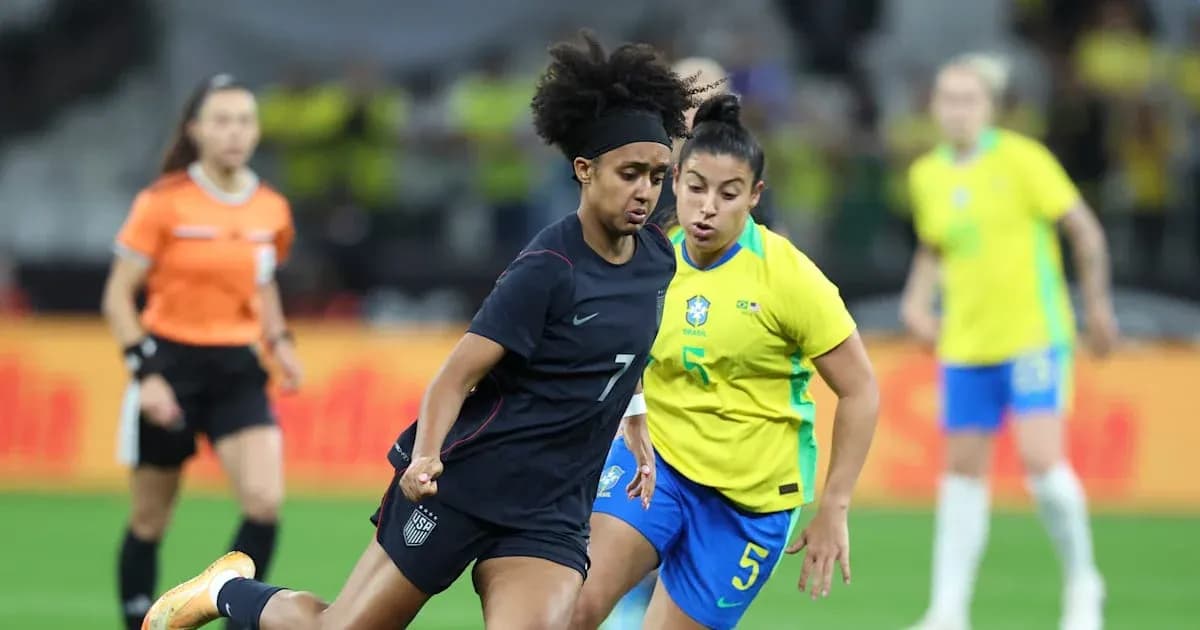
The U.S. women’s national team are used to being the destination, not the visitors. Opponents fly into American cities, play in front of largely partisan crowds, then head home. This June, that comfort disappeared.
Emma Hayes took her new-look side into Brazil, into the noise, into the chaos. A year out from a possible return for the 2027 Women’s World Cup, the U.S. stepped straight into the kind of environment they know they must master if they are to reclaim their place at the top of the women’s game.
They lost. But the story is bigger than the scoreline.
Baptism in Brazil
From the first whistle on Saturday, the U.S. were hit by a wall of sound. Whistles, jeers, roars that rose with every Brazilian tackle and sprint. Ninety minutes of hostility, with no soft edges, no lull.
“It was an amazing atmosphere and it’s one that, as much as I can prepare my team for this, you don’t really know until you experience it,” Hayes said afterward. For many in this young squad, this was a first look at what a truly partisan South American crowd feels like when it senses blood.
On the pitch, Brazil added a different kind of pressure. Physical duels. Second balls. Scrappy, disruptive “chaos ball” that dragged the U.S. away from their rhythm and into a fight. This was not the controlled, possession-heavy home friendly they have grown used to. It was a test of nerve.
Hayes wanted exactly that.
“I am so happy for the experience, because if we want things to be easy, we stay at home and play in LA or somewhere else,” she said. “We don’t want easy.”
Fast start, hard lesson
For a brief moment, it looked like the U.S. might quieten the crowd and seize control. Sophia Wilson struck early, her first goal since returning to the national team, and the visitors were in front.
The silence did not last.
Brazil hit back with a quick-fire double, turning 0-1 into 2-1 inside the opening 15 minutes. The momentum flipped. The noise swelled again. The U.S. were suddenly chasing, not dictating.
From there, Brazil dug in. They defended with edge and discipline, and while Hayes’s side fashioned half-chances and flashes around the box, they rarely carved out the kind of clear, must-score opportunities that change a game like this. The U.S. had the ball in spells, but not the control.
Inside the camp, there was no attempt to pin this on the referee, the crowd, or the conditions. The message was pointed: look inward.
Mentality under fire
Captain Lindsey Heaps cut straight to the heart of it.
“It’s difficult when it’s a game like that, when you’re being thrown to the ground multiple times and calls aren’t going your way,” she said. “But it’s up to us – it’s that mental capacity to stay in a game like that.”
This is where Hayes’s rebuild truly lives. Not in training-ground diagrams, but in how a team responds when the whistle doesn’t go their way, when the tackles bite, when every touch is booed.
“I’m really proud of our team because we stayed level-headed and we still created opportunities,” Heaps added. “But it’s about having that experience to get that goal back and walk away with a result from this kind of game.
“It’s hard but I think that emotional control has gotten so much better throughout this past year.”
Wilson echoed that sense of calm amid the storm. Her goal was a personal milestone, but her focus stayed on the bigger picture.
“We needed to do a better job of controlling the game and keeping that lead, but it was a really good test for us, and we felt what it is like to play here in their home country,” she said. “I think we can take what we need to from this game and the nice part is we get to go again in a few days.”
That “again” comes quickly.
Fortaleza awaits
On Tuesday, the U.S. and Brazil meet for the 45th time. History leans heavily towards the Americans, but the recent trend does not. The U.S. are trying to avoid a third straight defeat to the Brazilians, a run that would have been unthinkable not long ago.
This time, the stage is Fortaleza, another city ready to unsettle, another crowd eager to push the hosts on and rattle the visitors. The U.S. know exactly what is coming now: the whistles, the collisions, the relentless energy from the stands.
Hayes wants her team to lean into it, not flinch from it. With World Cup qualifiers looming in November and the prospect of another South American trip on the horizon next year, these are not just friendlies. They are rehearsals for the kind of nights that define tournaments.
The U.S. asked for discomfort. Brazil are giving it to them. What they do with it on Tuesday will tell plenty about where this new era is really headed.
Related News
UFC 332 Preview: Natalia Silva vs. Wang Cong Fight Card, Odds, Start Time, and Details
Andy Roddick Responds to Andre Agassi’s Comments on Alexander Zverev at the Laver Cup
Knicks Prepare for Flexible Roles in Title Defense
Rui Hachimura Swaps Lakers Fans to Clippers in Surprising Jersey Exchange

Who Will Be the NBA's Next First-Time All-Stars? Top Picks and Long Shots for 2027
How Strong Is Your Team at Home? Check Out the 2026 Brasileirão Home Standings