
USMNT's Growth: McKennie Reflects on Berhalter's Impact
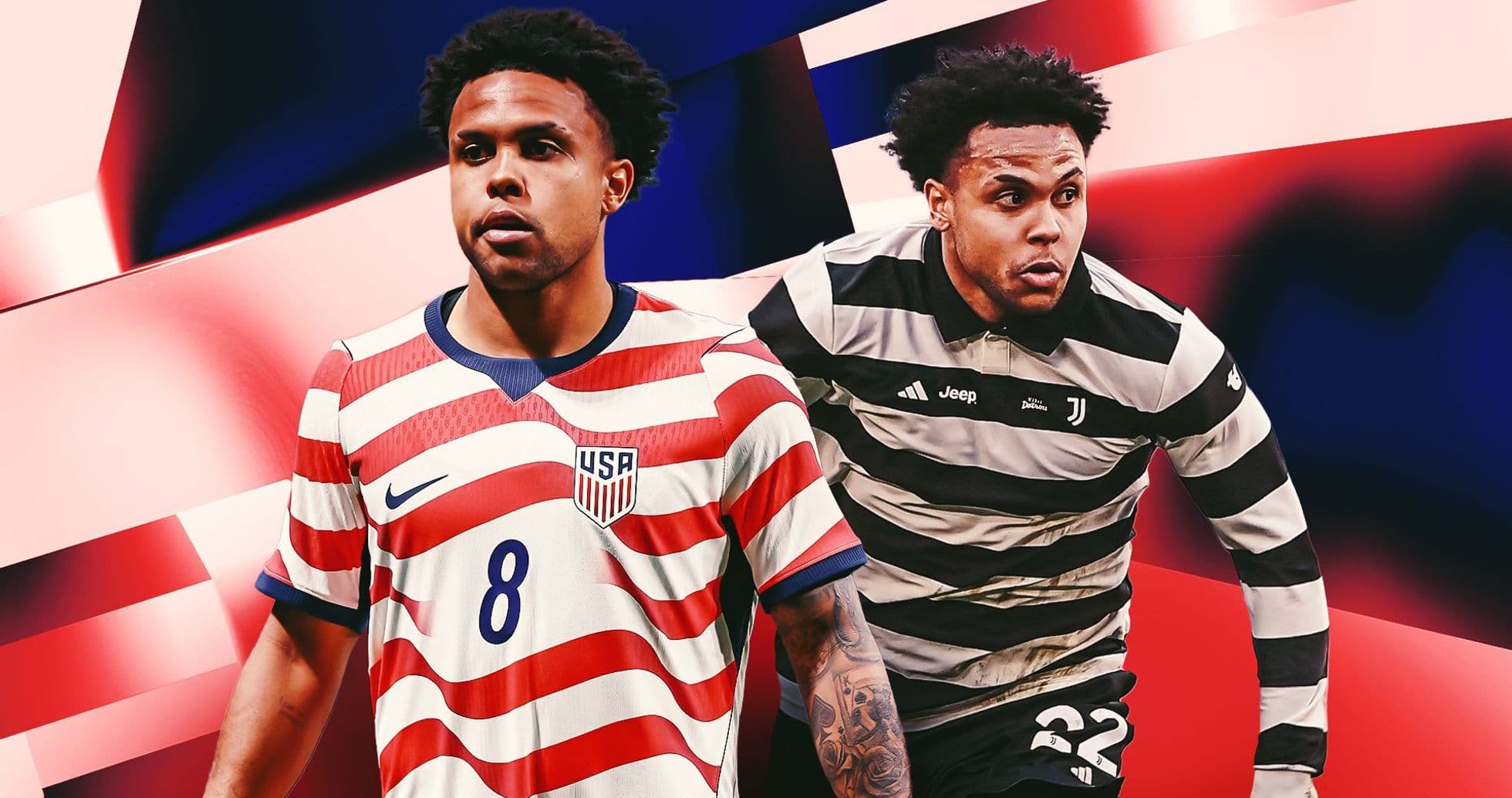
The first thing Weston McKennie wanted at the Chicago Fire training facility wasn’t a ball or a bib. It was a familiar face.
Gregg Berhalter’s.
Sebastian Berhalter stood beside him, the son of the former USMNT coach sharing the podium with one of his dad’s most trusted midfielders. The dynamic said plenty before a word was spoken. The national team may have a new man in charge now, but the old bonds haven’t gone anywhere.
"He's a great person, and I'm not just saying this because [Sebastian is here]," McKennie said with a laugh, talking about the coach who helped shape his international career.
McKennie had barely arrived before he was already talking about catching up with Berhalter. This wasn’t just about tactics or lineups. It was about history.
"I went to him with problems on and off the field. I've cried in front of him," McKennie admitted. "We've had tough times and also amazing times together, and so it'll be really nice to be able to see him around here, hopefully, today, and just to catch up and just go over some memories. I'm sure he'll probably give me some advice leading into the game and into the World Cup, because that's just the type of guy he is."
That’s the thing about this USMNT generation. It didn’t just appear. It was built, nurtured and pushed through its awkward teenage years by a coach asked to pick up the pieces after the 2018 qualifying collapse.
When Gregg Berhalter took over, many of these players were kids. Literally.
"I think one thing we have to remember is when I got them, they were young, they were babies, and they were just learning what it takes to be a professional athlete," he said. "Now I see them, and they're men! They have kids, and they're adults, and they know exactly what it means to maintain themselves as professionals. It's an amazing thing to see.
"I just greeted them now, and was like, 'I can't believe it, they're grown up!'. I think they'll be ready for this moment. The one thing I know about this group is that they step up to these moments."
The emotion is real. Berhalter no longer picks the team, but he still feels part of their story. This summer, he’ll be watching like everyone else, but with the unique vantage point of someone who remembers when these World Cup hopefuls were just prospects trying to figure out what it meant to be a pro.
Pochettino’s Balancing Act
Out on the grass on Friday, Chris Richards joined the warm-up, moving smoothly, no obvious issues. It looked encouraging. It also didn’t change the reality.
He won’t play this weekend. Mauricio Pochettino made that clear.
The defender’s situation annoys the coach, not because of the player, but because of the way the information around his availability kept shifting.
"When we decided the roster, we thought that Chris could play the final of the Conference [League] because we had designed the roster previously," Pochettino said. "There was a line of information where we were thinking that he could play that final against Rayo Vallecano in the Conference League. He was on the bench, if you remember. After, that he could maybe be [there] against Senegal. After, today, in the end, the timelines were lengthening and [it] angers me a bit. I’m not happy because we know Chris Richards is an important player, of course, we all know it, but also when I was saying is based on the information that we had, and sometimes there wasn't clarity.
"In the end, we can hope that Chris can be there. But, in the end, we’re going to find ourselves coming without competing [for a month] and after we have to make the decision if he’s in form to compete or not. There’s not a lot of time in the World Cup."
That last line hangs over everything. There’s never much time in a World Cup. Not for fitness, not for form, not for mistakes.
Across the squad, Pochettino knows he’s managing the usual end-of-season knocks and fatigue. He chuckled when pressed on specifics, but the dilemma is obvious and every coach in his position knows it.
Play your stars and risk a World Cup injury. Rest them and risk losing sharpness.
There’s no safe choice.
"The haters today with social media, they will never agree if you play normally with the players or if you play with the first team for the World Cup," he said. "If nothing happens, no one is going to say anything, good decision, but if something does happen, they say I have no clue!
"It's impossible to know what we need to do. That's why, from the beginning, it is to prepare in the best way that all the players have the possibility to play or to compete."
That’s the tightrope he’ll walk on Saturday: get minutes into legs, avoid disaster, keep rhythm, dodge headlines.
Germany Again, but Different Stakes
This weekend brings another heavyweight test: Germany.
In March, Pochettino had stressed how much he valued these European matchups. They don’t come often for the U.S., and they expose every flaw.
"We wanted to play the best in preparation for this World Cup," he said. "I think all the tests of Portugal or Belgium were amazing because they allowed us to improve and to learn what we don't need to do and how we need to approach it again. I think it's a great opportunity, after Senegal, this is going to be a beautiful team that we have to face tomorrow, and it's about approaching in the best way we can."
Germany aren’t a theoretical benchmark for this group. The U.S. saw them up close in October 2023, when a Christian Pulisic strike briefly gave them hope before a 3-1 defeat in Connecticut. Fourteen of the 26 players in this current squad were involved that day.
McKennie doesn’t dwell on the details of that German lineup, but the memory of the contest lingers.
"I don't really remember Germany's roster for that game, and I don't know how similar it is to this roster," he said, "But I think that game showed, obviously, the quality that they have, but also the quality that we have as well. We played a good game, and we had the potential to win that game as well.
"We go into this game with a lot of players that haven't played against them yet and players that have, so I think the new energy, the new style, the new circumstances in general leading into a World Cup, I think it's going to be a great test for us and I think we go out there with the same mentality that we always go out with."
New coach. New context. Same measuring stick.
McKennie’s Form and Flexibility
If there’s a player who embodies the growth of this group, it’s McKennie.
He arrives from a strong season with Juventus, nine goals and six assists across Serie A and the Champions League, even if the club itself fell just short of the top four and a Champions League place by two points. Personally, the numbers and performances have put him in a good place.
For the U.S., the question isn’t whether he plays. It’s where.
Deeper, dictating tempo and breaking up play? Or higher, crashing the box and joining attacks?
"I think any player can say that coming out of club form and being in good club form does a lot, because it's the confidence that you bring, it's the desire, the want, the everything," McKennie said. "I think the system that our coach has here, the type of player I am is a player that adapts. I'm the type of player who can play many roles, so I'm more of a guy that, wherever he needs me to do, I'll do whatever I'm called upon for.
"I try to step up and just be the best I can for the team. I think that's one thing that this team does have: no one's selfish. Everyone's here for the right reasons. Everyone's here to get a victory for the U.S., so I think it's amazing to be able to come here with confidence, and coming off a great individual season. Obviously, my club team didn't finish where we wanted to finish, but the confidence is still there."
Some teammates arrive in top gear, others dragging patchy club seasons behind them. That’s the reality of any World Cup camp. Form can matter, or vanish in a single 90 minutes.
McKennie’s view is simple: bring the confidence, then let the tournament judge you.
On Friday in Chicago, the scene captured the arc of this U.S. team in one frame. A former coach talking about players who grew from “babies” into men. A current coach wrestling with impossible choices in the shadow of a World Cup. A midfielder in his prime, ready to carry his club form into a stage he once dreamed about.
The generation everyone talked about is no longer coming. It’s here. Now it has to prove it.
Related News
Anthony Joshua Names Murat Gassiev as Next Opponent if He Defeats Tyson Fury
UFC 332: Start Time and Fight Highlights for Natalia Silva vs. Wang Cong
Court McGee Opens Up About Choosing UFC 332 as His Final MMA Fight
WBC Orders Lightweight Title Unification: William Zepeda vs Jadier Herrera
BCCI Pension List: Monthly Payments to Retired Indian Cricketers in 2025
Why Fury vs Joshua Is Set for Cardiff, and Dua Lipa’s Unexpected Role