
Vinícius Júnior: Arsenal's Summer Transfer Saga
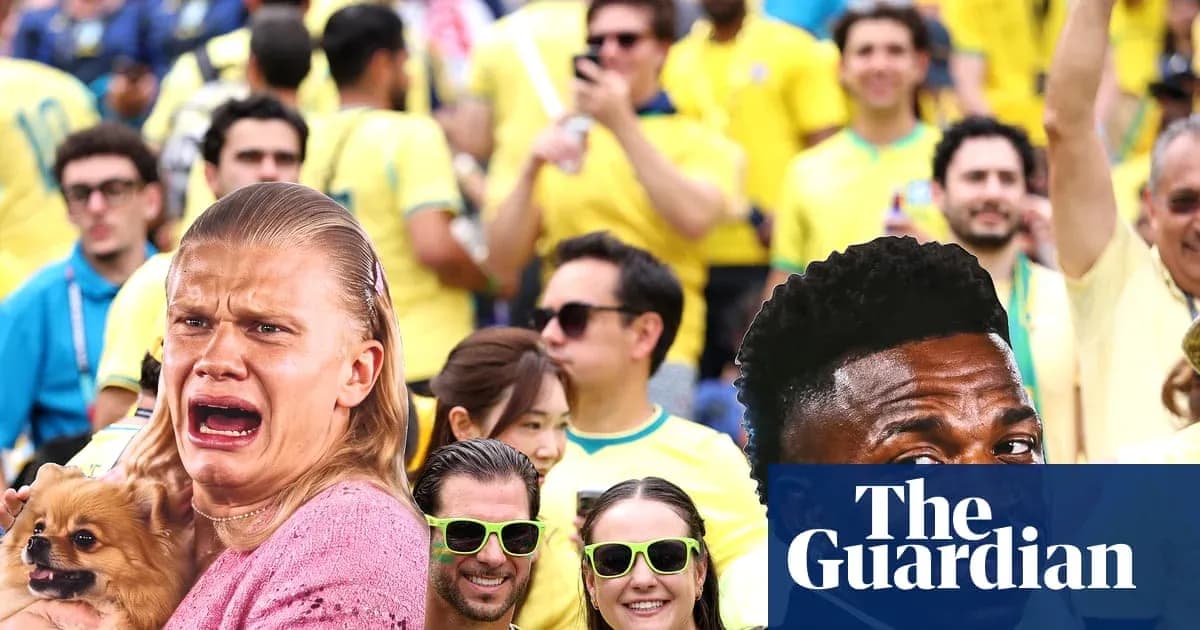
The Geopolitics World Cup has finally packed up its motorcade and left town, taking its motorcades, diplomatic rows and presidential phone calls with it. Into the vacuum marches the old reliable: a Real Madrid transfer saga.
This time the name on everyone’s lips is Vinícius Júnior.
For years, the Brazilian has been cast as the next Ballon d’Or winner-in-waiting, the livewire face of Madrid’s post‑Galáctico era and, increasingly, the player Florentino Pérez cannot afford to lose. Now, in the dog days between international fireworks and the first whistle of 2026‑27, he is being linked with Arsenal. Not in the half-hearted, algorithm-fed way of a random gossip column, but with enough conviction from those plugged into the market to make north London sit up.
Arsenal and Vinícius. On paper, it reads like fan fiction. In the heads of Gunners supporters, it’s already a parade route.
You can almost hear the Emirates roar at the thought: Vinícius isolated on the left, full-back on toast, corners whipped in with venom for Gabriel and William Saliba to attack. Leandro Trossard, the model professional and quietly efficient contributor, suddenly looks like yesterday’s man in that fantasy. The club only just signed Christos Tzolis as the supposed heir to Trossard’s minutes, the Greek winger billed as the next wide project in Mikel Arteta’s carefully curated squad.
Now imagine dropping Vinícius on top of that.
The dream collides quickly with the numbers. Vinícius is reported to earn around £400,000 a week. His current deal runs out next summer. Madrid cannot, and will not, allow an asset of that magnitude to stroll away for free. They have been talking to his camp, trying to stitch together an extension that reflects his status in a squad already groaning with stardust.
This is where Arsenal’s reality bites. The Kroenke ownership has sanctioned heavy spending in recent years, reshaping a drifting squad into a title challenger. Yet there is a ceiling. When the Alexander Isak auction spiralled, Arsenal stepped away and turned to Viktor Gyökeres in 2025 instead. That decision worked well enough, but it also underlined the limits of their appetite for all-out financial warfare with the Premier League’s richest.
Vinícius lives in a different financial postcode. This is not a clever swoop or a market inefficiency. This is a straight fight for one of the world’s most valuable forwards, with Madrid holding the strongest hand.
And Madrid know how to play it. Pérez has long used the Premier League’s wealth as leverage, floating interest, entertaining whispers, nudging stories along just enough to keep everyone honest at the negotiating table. Arsenal’s name in the frame suits him. It sharpens Vinícius’s bargaining position, reminds everyone how coveted he is and keeps the spotlight firmly trained on the Bernabéu.
There is another layer to the plot. Madrid are closing in on Yan Diomande, the Ivorian winger who has become a talking point far beyond the number of people who actually watch RB Leipzig every week. He is the latest wide forward in vogue, the kind of explosive, high‑ceiling talent every superclub wants before his price doubles.
Reports suggest Madrid have beaten PSG to his signature. If that lands, the dominoes start to wobble elsewhere. PSG’s frustration could accelerate Bradley Barcola’s exit, with Liverpool hovering and ready to pounce if the numbers add up. A single move on the Bernabéu flanks could reshape plans in Paris and Merseyside in one stroke.
This is how it always happens. One elite winger on the move, or even just in contract talks, and the market bends around him. Clubs that spent the World Cup insisting they were calm, methodical and patient suddenly find themselves checking the phone every 10 minutes, recalculating budgets, redrawing depth charts.
Football, as ever, drags us back in.
Power Plays and Public Posturing
While Vinícius and Diomande headline the gossip pages, the sport’s political theatre rolls on.
Gianni Infantino has emerged from the GWC with a lengthy open letter and a familiar tone. The Fifa president turned his fire on what he called the “hate and criticism” directed at the tournament, declaring that those behind “pens and papers” and “screens spreading hate and false rumours” had missed the “joy and happiness” of what he described as “the best show in the world”.
He trumpeted 100% safety and security, no violence, no incidents. The words jar against the list of controversies that hung over the competition: US visa restrictions that affected supporters and officials from several countries, concerns around teams from conflict-hit regions, soaring ticket prices that priced out many fans. Then came the most explosive flashpoint – the suspension of an automatic one‑match ban for USA striker Folarin Balogun after US president Donald Trump personally called Infantino.
On the pitch, the spectacle. Off it, a reminder that modern football now lives in the orbit of presidents and power brokers as much as playmakers and coaches.
York City’s Ruthless Reset
Drop down the pyramid and the ruthlessness feels no less stark.
York City should be basking in the glow of a near-perfect season. National League champions. Promotion secured with a record 108 points. A final day that felt scripted by a dramatist, edging out Rochdale in a title race that went to the wire.
Instead, the club has stunned its own fanbase by sacking manager Stuart Maynard less than three weeks before their League Two opener at home to Bristol Rovers. The official line is “a difference in direction and vision for the football club”. The reality looks brutal. Maynard had York moving in one very clear direction: up.
The manner of the change only deepened the sense of chaos. A social media post announced Martin Jol as the new manager, the former Spurs boss apparently parachuted in as the figurehead for the next step. Then came the deletion, the claim of a hacked account, and finally the real appointment: Scott Lindsey, who impressed at Crawley and had a spell at MK Dons.
Lindsey inherits a club that has just set the bar at 108 points. The implication is unmissable. Anything less than another surge towards the top will feel like regression. In a division where margins are tight and budgets tighter, York have chosen volatility over continuity.
Managers, Moves and Mixed Messages
Elsewhere, the summer’s subplots keep stacking up.
Andrea Pirlo has slipped out of contention for the Italy job, his sponsorship deal with Russian betting firm Fonbet believed to be at the heart of the decision. Pirlo pushed back, insisting that giving that partnership political weight meant attributing beliefs to him that he had never expressed and that did not belong to him. In the current climate, nuance rarely survives the headlines.
In England, Sunderland are drawing a hard line. Head coach Régis Le Bris has declared Chelsea’s pursuit of Granit Xhaka “closed”, underlining that the captain is not for sale. “He loves Sunderland, he wants to stay in Sunderland, he wants to make the future of Sunderland,” Le Bris said, hammering home the message that this project will not be stripped for parts without a fight.
At Liverpool, Federico Chiesa is trying to reboot. His time under Arne Slot never quite caught fire, and the Italian has been linked with a return to Serie A. For now, he is talking about doing “the best I can to have a chance here” under new boss Andoni Iraola, a coach whose aggressive, front‑foot style should, in theory, suit Chiesa’s direct running. Whether patience lasts on either side of that equation is another question.
Tottenham face their own balancing act. Inter have opened talks over Cristian Romero, a defender whose blend of aggression and quality makes him both invaluable and occasionally combustible. While that plays out, Micky van de Ven is talking up Spurs’ summer business after a 2-0 pre‑season win over Auckland FC, highlighting visible “changes” and a “new ambition” at the club. The message is clear: Spurs want to look like a team on the rise, not one cashing in.
At Chelsea, Xabi Alonso is already feeding the imagination. He has spoken of having a plan for Morgan Rogers and Cole Palmer, hinting that he can “see them linking really well”. For a fanbase desperate to see coherence after years of scattergun recruitment, that kind of clarity from the dugout matters almost as much as any signing.
The GWC, for all its controversies, has left one unambiguously positive number behind: an extra £150m in pub revenue across England and Scotland, according to the British Beer & Pubs Association. Pints pulled, tills ringing, screens packed – a reminder that for all the geopolitics and grandstanding, football’s economic heartbeat still lives in the local.
And then there is Kazuyoshi Miura. At 59, the Japanese legend has scored his first competitive goal in nearly four years, finding the net for Fukushima United in a 7-0 Emperor’s Cup win over Iwaki Furukawa. In a sport increasingly obsessed with the next big thing, Miura’s longevity is a quiet act of defiance.
Memory, Myth and the Next Big Leap
Football’s present never escapes its past.
The death of Kevin Keegan has pulled old stories into the light again. Tales of a tireless young forward at Scunthorpe, ignored by Hull City’s staff despite repeated recommendations from within their own dressing room, only to explode into superstardom at Liverpool. Years later, as manager of Newcastle, Keegan answered a letter from Australia, welcoming an unknown youngster for a spell at the club, sorting his digs, taking him on the first‑team bus to Wembley for the Charity Shield, Alan Shearer handing over his match boots. The game’s harshness and its generosity, wrapped into one life.
Elsewhere, the grind continues. Wigan Athletic pore over tactics and pre-season detail. Arsenal’s Lotte Wubben-Moy and Georgia Stanway talk about the standards they want to set in the WSL. Supporters of Tottenham Women find solace away from the men’s team’s turbulence. A young Manchester United fan, Joe Ruane, once held up a sign begging Sir Alex Ferguson to “please buy Rooney” and ended up on the Old Trafford pitch when the £27m deal went through, joking with his hero while wearing Alan Smith’s name on his shirt.
Those stories matter because they show what the transfer market can become when the dust settles: not just numbers and leverage, but memories.
For now, though, the noise is back. Vinícius Júnior weighs his options. Real Madrid flex their muscle. Arsenal dare to dream. And somewhere in the middle of all the speculation, the shape of the new season begins to emerge.
Who blinks first – the player chasing his worth, the club guarding its crown jewel, or the challenger trying to crash the party?
Related News
UFC 332 Preview: Natalia Silva vs. Wang Cong Fight Card, Odds, Start Time, and Details
Andy Roddick Responds to Andre Agassi’s Comments on Alexander Zverev at the Laver Cup
Knicks Prepare for Flexible Roles in Title Defense
Rui Hachimura Swaps Lakers Fans to Clippers in Surprising Jersey Exchange

Who Will Be the NBA's Next First-Time All-Stars? Top Picks and Long Shots for 2027

How Strong Is Your Team at Home? Check Out the 2026 Brasileirão Home Standings