
World Cup Highlights: Chaos and Brilliance Unleashed
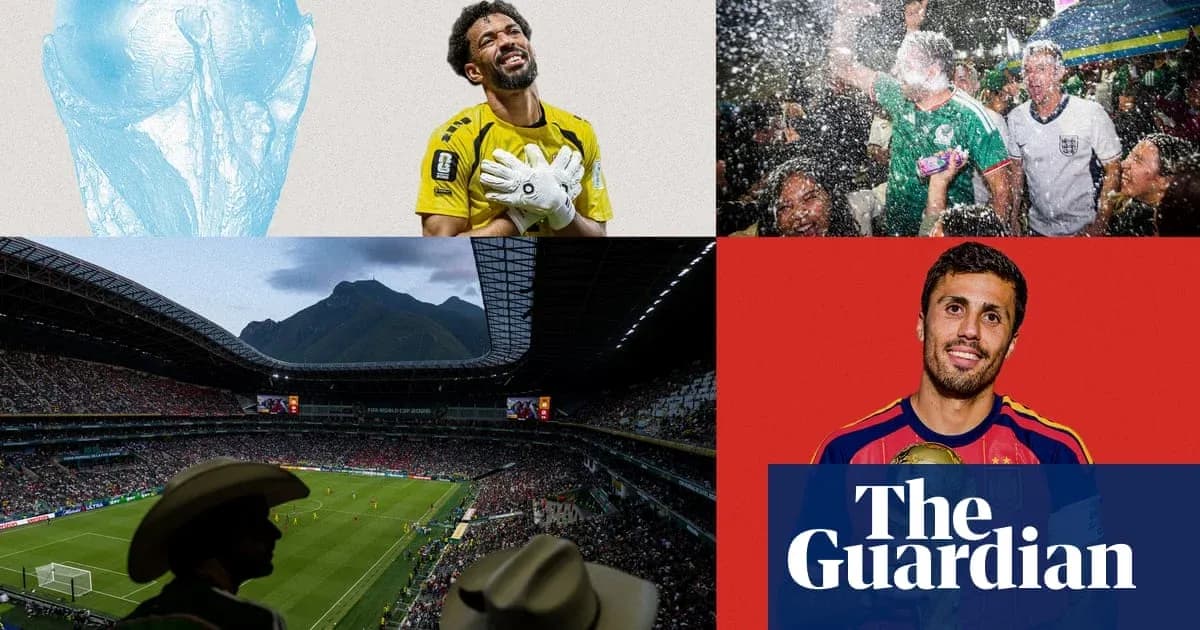
Match of the tournament? Take your pick from a month that never seemed to catch its breath.
Paraguay 1-1 Germany set the tone. Not for goals – there were plenty of higher-scoring romps – but for raw jeopardy. Germany do not lose penalty shootouts. They are built, culturally and tactically, to survive them. Yet in this last‑32 tie they cracked, and they did it in spectacular fashion. The upset landed with the weight of history being briefly suspended.
Algeria 3-3 Austria belonged on another channel, maybe another planet. For days the talk had been of a biscotto, the mutually convenient draw that would ease both teams through. The first half played into that suspicion, the second half toyed with it. Then stoppage time arrived and order disintegrated. Chaos, controversy, six goals and a match that felt less like a World Cup fixture and more like a shared hallucination.
Mexico 2-3 England at the Azteca was different again. This was theatre. The buildup began almost as soon as the draw was made and only intensified as the date drew closer. The stadium delivered on its legend: vast, echoing, unforgiving. Thomas Tuchel’s England absorbed the best Mexico could offer in the opening 45 minutes, hung on, and then found just enough to turn a classic into an away win that may outlive whatever disappointments followed. For those inside that awesome bowl – and even for those watching from afar – it was like drinking pure adrenaline.
France 4-6 England, by contrast, felt almost absurd. A scoreline from a different era, veering between farce and brilliance. Egypt 1-1 Iran in Seattle went the other way: tight, tense, and then utterly frantic. Iran thought they had won it in stoppage time, saw their goal ruled out, hit the woodwork twice in the dying minutes and still went out unbeaten, another story of a team who had everything but a path through the obstacles in front of them.
Argentina specialised in brinkmanship. Their 3-2 win over Egypt in the last 16 looked, for a long time, like the end of the road. Two goals down, the defending champions were thinking about flights home before Lionel Messi dragged them back, orchestrating a comeback that felt both inevitable and scarcely believable. Against Cape Verde they found themselves in another epic, another 3-2, another night when the underdogs refused to accept the script.
Cape Verde themselves supplied one of the tournament’s purest footballing joys in their 2-2 draw with Uruguay in Miami. They were organised, disciplined, and utterly unawed. Their attitude lit up the evening; their football backed it up.
And still, many kept returning to England’s wild ride. Mexico 2-3 England again. England 1-2 Argentina. Games thick with narrative, heavy with history, defined by tiny swings in momentum. For some, the improbable wonder of Argentina v Cape Verde stood apart. For others, the sheer unpredictability of Mexico v England made it the benchmark. Across press boxes and living rooms, one match kept being mentioned with a shrug that said: it’s not really a debate – Argentina 3-2 Cape Verde, Argentina 3-2 Egypt, Mexico 2-3 England. Take your chaos.
Rodri, Vozinha and the cast of stars
Amid all that noise, one player imposed a different kind of control. Rodri was the standout footballer for the standout team. Spain reverted to a possession-heavy model and he sat at its heart, a metronome with bite, setting the tempo, killing counterattacks, turning pressure into calm. He left with the Golden Ball and with the sense that no one else had managed the big moments with such consistency.
Kylian Mbappé scorched his way to the Golden Boot, his numbers swelled by that extraordinary third-place play-off. For long stretches France looked like the most complete side in the competition, with their striker at full tilt, before Spain cut them down in the semi-final.
Messi, Haaland, Jude Bellingham, Michael Olise, Dani Olmo – the marquee names did not hide. Bellingham justified Tuchel’s faith to such an extent that earlier doubts about his inclusion now look faintly ridiculous. Haaland powered Norway to a first-ever quarter-final, married a short Golden Boot chase with a seismic leap in global profile and left Brazil nursing the memory of his precise, low drive from distance that sealed a famous upset.
And then there was Vozinha. Cape Verde’s 40-year-old goalkeeper, without a club and suddenly the beating heart of a debutant nation. He frustrated giants, shut down favourites, and turned his late-career World Cup into something close to a fable. His story resonated because it felt so ordinary in origin and so extraordinary in execution: a middle-aged man finally getting the stage his performances had always merited.
Pau Cubarsí announced himself as Spain’s next defensive cornerstone. Pico Lopes, throwing himself in front of everything for Cape Verde, became a cult hero and perhaps earned the right to dream of one last big move. Wilson Isidor flashed world-class finishing in a Haiti shirt. The tournament did not lack for individual arcs, but when contests teetered on the edge, when one touch could tilt a tie, Rodri remained the player most trusted to get it right.
A goal that stopped the world
If there was one moment that cut through everything – the noise, the travel, the politics – it belonged to Sidny Lopes Cabral.
Cape Verde trailed Argentina deep into extra time of a knockout tie. The champions looked as if they would finally squeeze through. Then the full-back-cum-winger stepped into space, took aim and unleashed a shot that seemed to bend the air itself. Long-range, audacious, perfectly judged, it curled past Emi Martínez and into the far corner. For a second the stadium froze. Then it detonated.
His reaction matched the strike. Hands to his head in disbelief, then a beeline to the stands to find his girlfriend. Around him, his teammates lost their minds. Around the world, neutrals did too.
That goal dominated every conversation, but it did not stand alone. Eldor Shomurodov’s instinctive lob for Uzbekistan against DR Congo, from a tight angle that made no sense, lodged in the memory. Julián Álvarez, quiet for most of the tournament, stepped up in extra time against Switzerland with a vicious, swerving drive from distance that lit up a sweltering Kansas City night.
Kerim Alajbegovic, the 18-year-old from Bosnia and Herzegovina, slalomed through defenders and lashed in from the edge of the box against Qatar, a finish that justified the buzz around him. Johan Manzambi’s run and perfectly weighted pass to set up Breel Embolo against Algeria was a different sort of beauty, all balance and vision.
Wilson Isidor’s thunderbolt for Haiti against Morocco might not have altered the tournament’s destiny, but in terms of pure strike – the connection, the trajectory, the refusal to dip until it kissed the net – it belonged in any era. Erling Haaland’s second against Brazil, arrowed into the bottom-right from outside the area, distilled his tournament into one hit: clinical, powerful, a hint of mischief in the choice of shot.
Some even found themselves haunted by goals that did not count – a disallowed rocket, probably for Uzbekistan, smashed into the top corner and scrubbed from the record but not from the mind.
Still, when people talk about this World Cup’s defining strike, they will come back to Sidny Lopes Cabral. An outrageous goal, in extra time, against Argentina. Football at its most elemental: one swing of a boot, one nation stunned, another reborn.
The moments that stayed
Away from the main stage, quieter scenes took hold.
Eloy Room’s record-breaking performance for Curaçao against Ecuador, a blur of saves in 90 minutes, brought him his own short, sharp fame. At 37, he joked he deserved a statue back home. For a night, he played as if he might get one.
After final whistles, when crowds had thinned and television lights dimmed, the pitches belonged to others. Volunteers, stadium workers, low-level Fifa staff, security guards, local club stalwarts. They kicked balls around, posed for photos, ran carefree laps on the grass they had protected for weeks. It was their World Cup too, just on a different schedule.
The Azteca cast its spell again. Mexico’s win over Ecuador produced a wall of noise that seemed to rattle the concrete. Later, England’s 3-2 victory there delivered a different soundtrack: thunderstorm-delayed kick-off, Bellingham’s surge through midfield, the collective exhaustion at full time. Those early Argentina games, especially Messi’s record-breaking haul against Austria in Dallas, felt like rolling pilgrimages, thousands travelling simply to say they had seen him, once more, on this stage.
There were smaller, stranger vignettes. Senegalese journalists sharing a packet of malted milk biscuits during their anthem. A casual eight-a-side kickabout with Danny Cipriani, whose stories of training with Harry Kane at Tottenham added another layer to an already surreal month. Scotland finally walking out at a World Cup again, to the sound of bagpipes and “Scotland the Brave” in Foxborough, before reality bit.
Vozinha’s mother, against every expectation, made it from Cape Verde to watch her son. Nestory Irankunda revived Tim Cahill’s famous corner-flag celebration for Australia, a symbolic passing of the torch in just 26 minutes of their opener against Turkey. In Kansas City, England’s base, local warmth softened the grind of a long stay, even as public transport – particularly in Florida and around Boston’s choked roads – frayed tempers.
For some, the memories were off the pitch entirely: shouting “Paraguay. Number 10. Cover his mouth. Decision is RED CARD.” in a press box; pancakes at Mile End Deli; a live show in Manhattan punctuated by a gleeful “HELLO NEW YORK!”; standing knee-deep in Monterrey floods waiting for a bus after retrieving an iPad that would be lost again a week later in Houston.
The World Cup does this. It stitches together the ridiculous and the sublime until they feel inseparable.
Hosts under the microscope
On the field, the three hosts delivered mixed fortunes. Off it, they offered a sprawling, sometimes contradictory portrait of North America.
In the United States, the scale was relentless. Huge distances, endless flights, suburban stadiums that often sat miles from city centres. Public transport in some places barely existed. Yet the country leaned into the event. Stadiums filled. Conversations about tactics and lineups broke out in bars and on street corners. For those who had long covered the sport as a niche interest, the surge in attention felt almost disorienting, and deeply welcome.
The US national team played some of the most aesthetically pleasing football the country has produced, only to fall short against Belgium and invite serious questions about player development and coaching direction. The “Balogun situation” – a late reprieve shaped as much by politics as sporting merit – left a sour smell that Fifa’s complicity did nothing to dispel.
Canada embraced its moment. Toronto buzzed for their first World Cup match on home soil, even as Bosnia and Herzegovina held them to a draw. In Vancouver, a 6-0 dismantling of Qatar showcased a side that could be both thrilling and ruthless, with Jesse Marsch doubling as coach and chief hype man. Across the country there was a genuine hunger to be recognised as a real football nation, not just a co-host.
Mexico, steeped in football culture, deserved a bigger share of the spotlight than the tournament’s geography allowed. Inside its stadiums, especially the Azteca, the atmosphere was febrile, fervent, entirely its own. Mexico barnstormed Group A, overpowered an Ecuador team on the rise and then threw everything at England before running out of ideas in the final half-hour. On the streets, hospitality rarely wavered, even when the home side suffered.
Some cities – Vancouver, Seattle, places with downtown grounds and established soccer cultures – felt like natural hosts. Others, such as Dallas and San Francisco, accommodated the circus more than they embraced it. Across six weeks in America, visitors met warmth, curiosity and the occasional expectation that they should feel grateful simply to be there.
The tournament’s sheer scale made it impossible to pin down in one neat phrase. It was fractured and thrilling, exhausting and exhilarating, a World Cup that put the “whirled” into the world game.
And as the lights dim and the caravans move on, one question lingers: after a month of Rodri’s authority, Messi’s defiance, Haaland’s emergence and Sidny Lopes Cabral’s impossible arc, who will dare to follow this?
Related News
UFC 332 Preview: Natalia Silva vs. Wang Cong Fight Card, Odds, Start Time, and Details
Andy Roddick Responds to Andre Agassi’s Comments on Alexander Zverev at the Laver Cup

Knicks Prepare for Flexible Roles in Title Defense
Rui Hachimura Swaps Lakers Fans to Clippers in Surprising Jersey Exchange

Who Will Be the NBA's Next First-Time All-Stars? Top Picks and Long Shots for 2027
How Strong Is Your Team at Home? Check Out the 2026 Brasileirão Home Standings