
Zinedine Zidane Returns as Head Coach of France
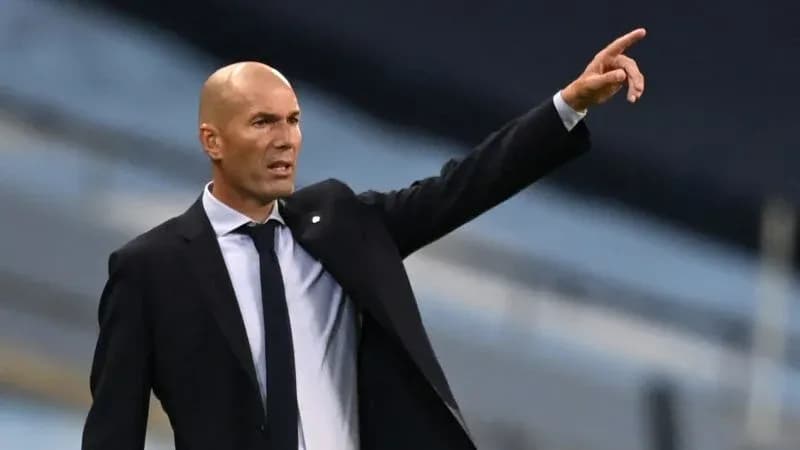
Zinedine Zidane is back where many always felt he belonged – at the heart of French football, this time with a whistle and a notebook instead of the No. 10 shirt.
The French Football Federation confirmed on Tuesday that the 54-year-old has been appointed head coach of France on a four-year deal, succeeding Didier Deschamps after the 2026 World Cup. Deschamps’ long reign ended in disappointment in North America, with Les Bleus knocked out in the semifinals by eventual champions Spain and then beaten by England in the third-place match.
A giant of the game steps into a giant of a job.
From Berlin’s scar to Clairefontaine’s throne
For France, this is not just a change of coach. It is the return of a symbol.
Zidane’s last act in a France shirt remains one of the sport’s most replayed images: the headbutt on Marco Materazzi in the 2006 World Cup final, a red card in Berlin, and a shootout defeat to Italy that left a permanent scar on an otherwise shimmering international career.
Now he comes back not as the flawed genius on the pitch, but as the man trusted to set the tone for a new era.
“I have often said there is nothing greater than the French national team. It is therefore a joy and obviously a great honor to become the coach of France. It is also a responsibility,” Zidane said at his unveiling, before thanking FFF president Philippe Diallo, the Executive Committee and paying tribute to Deschamps’ 14-year tenure. “Needless to say, I have a lot of ambition for the French Team!”
The words were measured. The ambition behind them is not.
Zidane will attempt to emulate his former teammate Deschamps by joining the most exclusive of football clubs: those who have lifted the World Cup both as a player and as a manager.
The hero returns
If there is such a thing as a guaranteed hero’s welcome in football, Zidane will receive it.
He is the man who lit the fuse under France’s golden era. In 1998, in a fevered Paris, he rose twice to meet corners and buried two headers past Brazil in a 3–0 World Cup final win that delivered France’s first star above the crest. Two years later, he was again central as France claimed Euro 2000, becoming the first reigning world champions to then win the European Championship.
Those years turned Les Bleus into a reference point for an entire generation. Zidane did not just win; he did it with a calm, devastating authority that made the extraordinary feel routine.
The end, of course, was anything but routine. That night in Berlin has hovered over his relationship with the national team ever since. This appointment offers a different kind of stage – one where he can shape France’s story rather than be consumed by it.
France fans will not have forgotten the headbutt. They simply believe he can now right the wrongs that followed.
From Madrid’s throne room to the international arena
This is Zidane’s first job in international football. It is not a leap into the unknown, more a step into a role he has been linked with for years.
When he walked away from his second spell at Real Madrid in 2021, the sense was clear: he was waiting. Waiting for Deschamps’ cycle to end. Waiting for France.
He arrives with a club résumé that commands instant respect. At Real Madrid, he presided over a modern dynasty: three consecutive Champions League titles, two La Liga crowns, two Club World Cups. Those numbers are not decoration; they are proof that he can guide elite players through the unique pressure of knockout football and come out the other side with silverware.
He has already shown he can manage egos, expectations and the relentless demand for victory. At Madrid, he handled a dressing room stacked with stars and turned talent into trophies. That experience will be central now. The France job is not about building from scraps. It is about moulding an abundance of riches into a ruthless, coherent unit.
The expectation is blunt: win. And not in the distant future. The next World Cup in 2030 looms large.
A galaxy of attackers, one puzzle
Zidane inherits a squad bursting with attacking options, and that is where the intrigue begins.
Kylian Mbappé remains the centrepiece, a global superstar in his prime. Around him orbit the speed and directness of Ousmane Dembélé, the craft of Michael Olise, the promise of Désiré Doué, the sharpness of Bradley Barcola. On paper, it is an arsenal that should terrify any defence.
On the pitch, France have struggled to find the right balance since lifting the World Cup in 2018. At times they have looked devastating going forward but open behind the ball; at others, solid but strangely muted in attack. The equilibrium has rarely felt stable.
Zidane’s task is to fuse that offensive firepower with the defensive rigidity that defined France at their best under Deschamps. To turn a collection of forwards into a system. To make sure Mbappé is not just the star, but the spearhead of a structure that works around him, not in spite of him.
He did that at Real Madrid with Cristiano Ronaldo and a supporting cast of Galácticos. The shirt is different, the rhythm of international football more fragmented, but the principles carry over: clarity of roles, trust in big players, and an unshakeable belief in the game plan when the stakes are highest.
Knockout instincts for a tournament team
International football is a sprint of moments, not a marathon of 50-game seasons. Zidane’s greatest strength may be that he already understands football in those terms.
His Champions League record with Real Madrid was built on navigating two-legged ties and one-off finals, where a single decision can tilt a season. That experience should serve him well when France reach the sharp end of major tournaments.
He knows how to manage the emotional temperature of a squad in those weeks. When to rotate. When to back experience. When to trust talent. When to shut a game down and when to let it breathe.
The role will be new. The stakes are not.
France, wounded by their 2026 exit and the loss to England in the third-place match, needed a jolt of energy and belief. They have turned to a man whose name is shorthand for both.
Zidane walks into Clairefontaine with a past that needs no introduction and a future that will be judged only by trophies. The question now is simple: can the man who once carried France on his shoulders from the centre circle now lift them again from the touchline, all the way to 2030?
Related News
Wilfred Ndidi’s Marriage Reportedly Ends as He Enters New Relationship
Cristiano Ronaldo's Top 5 Most Valuable Cars in His Extraordinary Collection
Ben Whittaker’s Challenge to Prove Eddie Hearn’s Bold British Boxing Bet
Peter Handscomb on the Challenge of Facing Indian Bowlers
How to Watch UFC 332: Silva vs. Wang Live on CBS and Paramount+ This Saturday
Raul Rosas Jr. Shares His Thoughts on the Shocking UFC Vegas 121 Finish Against Raoni Barcelos