
2026 FIFA World Cup: A Continental Takeover in North America
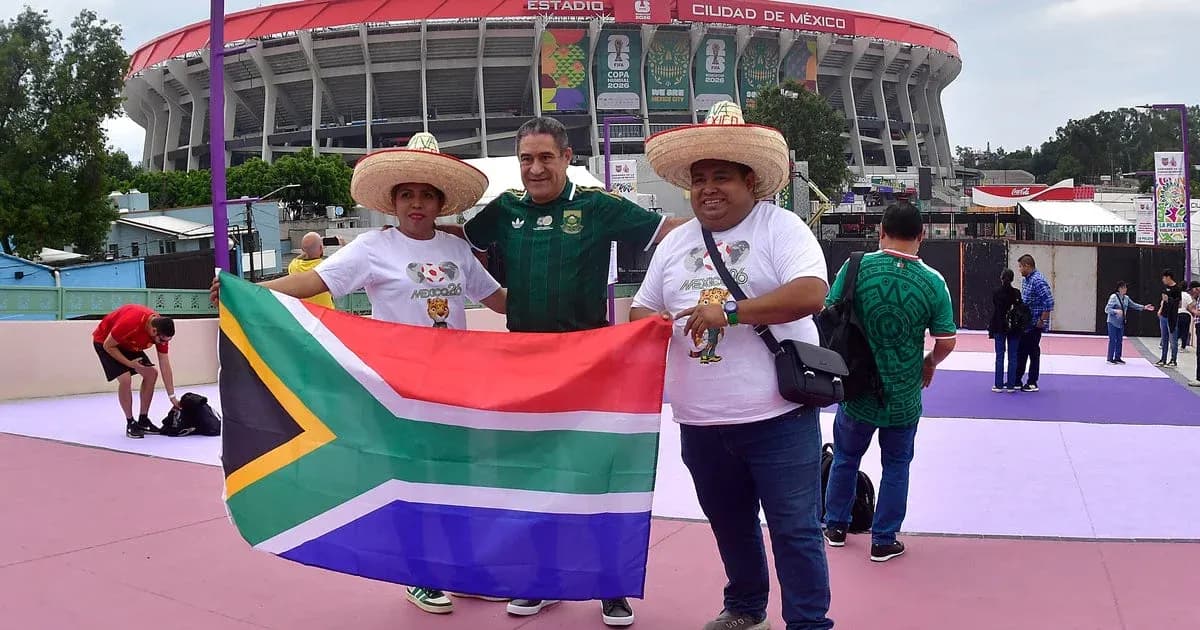
The biggest World Cup ever has finally landed in North America, and it feels less like a tournament and more like a continental takeover.
From Mexico City’s high-altitude haze to the glass-and-steel skyline of Toronto and the sprawl of New York and Los Angeles, 48 national teams are about to stretch the World Cup into something the sport has never quite seen before. Three hosts, 16 stadiums, 39 days. The familiar 32-team format is gone, replaced by a sprawling new field that turns this into football’s version of a marathon.
And it all starts with three opening ceremonies for one World Cup.
Three hosts, three opening acts
Mexico gets the first word.
On Thursday at the Estadio Azteca, one of the sport’s true cathedrals, Mexico and South Africa open Group A at 2 p.m. local time (3 p.m. ET). Before a ball is kicked, Shakira and Burna Boy will step onto the Azteca stage to perform “Dai Dai,” the official song of the 2026 FIFA World Cup. The show starts at 11:30 a.m. local time (1:30 p.m. ET), with a lineup that reads like a Latin American festival poster: Alejandro Fernández, Belinda, Danny Ocean, J Balvin, Lila Downs, Los Ángeles Azules, Maná and Tyla, among others, all named by FIFA.
For Mexico, it’s more than a concert. It’s a statement that the sport’s emotional core still beats loudly in this part of the world.
On Friday, attention jumps north.
Toronto’s BMO Field has been reshaped for the moment, swelling from 28,000 to 45,000 seats to cope with demand. Canada, hosting Bosnia and Herzegovina in its first-ever World Cup match on home soil, will stage its own ceremony 90 minutes before the 3 p.m. ET kickoff. Alanis Morissette, Alessia Cara, Jessie Reyez, Michael Bublé and others will take the stage as the “Great White North” tries to sound like a football nation as loudly as it’s trying to play like one.
Then comes Hollywood.
Also on Friday, in Los Angeles, the United States will roll out its opening ceremony ahead of its Group D clash with Paraguay at SoFi Stadium (6 p.m. local, 9 p.m. ET). Katy Perry, Future, Anitta, LISA, Rema and Tyla will headline a show set for 4:30 p.m. local time (7:30 p.m. ET). It’s big, loud, unmistakably American.
“The lineup of artists reflects the cultural diversity of the United States and the vibrancy of its many diasporas, highlighting the nation's rich influence on music, entertainment and pop culture, while showcasing the power of music to bring people together across the country,” FIFA President Gianni Infantino said.
The football, though, will decide whether the noise is justified.
Mexico–South Africa: a World Cup déjà vu
Once the fireworks clear in Mexico City, the first ball of this World Cup will bring back a familiar pairing.
Mexico and South Africa met on June 11 in the opening match of the 2010 World Cup in Johannesburg. They drew 1-1 that day, Siphiwe Tshabalala’s thunderbolt still etched into tournament lore. Sixteen years later, the date, the fixture and the stakes return. Only the setting has changed.
This time, Mexico has the Azteca behind it. Kickoff is set for 2 p.m. local time (3 p.m. ET), the stadium’s steep stands and thin air once again turning into a weapon.
Later on Thursday, Group A shifts west to Akron Stadium in Zapopan, near Guadalajara, where South Korea face Czechia at 9 p.m. local time (11 p.m. ET). A different style of football, a different climate, but the same unforgiving reality: slip early, and the group can turn on you in an instant.
Friday belongs to the co-hosts.
Canada’s date with Bosnia and Herzegovina at 3 p.m. ET marks a landmark moment: the Canadians playing a World Cup match at home for the first time. For a country that has spent decades on the edge of the global game, it’s a long-awaited arrival.
In Los Angeles, the United States will walk into its first World Cup home match since July 4, 1994, when Brazil ended their run in the Round of 16 with a 1-0 win en route to the title. The echoes of that day linger, but this time the USMNT will do it in new Nike kits that nod to the past, including striping inspired by those 1994 jerseys.
The colors are familiar. The pressure is bigger.
A World Cup under tight watch
The size of this World Cup has forced the United States to think beyond football.
The FBI has deployed tactical teams to a long list of host regions: Atlanta, Boston, Dallas, Houston, Kansas City, Los Angeles, Miami, New York, New Jersey, Philadelphia, the San Francisco Bay Area and Seattle. FBI Director Kash Patel confirmed the mobilization earlier this week, describing the units as crisis response experts brought in to “help support the massive security work involved in protecting players, fans, and visitors.”
In Foxborough, fans heading to Gillette Stadium have already been warned: arrive more than an hour early, or risk missing kickoff while stuck in security lines, according to CBS Boston.
Marlo Graham, the special agent in charge of the FBI’s Atlanta field office, told CBS Atlanta that the scale is large but the approach is familiar. The key difference is the duration. This isn’t a one-off Super Bowl weekend; it’s 39 days of rolling high-alert operations.
“Our tactical teams have been practicing commingled with other tactical teams from other agencies for months leading up to this,” Graham said.
Immigration and Customs Enforcement will also play a role. White House border czar Tom Homan told CBS News that ICE’s “primary focus” at the World Cup will be national security, not immigration enforcement.
All of this comes against the backdrop of a more-than-yearlong effort by the Trump administration to tighten entry into the United States, a policy shift that has hovered over the build-up to the tournament. Those tensions surfaced in stark fashion when Somali referee Omar Abdulkadir Artan, selected to officiate at the World Cup, was denied entry to the U.S. over the weekend. Customs and Border Protection cited “vetting concerns” in a statement Monday. A FIFA spokesperson confirmed the decision but did not disclose details.
The message is clear: this World Cup will be watched on the pitch and scrutinized at the border.
What fans can – and can’t – bring
The stadium experience has its own rules, and FIFA has been forced to adjust on the fly.
The organization’s stadium code of conduct bans nontransparent bags and a wide array of potentially hazardous items: weapons, body protection gear, helmets, umbrellas, strollers and chairs are all off the list. Initially, FIFA also moved to prohibit “bottles, cups, jars, cans or any other form of closed or capped receptacle that may be thrown or cause injury,” along with branded water bottles.
In a World Cup played in the height of summer, that went down badly.
“What next? Suncream banned and fans forced to buy it in stadiums?” the Free Lions, a group of English supporters, wrote on X. “Naturally, the immediate thought from supporters is this is just the latest money-grab.”
The backlash landed quickly. FIFA World Cup 2026 Chief Operating Officer Heimo Schirgi later clarified on social media that spectators in U.S. and Canadian stadiums will be allowed to bring in one soft, plastic, disposable, factory-sealed water bottle up to 20 ounces. Hard reusable bottles remain barred.
Inside the venues, beverages — water, sodas and juices — will be supplied exclusively by long-time FIFA sponsor Coca-Cola, as reported by The Associated Press.
Hydration, like everything else at this World Cup, will be tightly controlled.
The price of being there
More matches and more stadiums mean more opportunities to watch the World Cup in person. They do not mean it has become more affordable.
Ticket prices for group-stage matches have surged into the hundreds and, for certain fixtures, into the thousands of dollars. For many diehards, that has turned a once-in-a-lifetime home World Cup into a financial strain.
“It’s an absolutely punishing number with regards to the ticket prices to get into a game,” said Phil Labas, captain of the Chicago chapter of the American Outlaws, a 30,000-strong U.S. supporters’ group.
Labas told CBS News he has attended nearly every U.S. Soccer event over the last four years. This time, he and many of his fellow Outlaws have been pushed far from the pitch.
“We’re in the 300 section. We are upper deck in a corner ... It’s an absolute travesty,” he said.
The distance won’t silence them.
“You’ll hear us, you’ll see us if they pan up, but we will absolutely be there,” Labas promised.
The World Cup remains the game’s grandest stage. It’s just never been quite this expensive to stand in the spotlight.
The contenders – and one bold prediction
Off the field, another contest is already underway: the battle to predict who survives the expanded format and lifts the trophy.
With bookmakers expecting the 2026 edition to become one of the biggest gambling events in history, eyes naturally drift toward the usual heavyweights — France, Spain, England, Brazil. Yet German economist Joachim Klement, who has correctly forecast the last three World Cup winners, has gone a different way.
His pick: the Netherlands.
Klement told CBS News’ Ramy Inocencio that he ranks the Dutch above the traditional favorites because they sit among the “teams that are constant outperformers.” The Netherlands have reached three World Cup finals — 1974, 1978 and 2010 — but have never won the title.
“I think they have a team that doesn’t have real stars, like [Lionel] Messi for Argentina, but they are a team that is very, very leveled in the performance of every one of the players in the team. So there’s no real weak spot,” he said.
“The second thing is they have a really good defense, and in soccer more so than in most other sports, is the saying that offense wins matches, defense wins tournaments.”
For the United States, Klement sees a split picture.
The good news: in Group D, the USMNT lines up against Paraguay, Australia and Turkey. On paper, that offers a genuine chance to escape the group and perhaps push on to at least the quarterfinals.
The bad news: the structural reality of American sport hasn’t changed.
“The U.S. has so many sports that compete for the talent pool that it isn’t really the dominating, most important sport in the U.S.,” Klement said. “While if you go anywhere in Europe or Latin America, it’s soccer and then there’s the rest.”
That tension — between a country still negotiating its relationship with the game and a tournament about to consume its cities — might define this World Cup as much as any tactical battle.
The stage is built. The prices are high, the security tighter than ever, the predictions already flying. Now 48 teams step into the noise and try to turn a supersized spectacle into something lasting: a champion, a memory, a moment that justifies the scale of the biggest World Cup the sport has ever dared to stage.
Related News
UFC 332 Preview: Natalia Silva vs. Wang Cong Fight Card, Odds, Start Time, and Details
Andy Roddick Responds to Andre Agassi’s Comments on Alexander Zverev at the Laver Cup

Knicks Prepare for Flexible Roles in Title Defense
Rui Hachimura Swaps Lakers Fans to Clippers in Surprising Jersey Exchange
Who Will Be the NBA's Next First-Time All-Stars? Top Picks and Long Shots for 2027
How Strong Is Your Team at Home? Check Out the 2026 Brasileirão Home Standings