
AC Milan vs Benfica: A Clash of Two Philosophies in UEFA Europa League
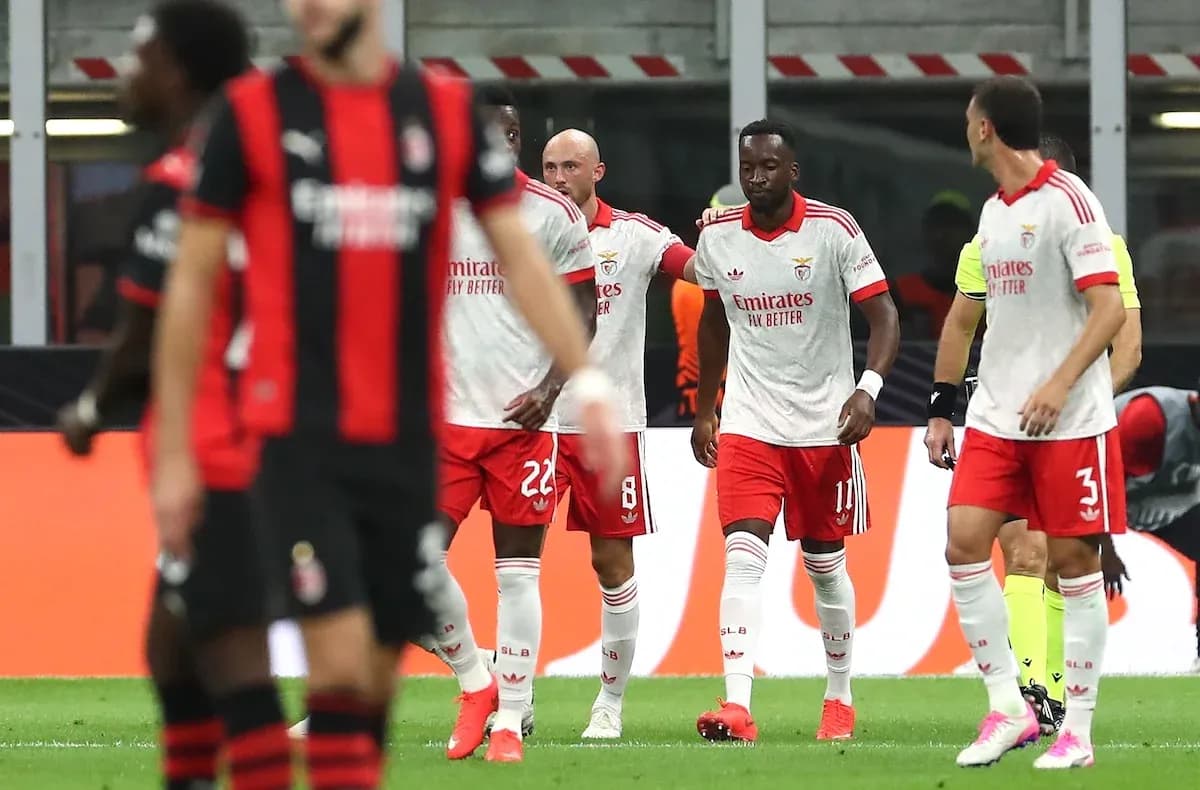
Under the San Siro lights, the opening night of the 2026 UEFA Europa League league stage told a blunt story. AC Milan, at home in front of a restless Milano crowd, were methodical in structure but toothless in edge. Benfica, hardened by seven matches in this campaign already, were ruthless in their clarity. The 2–0 away win did more than settle a single fixture; it underlined the gap between a project still in blueprint and a side already playing at full speed.
Following this result, the table reflects that contrast starkly. Milan sit 31st with 0 points, a goal difference of -2 from 0 goals scored and 2 conceded overall. Benfica, by contrast, are 7th, on 3 points with a goal difference of 2 after 2 goals scored and none conceded overall. For Milan, the league stage has begun with a home defeat; for Benfica, it is a continuation of a broader pattern: 5 wins from 7 Europa League matches overall, with 21 goals scored and only 6 conceded.
I. The Big Picture – Two Philosophies, Two Rhythms
Ruben Amorim stayed loyal to his structural principles, sending Milan out in a 3-4-2-1. M. Maignan anchored a back three of F. Terracciano, K. De Winter and S. Pavlovic, with the width and dynamism entrusted to S. Chukwueze and D. Bartesaghi as nominal wing‑midfielders. Inside, A. Jashari and Y. Musah were tasked with knitting transitions, while the front triangle of O. Hutchinson, A. Cisse and G. Ramos was meant to give vertical threat and pressing teeth.
On the opposite bench, Marco Silva’s Benfica arrived with the swagger of a side that has been scoring freely. Across all Europa League matches this season, they average 3.0 goals per game overall, with 4.7 at home and 1.8 on their travels. The shape was a classic 4‑2‑3‑1: A. Trubin behind a back four of D. Banjaqui, A. Circati, T. Araujo and S. El Karouani, with F. Aursnes and J. Palhinha screening. Ahead of them, the creative line of D. Lukebakio, G. Sudakov and J. Kaminski supported lone striker J. Duran.
Benfica’s attacking volume is backed by control: only 6 goals conceded overall, at 0.9 per match, with 0.7 at home and 1.0 away. Milan, by contrast, have started their Europa League season with no goals scored and 2 conceded overall, both at home, averaging 0.0 for and 2.0 against at San Siro. The numbers mirrored the eye test: Benfica moved like a side used to imposing their game; Milan looked like one still learning its new grammar.
II. Tactical Voids – Absences and Edges
The most obvious tactical absence belonged to Benfica: A. Bah, one of the competition’s notable providers with 1 assist and 1 yellow card this season, was listed as missing through injury. His usual energy and overlapping from the right would have added another layer to Benfica’s wide play. Instead, D. Banjaqui stepped in, offering a more conservative but solid presence.
For Milan, the void was more conceptual than individual. Their season statistics show a team that has already failed to score in their only Europa League outing, with 0 clean sheets and 1 match where they failed to find the net overall. The back three is designed to give security, yet the structure left them chasing the game once behind, with no established Europa League goalscoring form to lean on.
Disciplinary trends added a subtle undercurrent. Milan’s Europa campaign so far has produced a single yellow card, and it came early: 100.00% of their yellows have arrived between 0–15 minutes. Benfica’s yellows are more spread, but with a clear late spike: 30.00% of their cautions come between 76–90 minutes, and 10.00% between 91–105 minutes. It paints a picture of a side that pushes the limits as they protect leads late on – a detail that matters in tight knockout‑style football, even in a league stage.
III. Key Matchups – Hunter vs Shield, Engine Room vs Engine Room
The “Hunter vs Shield” duel lived on Benfica’s attacking line against Milan’s new-look back three. Benfica’s forwards and attacking midfielders came into this league stage on the back of 21 Europa League goals overall, including a biggest away win of 3–1. Milan’s defence, by contrast, had only one European data point: a 0–2 home defeat, now their heaviest home loss in the competition this season.
J. Kaminski embodied Benfica’s cutting edge. Across the Europa League campaign, he has 1 goal and 1 assist, with 3 key passes and 1 shot on target from 1 attempt. His ability to drift inside from the left and combine with G. Sudakov between the lines gave Milan’s outer centre‑backs constant decisions to make. D. Lukebakio, another of Benfica’s standout performers with 1 goal, 3 shots on target from 3 attempts and 3 tackles overall, attacked the half‑spaces on the opposite side, testing Bartesaghi’s defensive positioning and Terracciano’s timing in stepping out.
In the engine room, Y. Musah and A. Jashari faced a stern examination from J. Palhinha and F. Aursnes. Palhinha’s role as an enforcer was clear: break Milan’s rhythm, protect the centre, and allow Benfica’s attacking quartet to stay high. Aursnes, more of a connector, kept Benfica’s passing lanes open. Milan’s pair needed to do two jobs at once – progress the ball and protect the back three – and too often were pinned deep, unable to release Hutchinson and Cisse early enough to stretch Benfica’s back line.
On the Benfica bench, there was additional menace and edge. V. Pavlidis, one of the Europa League’s most card‑prone forwards with 2 yellows overall, and L. Barreiro, also on 2 yellows, offered late‑game aggression and pressing. Their profiles hint at how Benfica can turn the screw in closing stages, even if they were not central to this particular scoreline.
IV. Statistical Prognosis – A Tale of Two Trajectories
Following this result, the statistical currents are moving in opposite directions. Milan’s Europa League snapshot is stark: 1 match played overall, 0 wins, 0 draws, 1 loss, 0 goals scored, 2 conceded, no clean sheets, and 1 match where they failed to score. Their only formation used has been the 3‑4‑2‑1, and it has yet to yield either attacking fluency or defensive resilience.
Benfica’s body of work is deeper and more convincing. Across 7 Europa League matches overall, they have 5 wins, 1 draw and just 1 defeat, with clean sheets in 2 of those games and no match in which they have failed to score. Their penalty record is immaculate: 4 penalties taken, 4 scored, 0 missed. That composure from the spot adds a further layer of threat in tight contests.
From a tactical and statistical standpoint, the prognosis is clear. Milan’s path forward in this league stage will depend on finding more incision from their front three and greater verticality from Musah and Jashari, while shoring up a back line that currently concedes 2.0 goals per match at home in Europe. Benfica, meanwhile, look built for a deep run: a stable 4‑2‑3‑1, multiple creative hubs in Kaminski, Sudakov and Lukebakio, and a defensive platform that concedes just 1.0 goal per match on their travels.
On this evidence, Milan are at the beginning of a demanding learning curve. Benfica, already in stride, are setting their sights higher than just navigating the league stage.
Related News
Five Standout Europa League Players to Watch in 2026/27

AC Milan vs Benfica Europa League Clash: Team Updates, Lineups & Broadcast Info

Omonia Nicosia vs Benfica Predicted Lineups: Team News for UEFA Europa League

Red Bull Salzburg vs Ararat-Armenia Predicted Lineups and Team News
Celje vs Red Bull Salzburg Predicted Lineups and Team News

Red Bull Salzburg vs Sparta Praha: Predicted Lineups and Team News