
Alverca's Rise: From Shadows to Gamechangers in Portuguese Football

Alverca used to live in the shadows. A feeder for Benfica, a name that flickered briefly in the Portuguese top flight before vanishing altogether in 2005. Now they are back, rebuilt from the rubble, fuelled by data, French prospects and Brazilian money – and fronted, from a distance, by one of the most famous footballers on the planet.
They do not want to be a curiosity. They want to be, as their sporting director Fernando Malta puts it, “gamechangers.”
From collapse to the climb back
Alverca’s first taste of the Primeira Liga came in 1998. It did not end well. Relegation, mounting costs and a fragile structure led to the club folding seven years later. For many, that would have been the end of the story.
Instead, the badge survived. The club reformed, started again in the regional leagues and inched its way back up. Promotion followed promotion, until in 2025 they punched their way back into the top division with back-to-back rises through the pyramid.
The surge had a catch. The Vicintin family, who owned Alverca, already controlled Santa Clara in the top flight. Father and son, Ricardo and Bruno, ran different clubs on an inevitable collision course.
“How could a father face his son? I’m talking about the heart,” Ricardo said at the time. “I could never cope with having to face the team that my son loves so much. A father’s role is to let his children grow. And I’m no different.”
Sentiment aside, the rules were blunt. The same ownership group could not control two clubs in the same division. The Vicintins had to sell.
That is when the story changed gear.
Vinícius arrives – from Madrid to the Ribatejo
In February 2025, as promotion loomed into view, a new group of investors stepped in. At its centre: Real Madrid forward Vinícius Júnior.
He is not the day‑to‑day operator. That role falls to his agent, Thassilo “Tata” Soares, the majority shareholder. Vinícius sits in the background, a powerful name on the letterhead and a magnet for attention.
“Our relationship with Vinícius is remote,” Malta says. “We say he is the club’s most famous fan.”
The “fan” comes with friends. Eduardo Camavinga, his teammate at Real Madrid, and the rapper Travis Scott are also involved, providing what Malta describes as “communication and marketing” services. None of them are in the office moving magnets on a tactics board, but their presence changes the way Alverca are seen, particularly by young players.
In an era where footballers increasingly buy into clubs as well as play for them, Alverca fit a wider trend. Thibaut Courtois has a stake in Le Mans, who have just climbed into Ligue 1. Kylian Mbappé’s project at SM Caen has been rougher, ending in relegation to the French third tier and protests against the France captain. Luka Modric at Swansea, Cristiano Ronaldo at Almería, Ronaldo Nazário at Real Valladolid and Cruzeiro – the map of player-investors stretches across Europe and South America.
Alverca are one of the most intriguing dots on that map.
Thirty-five signings and a “mad” summer
Vinícius turned up in person for Alverca’s game against Benfica at the start of last season. What he saw was barely a team in the traditional sense. It was an assembly line of new arrivals.
The club signed 35 players in one window, a record in Portuguese football. “Mad,” is how chief scout Dominique Castro describes it. It had to be. The squad that had earned promotion was largely borrowed from Santa Clara; when that relationship ended, so did most of the team.
By the time the season kicked off, only one player from the previous campaign remained. He left in January.
On paper, it looked like chaos. In practice, it clicked faster than anyone expected.
“Our team was made up of entirely new players,” says centre-back Bastien Meupiyou, who arrived from Wolves. “No one knew each other, but we managed to adapt, which happened naturally, and we managed to get along well.”
The outside verdict was harsh and simple. “Everyone in Portugal expected us to be in the relegation zone for the whole season,” Malta says.
They were wrong. Alverca finished 11th. Santa Clara, the club they had once fed and shared owners with, ended up two places below them. You can imagine the quiet smiles in the directors’ box.
A factory for talent, not titles
Meupiyou became the symbol of the project. Nominated for this year’s Golden Boy award, the 20‑year‑old defender has drawn interest from higher up the food chain.
“He’s the player that every high-level club wants to know about,” Malta says. If he moves this summer, he could become Alverca’s record sale. That is not a side note; it is the business model.
Portugal’s top flight is a launchpad. The Lusophone ties make it a natural first stop for Brazilian prospects. The new owners have strengthened those links with a relationship with Athletic Club in Minas Gerais, building a direct route from one of Brazil’s talent factories to the Ribatejo.
At the same time, Alverca are mining another gold seam: Île-de-France. The region around Paris might be the most fertile talent pool in world football, and Castro knows it intimately from his time as chief scout at Lens.
“Along with São Paulo, it is the region that creates the best young players in the world,” he says. France, he argues, produces so much talent that clubs and academies simply cannot maximise all of it. Players fall through the cracks, underused or misused. For many, the only way to grow is to leave.
“The talent in France is extraordinary and multicultural, which means players adapt to life abroad quickly and well,” Castro says.
Alverca have moved aggressively into that space. Only Gil Vicente have more French players in the Portuguese top flight. It is deliberate, targeted, and underpinned by data.
“We are not a big club in terms of size, so we need to be creative in our scouting and use of data,” Malta says. The first objective is blunt: stay in the division. The second is just as clear: sell players.
“It’s a league that is not sustainable for the owners,” he adds. Survival and sales keep the lights on.
Knowing their place, pushing their limits
There is no talk of titles. No grand promises about breaking the cartel. Malta will “never focus” on challenging Benfica, Porto and Sporting “because they are not from our league”. It sounds defeatist until you look at the numbers.
In 92 years, only twice have the “big three” been toppled: Boavista in 2001, Belenenses in 1946. If this were an Opta post, it would end with one word: “Dominant.”
Alverca understand the landscape. They are not pretending to be something they are not. They want to be a different kind of threat – smarter, faster, sharper in the markets that the giants overlook.
“There is space for new things. We strongly believe in our method and that we will be gamechangers,” Malta says. He looks at Braga’s recent rise – a club that carved out its own place just below the traditional powers – and sees a blueprint, not a fantasy.
For most of their history, Alverca existed in someone else’s shadow. Benfica’s satellite. A small-town club, briefly seen and quickly forgotten.
Now the shadows are shrinking. Backed by big-name investors, driven by a restless recruitment team and anchored by a clear-eyed realism about their limits, Alverca have stepped into the light.
The question now is not whether they belong in the top flight. It is how far this unorthodox model can push them before the rest of Portugal is forced to follow.
Related News
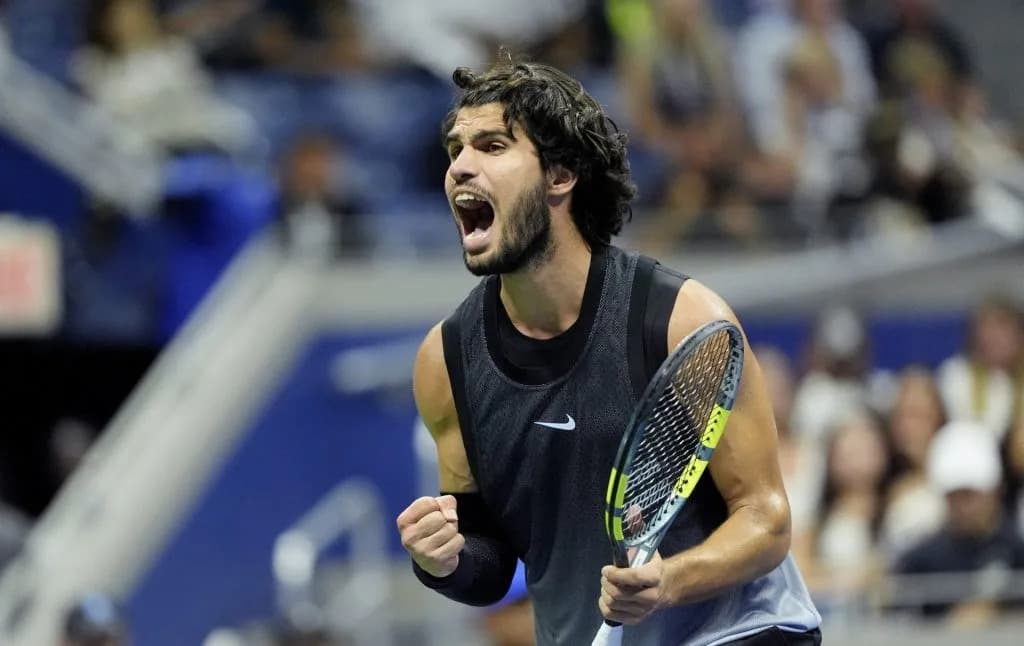
Carlos Alcaraz Urges an End to Matches Ending in the Early Hours

Carlos Alcaraz Criticizes Late US Open Finish After 3:30 a.m. Match

Jannik Sinner Set for ATP 500 Return in Beijing with Novak Djokovic Also Competing

Meet Iva Jovic: The American Tennis Prospect Making Waves

Flavio Cobolli Shares Insights on Practice Session with Jannik Sinner Ahead of Comeback

Till vs Romero: Fight Details, Undercard, and Viewing Info for This Weekend