
Argentina Triumphs in World Cup Semi-Final Against England
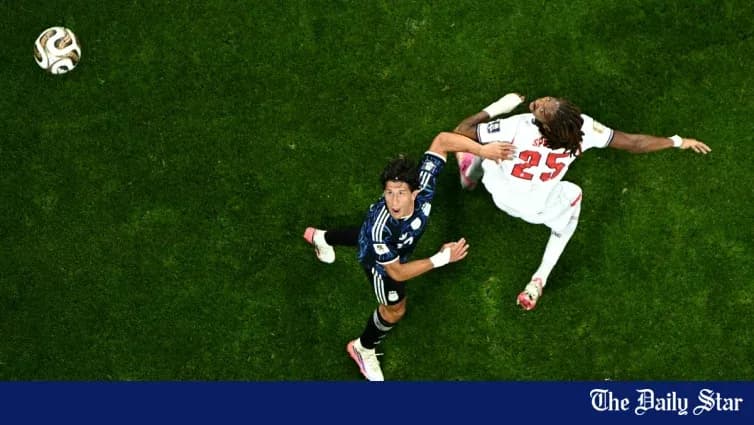
They may have to check the structural integrity of the Mercedes-Benz Stadium.
When Lautaro Martínez’s 92nd‑minute header ripped past Jordan Pickford, the sound from the Albiceleste end didn’t just rise. It detonated. Concrete, steel, and glass felt flimsy against the force of a nation that refuses to accept the idea of an ending.
Argentina are back in a World Cup final. Again. This time after a 2-1 comeback that left England floored and Atlanta breathless.
Messi, 39 and still dictating the rhythm of football’s biggest stage, stood at the heart of the storm. He slipped the pass that set up Enzo Fernández’s thunderous equaliser in the 85th minute, then delivered the decisive ball for Lautaro’s winner deep into stoppage time. But to call this just another Messi epic would be to miss the real story.
This was trench warfare dressed as a football match.
Simeone’s name, Simeone’s scars
For England, the shock began long before kick-off. One word on the Argentina team sheet dragged an entire generation back to Saint‑Étienne in 1998: Simeone.
Back then it was Diego, the scheming midfielder who drew David Beckham into that infamous red card and etched his name into English nightmares. Here in Atlanta, it was his 23‑year‑old son Giuliano, dropped into a World Cup semi-final as a surprise starter and a psychological grenade.
The message was unmistakable. Argentina weren’t just here to play. They were here to reopen old wounds.
Giuliano Simeone did not tiptoe into the occasion. He tore into it. While Enzo Fernández, Alexis Mac Allister, Leandro Paredes and Nicolás Tagliafico hurled themselves into tackles and pressed like men possessed, Simeone operated on a higher frequency. Every loose ball became his obsession. Every duel, a personal vendetta.
On the right flank, he formed a ferocious double act with Nahuel Molina. Ahead of them, fellow Atlético Madrid man Julián Álvarez stretched England’s back line. That entire side of the pitch turned into a rolling wave of sky blue and white, hammering England’s left and forcing them to retreat, metre by uncomfortable metre.
Simeone played with the desperation of someone who knows how quickly it can all be taken away. Three years removed from a horrific leg fracture, he ran as if this semi-final had been waiting for him since the day he learned to walk. His energy infected Argentina; it irritated England. It tilted the night.
And it did something else. It gave Messi room.
With Simeone’s relentless harrying acting as a shield, Messi found pockets of space to glide into, to turn, to tease. Argentina, often accused this tournament of sleepwalking through games and relying on late surges, instead chose unfiltered chaos from the first whistle.
Gordon strikes, Scaloni gambles
For all that Argentine fury, it was England who landed the first clean blow.
In the 55th minute, Anthony Gordon struck, and suddenly Thomas Tuchel’s side had exactly the game state they wanted. Goal up, lines compact, bus parked. Argentina, for all their aggression, were staring at the familiar nightmare of chasing a disciplined, retreating block with the clock ticking away.
The game tightened. The noise dipped, edged with anxiety rather than euphoria. Simeone, who had burned through his reserves with that manic first hour, began to fade. His job, in truth, was done.
Lionel Scaloni saw it. In the 73rd minute, he made a change that felt more like a passing of a torch than a routine substitution. Off came Giuliano Simeone, utterly spent but leaving behind four ball recoveries — second-joint-highest among Argentines on the night — and a trail of bruised English ankles. On came Rodrigo De Paul.
The symbolism was impossible to ignore. De Paul, once Diego Simeone’s on-field lieutenant at Atlético Madrid, a player who built his reputation on exactly this kind of controlled brutality, now in Inter Miami colours alongside Messi at club level, stepping in for the younger Simeone who had taken his starting spot.
The role did not change. The intensity did not drop.
De Paul immediately cranked up the pressure, matching Simeone’s tally of four ball recoveries in a breathless cameo and almost carving out a goal with a curling effort of his own. England’s midfield, which had briefly tasted control after Gordon’s opener, suddenly looked suffocated again.
The pressure finally told.
Enzo’s rocket, Lautaro’s dagger
In the 85th minute, Argentina’s persistence finally found its reward. Messi, always scanning, slipped the ball into Enzo Fernández, who unleashed a rocket. The shot tore into the net and, with it, ripped away England’s illusion of safety.
The stadium erupted. Not relief. Defiance.
England, rattled, retreated even deeper. Argentina smelled fear. Every second touch from a white shirt drew whistles. Every Argentine tackle drew roars. The semi-final had become a siege.
Then came the moment that will live in Argentine folklore.
Deep into stoppage time, Messi again became the architect. One more decisive action. One more incision. His delivery found Lautaro Martínez, who rose and buried his header past Pickford in the 92nd minute. No VAR drama. No delay. Just a clean, brutal finish and an explosion of sound that felt like it might rip the roof off the Mercedes-Benz.
On the touchline, Scaloni roared. On the pitch, Argentina collapsed into a pile of limbs. In the stands, grown men wept.
The rest is chaos. Blue and white chaos.
A rivalry that never cools
Argentina and England do not simply play football matches. They reopen files. Las Malvinas, the Falkland Islands, the 1982 war — the political and emotional weight between these nations never really cools. It simmers, waiting for nights like this.
So when Argentina dragged themselves back from the brink yet again, it meant more than just another route to another final. This was a statement of identity. Not the languid, second‑gear stroll that had drawn criticism earlier in the tournament, not a team waiting passively for late magic to bail them out.
This was Argentina refusing to blink, refusing to slow down, refusing to breathe.
Messi will dominate the headlines, and rightly so. A 39‑year‑old playmaker deciding a World Cup semi-final with two decisive contributions belongs on every back page on the planet.
But deep in the Argentine consciousness, another name carved itself into the story.
Giuliano Simeone, the son of a man England will never forget, ran himself to the edge of collapse and into a different kind of immortality. Not with a goal, not with a trick, but with a performance of pure, relentless will.
On a night of old ghosts and new heroes, he didn’t just play in a World Cup semi-final.
He earned the right to be remembered in one.
Related News

India's Record Chase of 406 Against West Indies Highlighted by Gill's 223 and Rohit's Century

Alex Pereira Hints at Major UFC Bout: 'Big Challenge' Ahead
Three Hall of Famers, Ten Fights, 109 Rounds: The Forgotten Rivalry That Shaped Lightweight Boxing's Golden Era

Khamzat Chimaev and Colby Covington Set for RAF Abu Dhabi Title Clash in November
Thomas Tuchel Confident Harry Kane Will Join 100-Goal Club for England Soon
Cristiano Ronaldo Vows to Reveal Truth After Leaving Portugal Squad Amid Conflict