
Arsenal's Dressing Room Unrest: Martinelli's Situation Explained
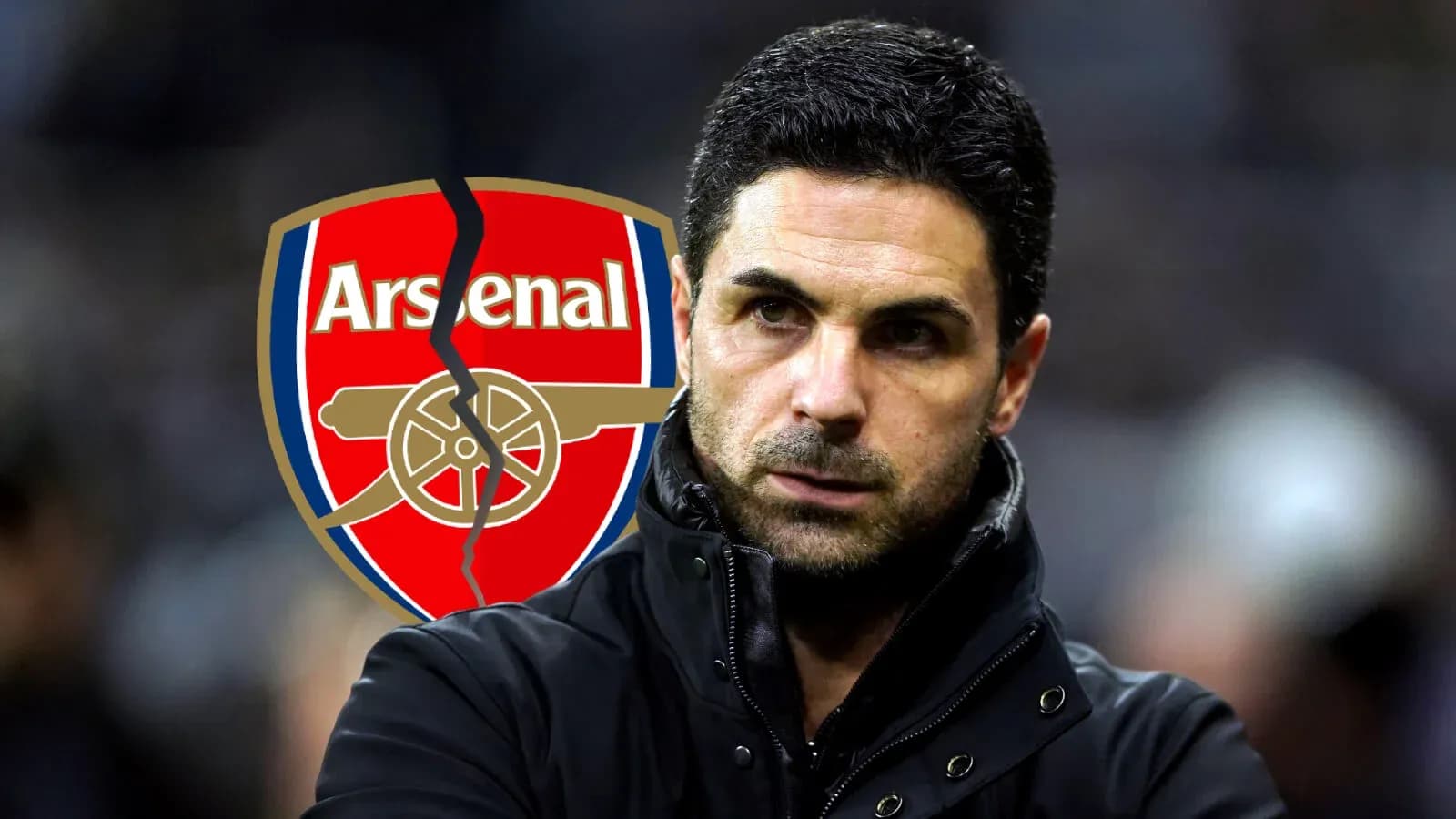
Mikel Arteta is apparently facing a dressing-room revolt at Arsenal. Players are said to be “unhappy”. Some are supposedly “siding with Gabriel Martinelli” over his treatment this summer.
Except that, when you follow the trail back to the source, the story all but disappears.
The fee, the form and the fury
Gabriel Martinelli is heading towards the exit after seven years at Arsenal, with a £50m price tag attached and Al-Hilal circling. That figure has triggered a familiar question in north London: are Arsenal really getting full value for a player they once saw as a future cornerstone?
John Cross raised it in the Daily Mirror, pointing to the £85m fee Tottenham are expected to pay for Savinho and asking why Martinelli is cheaper. On the face of it, it looks like a fair challenge. The market is wild, and £85m for Savinho is a huge number.
But that Spurs deal is heavily shaped by the deliberately low fee involved in Omar Marmoush’s move in the opposite direction. It’s a package, not a straight comparison.
Strip it back to Martinelli alone and the picture changes. One goal and four assists last season. A forward whose numbers have stalled rather than soared. A contract with a year left, plus an option. In that light, £50m is not a scandalous undersell. Clubs like Chelsea and Manchester City have spent years building transfer machines designed to squeeze every last drop of value from that kind of asset. Arsenal are still learning that game.
Claims that his “stats measure up against the likes of Yildiz” also wilt quickly. Kenan Yildiz is four years younger, hit ten Serie A goals last season and added seven assists. That is a different profile, and a different trajectory.
Martinelli still has pace. He can still hurt teams. But has he really kicked on in the last two seasons? The answer, brutally, is no. Hence the £50m.
The ‘unhappy’ Arsenal dressing room
So where does the alleged mutiny come from?
Three headlines did the rounds:
- “Gabriel Martinelli has Arsenal stars on his side after being pushed out by Mikel Arteta” – Daily Mirror website.
- “Arsenal stars ‘side with Gabriel Martinelli’ as Mikel Arteta tries to force him out” – Daily Star website.
- “Arsenal squad ‘unhappy’ with Mikel Arteta as Gabriel Martinelli nears £40m Al-Hilal transfer” – Goal.com.
Each piece points back to ESPN Brasil. And this supposed bombshell of a split dressing room? It rests on a single translated paragraph, ending with just a handful of crucial words:
“At the start of this season, the Brazilian wasn’t even included in Arsenal’s matchday squad and didn’t even receive a medal for winning the English Super Cup after beating Manchester City 3-0, something that even caused some discomfort among other players in the team.”
That’s it. No detailed breakdown of factions in the squad. No named players. No suggestion of a full-blown crisis. Just a line noting that some team-mates felt uncomfortable with how a long-serving colleague was handled around the Super Cup.
From there, those 12 words at the end of a sentence are repackaged into “Arsenal stars ‘side with Martinelli’” and a squad “unhappy” with Arteta. Quote marks wrapped around emotions that were never actually quoted.
Strip away the spin and what’s left is fairly ordinary. A player of seven years, frozen out ahead of a likely sale, has the sympathy of some in the dressing room. It would be far stranger if Gabriel Magalhaes and Declan Rice were delighted to see him excluded and medal-less.
The Alvarez ‘condition’ that isn’t
While Martinelli edges towards the door, another Arsenal story tried to crank up the drama at the other end of the market.
“Mikel Arteta sets one condition for £130m Julian Alvarez transfer as Arsenal plan emerges,” claimed the Daily Mirror website.
One condition for a £130m move? It sounds ominous, or at least intriguing, until the detail arrives:
“Mikel Arteta is ready to make a £130m push to sign Julian Alvarez – but will demand assurances the Argentina star wants to move to Arsenal.”
So the grand “condition” is that the player actually wants to join. Not exactly a radical demand. That’s not a cunning clause or a hardball stance; it’s the basic starting point of any serious transfer.
Time-wasting, or just defending a lead?
Elsewhere, the weekend offered a different kind of narrative stretch. At the Daily Mail, Ian Ladyman took aim at Newcastle coach Matthias Jaissle for his reaction to a late penalty against Liverpool.
Ladyman argued that Jaissle was wrong to blame referee Stuart Attwell for the spot-kick, calling the contact by Lewis Hall on Victor Munoz “clear”. He then went further, suggesting Jaissle should look at his own role in the incident because the foul arrived in time added on for what he described as a “totally unnecessary” Newcastle substitution.
Jaissle had replaced Yoane Wissa with Fabian Schar in the final moments, a move Ladyman framed as a classic time-wasting ploy that backfired when Attwell extended the added time by 30 seconds, during which Munoz earned the penalty.
New guidelines this season mean players must leave the pitch within 10 seconds of their number being raised or risk a booking, making those old-school, slow-walk substitutions less effective as a tactic.
But was the change only about running down the clock? Newcastle were leading and swapped a forward for a defender. There is a far more obvious football reason for that switch: protect the advantage. To frame it purely as time-wasting is, at best, incomplete.
United, Baleba and a ‘plan’ that moved the goalposts
In Manchester, a different kind of spin surfaced.
“Manchester United’s transfer plan has paid off with £45million boost,” announced the Manchester Evening News, in reference to Carlos Baleba.
The story’s thrust is simple: Baleba might have cost around £115m last summer, and United are now set to sign him for £70m a year later. On paper, that looks like a £45m saving and the fruits of a clever long-term strategy.
But calling it a “plan” stretches the definition. Not spending an enormous fee last summer only to spend a still-very-high fee 12 months later, after a season in which the player underperformed, is not obviously master planning. Doing so after the season has already started, having lost to promoted Hull on the opening day with a midfield that included a struggling Youri Tielemans, hardly screams flawless execution.
It also sits awkwardly alongside the reality that United’s midfield shortlist has shifted repeatedly. At various points, Elliot Anderson, Mateus Fernandes and even Sandro Tonali have featured in the conversation. That’s less a single, coherent “Baleba strategy” and more a club feeling its way through a messy market.
Across Arsenal, Newcastle and United, the pattern is the same: a few hard facts, padded out, stretched, and sometimes twisted into something much louder. The football is back. So is the noise.
Related News

Fantasy Premier League 2026/27: Insights from Gameweek 1

Jed York Jailed After Prostitution Sting in Ohio

Liverpool's Stefan Bajcetic and Calvin Ramsay Face Uncertain Futures
Liverpool's Struggles with Rest Defence Under Andoni Iraola
Arsenal's Dressing Room Unrest: Martinelli's Situation Explained
Rio Ferdinand Questions Manchester United's Transfer Strategy After Hull Defeat