
Aston Villa vs Fenerbahçe: Champions League Clash Preview
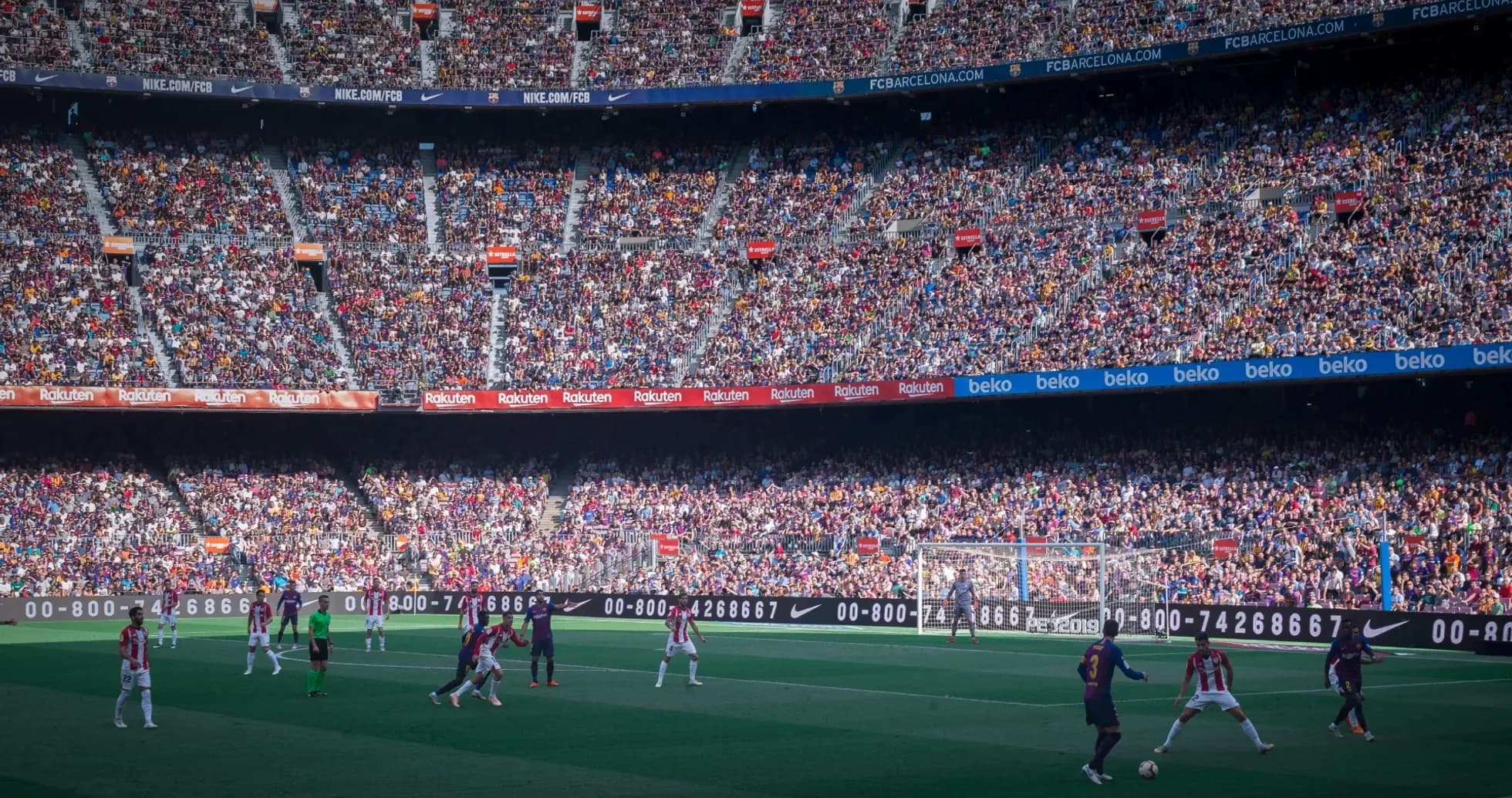
Under the lights of Villa Park in Birmingham on 14 October 2026, Aston Villa step back onto the UEFA Champions League stage with a point to prove and a score already in the bank against these opponents. For Villa, this League Stage clash is about staking an early claim in Europe’s elite after starting the campaign with no points on the board. For Fenerbahçe, who arrive with the confidence of recent continental momentum and a “Play Offs” tag attached to their name, it is a chance to turn league-phase consistency into a statement away performance in one of England’s most traditional arenas.
Season Context
Aston Villa enter this Champions League League Phase still waiting to write the first numbers of their campaign. They sit 3rd in the table snapshot provided, with 0 games played, 0 goals scored and 0 conceded, and therefore 0 points. It is a blank slate in every sense, but that also means this home date with Fenerbahçe can immediately tilt their European narrative in either direction.
Fenerbahçe are listed 11th in the League Phase picture, also on 0 points with 0 games played, 0 goals scored and 0 conceded in the standings. Yet unlike Villa, they carry the label “Play Offs” next to their name, a reminder that expectations are higher and recent European work has been good enough to place them in the conversation for the knockout rounds once the league stage table begins to take shape.
Form & Momentum
For Aston Villa, there is no recent Champions League form string to lean on in the standings and no goals for or against yet recorded. That makes this more of an emotional reset than a statistical one: a home crowd at Villa Park, a familiar English setting, and the knowledge that their last European meeting with Fenerbahçe ended in their favour will have to supply the early momentum.
Fenerbahçe, by contrast, arrive with a clear rhythm. Their Champions League league record in the predictions data shows them unbeaten across 6 matches, with 4 wins and 2 draws (6 played, 4 wins, 2 draws, 0 losses) and a tidy goal balance of 8 scored and 3 conceded (1.3 scored per game and 0.5 conceded over those 6 fixtures). The standings echo the clean defensive slate so far in this League Phase, but the broader European sample paints a picture of a side that is hard to beat and efficient at both ends. A form string of WDWWDW in their recent Champions League run underlines that they are used to navigating tight group-stage nights without slipping.
Head-to-Head Patterns
There is only one recent competitive reference point between these clubs, but it is a powerful one in narrative terms. On 22 January 2026, Aston Villa travelled to Istanbul and came away with a 1-0 victory over Fenerbahçe in the UEFA Europa League (1-0, UEFA Europa League, season 2025, January 2026) at Chobani Stadium. Fenerbahçe were the home side that night and failed to break down Villa, who protected a first-half lead all the way to full time. That single result, away from home and in a European setting, feeds directly into the psychological backdrop of this rematch: Villa know they can keep Fenerbahçe out over 90 minutes, while the Turkish side arrive with the memory of frustration and a need to flip the script on English opposition.
Tactical Preview
Aston Villa’s Champions League-specific statistics are still a void – no games played, no goals for or against, no established formation pattern in the data. That forces any tactical reading to focus on the profile of their squad rather than hard numbers. The presence of experienced defenders like Pau Torres, Tyrone Mings and Victor Lindelöf suggests a back line built on aerial strength and positional awareness, while full-backs such as Matty Cash and Aaron Wan-Bissaka point to an ability to alternate between aggressive overlapping and more conservative, one‑v‑one defending. In midfield, the blend of Leon Goretzka, Boubacar Kamara, João Gomes and John McGinn hints at a physically robust, box‑to‑box core capable of pressing and breaking lines. Further forward, options like Tammy Abraham, L. Bailey and A. Garnacho provide a mix of penalty-box presence and wide pace, ideal for transitions if Villa choose to let Fenerbahçe have more of the ball.
Fenerbahçe arrive with a far more defined European identity. Their most-used system is a 4-2-3-1, deployed in all 6 of their recent Champions League fixtures, and the numbers back up its balance: 8 goals scored and only 3 conceded across those 6 matches, with 3 clean sheets and no failures to score. The double pivot, likely anchored by players such as N. Kanté and M. Guendouzi, provides screening and ball-winning, while the attacking band behind the striker is loaded with quality. Talisca has been one of the standout figures in this competition, scoring 4 goals in 6 appearances with 23 shots and 13 on target, making him a clear long-range and set-piece threat. Around him, M. Greenwood adds 2 goals and 1 assist from 6 appearances, while K. Aktürkoğlu has supplied 2 assists and 12 key passes, indicating a winger who can both create and press. Up front, the presence of a centre-forward like R. Lukaku or V. Muriqi offers a classic focal point for crosses and hold-up play. This structure allows Fenerbahçe to control games without becoming reckless, as shown by their average of only 0.5 goals conceded per match across those 6 games.
The key tactical battle may revolve around how Villa’s yet‑to‑be‑tested Champions League unit copes with Fenerbahçe’s established 4‑2‑3‑1 rhythm. If Villa’s midfield can disrupt supply into Talisca and deny space between the lines, they can lean on their previous success in containing the Turkish side. But if Fenerbahçe manage to impose their controlled possession and get their attacking midfielders into shooting positions around the box, Villa’s defence will be asked serious questions early in their European campaign.
Statistical Snapshot
- Competition: UEFA Champions League, season 2026 — 14 October 2026.
- Venue: Villa Park, Birmingham.
- Prediction: Win or draw for Aston Villa — Combo Double chance : Aston Villa or draw and -2.5 goals.
- Win Probabilities: Home 50% / Draw 50% / Away 0%.
- Model: Aston Villa 0 — Fenerbahçe 0.
Betting Verdict
The prediction model leans towards Aston Villa avoiding defeat, with a double‑chance recommendation on Villa or draw combined with a low‑scoring angle. That stance is built on two pillars: Villa’s recent head‑to‑head success in Istanbul (1-0 in January 2026) and Fenerbahçe’s tendency to keep scores tight despite their unbeaten run (only 8 goals scored and 3 conceded across 6 Champions League matches). With the probabilities split at 50% for a home win and 50% for a draw, and Fenerbahçe given virtually no chance of victory by the model, the analytical case points to a cautious, controlled contest where Villa’s home advantage and prior psychological edge are expected to neutralise Fenerbahçe’s form. Under such a scenario, backing Villa on the double chance in a match with fewer than three goals aligns neatly with both the numbers and the narrative.
Related News

Luis Díaz Confident Bayern Munich Can Win Champions League

AFC Champions League Matchday One: Insights and Team Strategies

Vincent Kompany’s Bayern Munich Future Not Tied Solely to Champions League Success

Barcelona’s Camp Nou to Host 2029 Champions League Final, Munich Confirmed for 2028

Bayern Munich's Allianz Arena Set to Host 2028 Champions League Final

Allianz Arena to Host 2028 Champions League Final for Third Time