
Aston Villa's Statement Win Over Liverpool: 4-2 Triumph
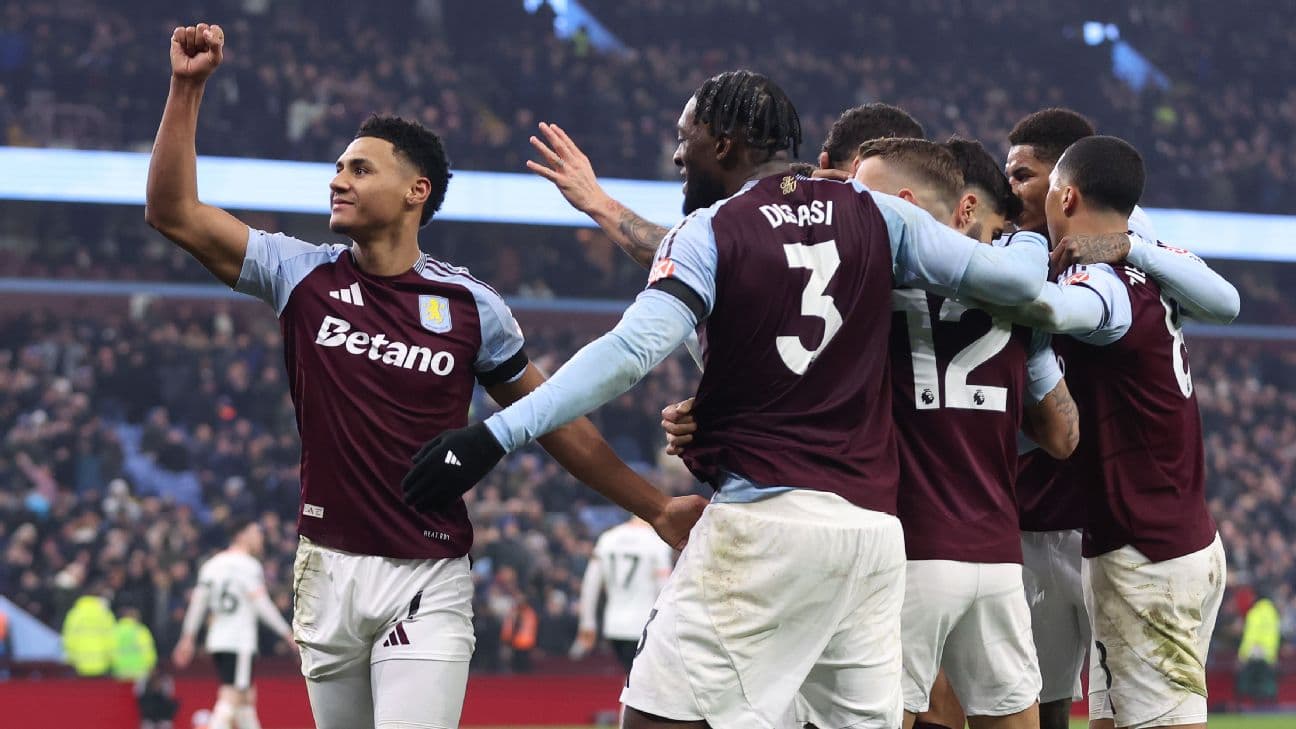
Villa Park under the Friday night lights delivered a scoreline that felt like a manifesto. Aston Villa 4–2 Liverpool, a statement win in round 37 of the Premier League season that crystallised why Unai Emery’s side sit 4th on 62 points, with a goal difference of 6 (54 scored, 48 conceded), and why Arne Slot’s Liverpool, 5th on 59 points with a goal difference of 10 (62 scored, 52 conceded), remain a volatile, exhilarating work in progress.
Both coaches went to their default shape – mirrored 4-2-3-1s – but the similarities ended with the chalkboard. Emery’s Villa, so often defined this season by their structure at home, leaned into their Villa Park identity: front-foot aggression and calculated risk. Heading into this game, they had won 12 of 19 at home, scoring 32 and conceding 22. That 1.7 goals for at home against 1.2 conceded framed the night: they trust their attack to outgun whatever their defence gives up.
Liverpool arrived with a different duality. Overall they had scored 62 and conceded 52, but the split is stark: on their travels they had 29 goals for and 33 against, an away average of 1.5 scored and 1.7 conceded. Slot’s side can hurt anyone going forward, yet away from Anfield they are perpetually on the edge of chaos. Villa, with 1.5 goals per game overall and a home crowd that senses blood, were the worst possible opponent for that fragility.
The tactical voids on the teamsheet only amplified those trends. Aston Villa were without Alysson, H. Elliott, B. Kamara and A. Onana – a cluster that particularly thins out Emery’s options at the base of midfield. The response was telling: V. Lindelof stepped into a holding role alongside Y. Tielemans, a centre-back’s reading of danger married to a playmaker’s passing lane. It gave Villa a double pivot that could both build and break, crucial against Liverpool’s central overload.
Liverpool’s absentees cut straight through their spine. Alisson, S. Bajcetic, C. Bradley, H. Ekitike, W. Endo and G. Leoni were all missing. Without Alisson, G. Mamardashvili took the gloves; he is a high-calibre shot-stopper, but the loss of Alisson’s sweeping and distribution subtly altered Liverpool’s build-up under pressure. The absence of W. Endo and S. Bajcetic stripped Slot of his most natural screeners, forcing a double pivot of R. Gravenberch and A. Mac Allister that is progressive but not naturally destructive. Ekitike’s injury removed Liverpool’s top league scorer (11 goals), leaving C. Gakpo and, from the bench, M. Salah and F. Chiesa to carry the attacking burden.
On the pitch, the shapes were familiar. Villa’s back four of M. Cash, E. Konsa, P. Torres and L. Digne sat behind Lindelof and Tielemans, with J. McGinn, M. Rogers and E. Buendia rotating in the three behind O. Watkins. Emery’s season-long commitment to 4-2-3-1 – used in 33 league matches – was evident in the automatisms: Cash and Digne high and wide, Rogers drifting inside to create overloads, McGinn attacking the half-spaces.
Liverpool mirrored the structure: J. Gomez, I. Konate, V. van Dijk and M. Kerkez behind Gravenberch and Mac Allister; C. Jones, D. Szoboszlai and R. Ngumoha in support of Gakpo. Slot has also leaned heavily on 4-2-3-1 (33 matches), but the personnel here skewed attacking. Szoboszlai, one of the league’s premier creators with 7 assists and 6 goals, is also Liverpool’s leading red-card recipient this season and has missed a penalty; his profile encapsulates Liverpool’s risk-reward midfield: high volume, high impact, but combustible.
Key Duel: Watkins vs Liverpool Defense
The “Hunter vs Shield” duel was always going to revolve around Watkins. With 14 league goals and 3 assists from 36 appearances, he is Villa’s spearhead. He attacked a Liverpool away defence that had already shipped 33 goals on their travels. Van Dijk and Konate are elite in duels, but Liverpool’s away record shows systemic rather than individual issues: exposure in transition, full-backs high, and a double pivot that can be passed through. Villa’s 1.7 home goals per game met Liverpool’s 1.7 away goals conceded and the balance tipped towards the Hunter; the 4-2 full-time scoreline only underlined that projection.
Behind Watkins, Rogers was the game’s quiet puppeteer. Ten goals and 6 assists overall, 47 key passes and 118 dribble attempts speak to his dual threat as both carrier and creator. Up against a Liverpool midfield where Mac Allister is more regista than destroyer and Gravenberch prefers to stride forward than sit, Rogers repeatedly found pockets between the lines. This was the “Engine Room” battle: Rogers and Tielemans against Mac Allister and Szoboszlai. Szoboszlai’s 74 key passes and 7 assists make him Liverpool’s main conduit, but his 8 yellow cards and 1 red, plus a missed penalty this season, hint at a player who can tilt from conductor to liability under pressure.
Defensive Duels
Out wide, Cash versus Kerkez and Digne versus Gomez formed subplots. Cash, who has collected 9 yellow cards and committed 41 fouls, is Villa’s edge in defensive duels, blocking 13 shots this season and living on the disciplinary line. He is exactly the kind of aggressive full-back who can rattle a young winger like Ngumoha but also risk cards against the likes of Gakpo drifting wide. Liverpool’s own disciplinary pattern shows 30.91% of their yellows arriving in the 76–90 minute window – a late-game surge of indiscipline that dovetails dangerously with Villa’s willingness to keep attacking at home.
The benches offered contrasting late-game tools. Villa could lean on the direct running of L. Bailey, the link play of R. Barkley, and the penalty-box presence of T. Abraham, with J. Sancho as a wild card between the lines. Liverpool’s response pieces were devastating on paper: Salah, Chiesa, F. Wirtz and the young W. Wright, plus A. Robertson to change the left flank dynamic. Yet without a natural holding midfielder, any attacking substitution risked further unbalancing a side already conceding 1.7 goals per game away.
Statistical Insights
Statistically, the xG balance heading into this type of matchup always tilted towards a high-event contest. Villa’s overall averages of 1.5 scored and 1.3 conceded, combined with Liverpool’s 1.7 scored and 1.4 conceded, pointed towards a multi-goal game. Add Liverpool’s late yellow-card spike (30.91% between 76–90 minutes) and Villa’s own mid-second-half booking peak (29.31% between 46–60 minutes), and you had a script for a match that would grow more open, more stretched, and more emotional as it wore on.
Following this result, the narrative is clear. Villa’s structured aggression, their faith in the 4-2-3-1 and in Watkins’ ruthless edge, has them on the brink of Champions League qualification. Liverpool, for all their attacking artistry through Szoboszlai and Gakpo and the threat of Salah from the bench, remain a side whose away defensive profile cannot yet support their ambitions. At Villa Park, the numbers foreshadowed a shootout; the football delivered one, and Emery’s side proved better armed.
Related News

Premier League Managers Facing Potential Sackings During International Break
Arsenal's Myles Lewis-Skelly Names Unexpected Tottenham Rival as Toughest Premier League Opponent

Three Premier League Players Shining Early This Season

Premier League Early Season Reactions: Man City’s Strength, Arsenal’s Flaws, United’s Struggles

Premier League Returns October 10 After Extended September-October International Break

Fulham and Manchester United Share Points in 1-1 Draw