
Manchester United vs Nottingham Forest: Tactical Analysis of a High-Scoring Clash
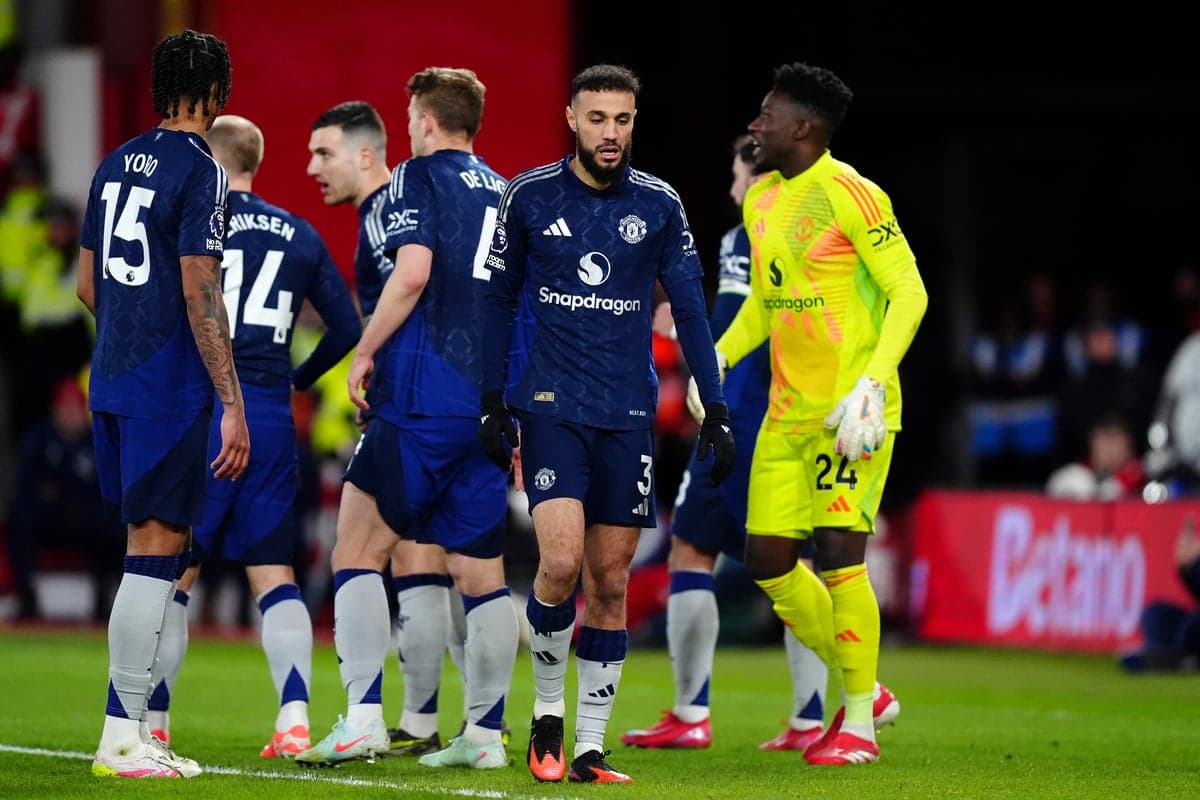
Old Trafford closed its Premier League season with a scoreline that told only half the story. Manchester United 3–2 Nottingham Forest was officially “Match Finished”, but it felt more like a tactical stress test for two sides heading in opposite directions in the table.
I. The Big Picture – Seasonal DNA and the Shape of the Contest
Following this result, Manchester United sit 3rd in the Premier League on 68 points, their goal difference of 16 a direct product of 66 goals for and 50 against overall. At home they have been one of the division’s most reliable forces: 19 games at Old Trafford, 13 wins, 3 draws, 3 defeats, with 39 goals scored and 24 conceded. That home attacking average of 2.1 goals per game and 1.3 conceded framed this as another high-event afternoon rather than a cagey end‑of‑season affair.
Nottingham Forest, by contrast, leave Manchester 16th with 43 points and a goal difference of -3, shaped by 47 goals scored and 50 conceded overall. On their travels they have been bolder than their reputation suggests: 19 away games, 7 wins, 3 draws, 9 defeats, with 28 goals for and 28 against, averaging 1.5 goals scored and 1.5 conceded away. The 3–2 scoreline fits both teams’ seasonal patterns: United leaning into their attacking firepower, Forest willing to trade blows.
Michael Carrick set United up in a familiar 4‑2‑3‑1, the dominant shape of their season (19 league games with this system). Vitor Pereira answered with a 4‑4‑2, one of several systems Forest have cycled through but one that underlined a more direct, vertical intent at Old Trafford.
II. Tactical Voids – Absences and Discipline
Both managers had to redraw their plans around significant absences.
For United, the headline absentee was B. Šeško. With 11 league goals in total this season, he has been a central pillar of their attacking threat, but a leg injury ruled him out of this fixture. Without his penalty‑box presence, Carrick leaned fully into mobility and interchange: B. Mbeumo started as the nominal forward, with Matheus Cunha, Bruno Fernandes, and A. Diallo rotating behind and around him. M. de Ligt’s back injury removed a powerful aerial presence from the defensive line, placing more responsibility on H. Maguire and L. Martinez to manage Forest’s direct attacks.
Forest’s back line, meanwhile, was stripped of both experience and athleticism. O. Aina, W. Boly, Murillo and N. Savona were all missing, while C. Hudson‑Odoi’s absence robbed Pereira of a one‑v‑one outlet on the flank. That forced a back four of N. Williams, N. Milenkovic, Morato and L. Netz to play almost every defensive role at once: defend the box, defend space, and offer width in transition.
Disciplinary trends added another layer of risk. United’s season card profile shows a pronounced late‑game edge: yellow cards spike between 46‑60 minutes and 76‑90 minutes, both at 20.63% of their total yellows, with red cards clustering in the 46‑60 range (66.67% of their reds) and a further 33.33% in 76‑90. Forest mirror that second‑half volatility: 25.42% of their yellow cards arrive between 46‑60 minutes, and 22.03% between 61‑75. This fixture was always likely to become more stretched and more combustible after the interval, and the 3–2 outcome reflects that escalation.
III. Key Matchups – Hunter vs Shield, and the Engine Room
The “Hunter vs Shield” narrative revolved less around a single striker and more around United’s multi‑headed attack facing Forest’s patched‑up defence.
On United’s side, Mbeumo entered as a top‑20 league scorer with 10 goals and 3 assists, backed by 58 total shots and 31 on target. His profile is that of a wide forward who can both attack the box and create, as shown by 46 key passes and a willingness to work without the ball (25 tackles, 8 interceptions). Matheus Cunha matched his 10‑goal tally and added 2 assists, but his 91 dribble attempts with 44 successes and 353 duels (164 won) paint him as the chaos agent: dropping off the line, driving at centre‑backs, and dragging Forest’s shape into uncomfortable zones.
Their primary target was a Forest rearguard missing its usual anchors. N. Williams, one of the league’s top red‑carded players this season, brings aggression and volume: 94 tackles, 17 blocked shots, 45 interceptions, and 377 duels with 211 won. His 6 yellow cards and 1 red underline the fine line he walks. With Milenkovic and Morato forced into a high‑stress afternoon against a mobile front four, Forest’s “shield” was always likely to bend under pressure.
In midfield, the “Engine Room” duel was compelling. Casemiro, with 9 goals and 2 assists from midfield and a league‑leading defensive profile for United (90 tackles, 27 blocked shots, 32 interceptions, 358 duels with 189 won), anchored the double pivot alongside K. Mainoo. His disciplinary record – 10 yellow cards and 1 yellow‑red – is the price of that protective role, especially in those card‑heavy second‑half windows.
Opposite him, M. Gibbs‑White carried Forest’s creative burden. As Forest’s top scorer with 14 goals and 4 assists, 57 shots (31 on target), and 47 key passes, he is both finisher and architect. His 59 dribble attempts with 28 successes and 315 duels (127 won) reflect a player willing to take responsibility in tight spaces. In a 4‑4‑2, he often had to drop into the half‑spaces to link with E. Anderson and O. Hutchinson, then break forward to support Igor Jesus and C. Wood.
Bruno Fernandes, the league’s leading assister, tilted the balance. His 20 assists and 8 goals from midfield, underpinned by 1,940 passes and an extraordinary 133 key passes, gave United a structural advantage. Even in a crowded Forest block, his ability to find Mbeumo’s diagonal runs or Cunha’s drops between the lines repeatedly forced Forest’s defence to choose the lesser of two evils.
IV. Statistical Prognosis – xG Logic and Defensive Solidity
Even without explicit xG numbers, the season data points toward a game where United would create the better chances but leave the door ajar. Heading into this game, United’s overall scoring average of 1.8 goals per match and conceding 1.4 suggested a baseline of multiple home chances and at least one defensive lapse. Forest’s away averages of 1.5 goals scored and 1.5 conceded reinforced the likelihood of both teams finding the net.
United’s penalty record – 4 penalties taken and 4 scored overall, with 0 missed – removes one of the usual variance points in tight games; if they get to the spot, they usually convert. Forest’s own perfect penalty record this season (3 scored, 0 missed) tells a similar story, though they did not have that lever to pull here.
The 3–2 final feels like the logical endpoint of these intersecting trends. United’s attacking structure, driven by Bruno Fernandes, Cunha and Mbeumo, was always likely to overpower a depleted Forest back line, especially in front of a home crowd where they average 2.1 goals. At the same time, a United side that concedes 1.3 goals at home and 1.4 overall was unlikely to keep a clean sheet against a Forest team with a genuine creator‑scorer in Gibbs‑White and an away scoring average of 1.5.
Following this result, the narrative is clear. Manchester United look every inch a Champions League side built on attacking volume and individual quality, still searching for full defensive control. Nottingham Forest, scarred by absences but buoyed by their ability to score twice at Old Trafford, remain a team whose survival and future progress will hinge on shoring up the back line without losing the ambition that makes them dangerous on their travels.
Related News

Premier League Managers Facing Potential Sackings During International Break
Arsenal's Myles Lewis-Skelly Names Unexpected Tottenham Rival as Toughest Premier League Opponent

Three Premier League Players Shining Early This Season
Premier League Early Season Reactions: Man City’s Strength, Arsenal’s Flaws, United’s Struggles

Premier League Returns October 10 After Extended September-October International Break

Fulham and Manchester United Share Points in 1-1 Draw