
Atlético Ottawa Overcomes York United in Canadian Premier League Showdown

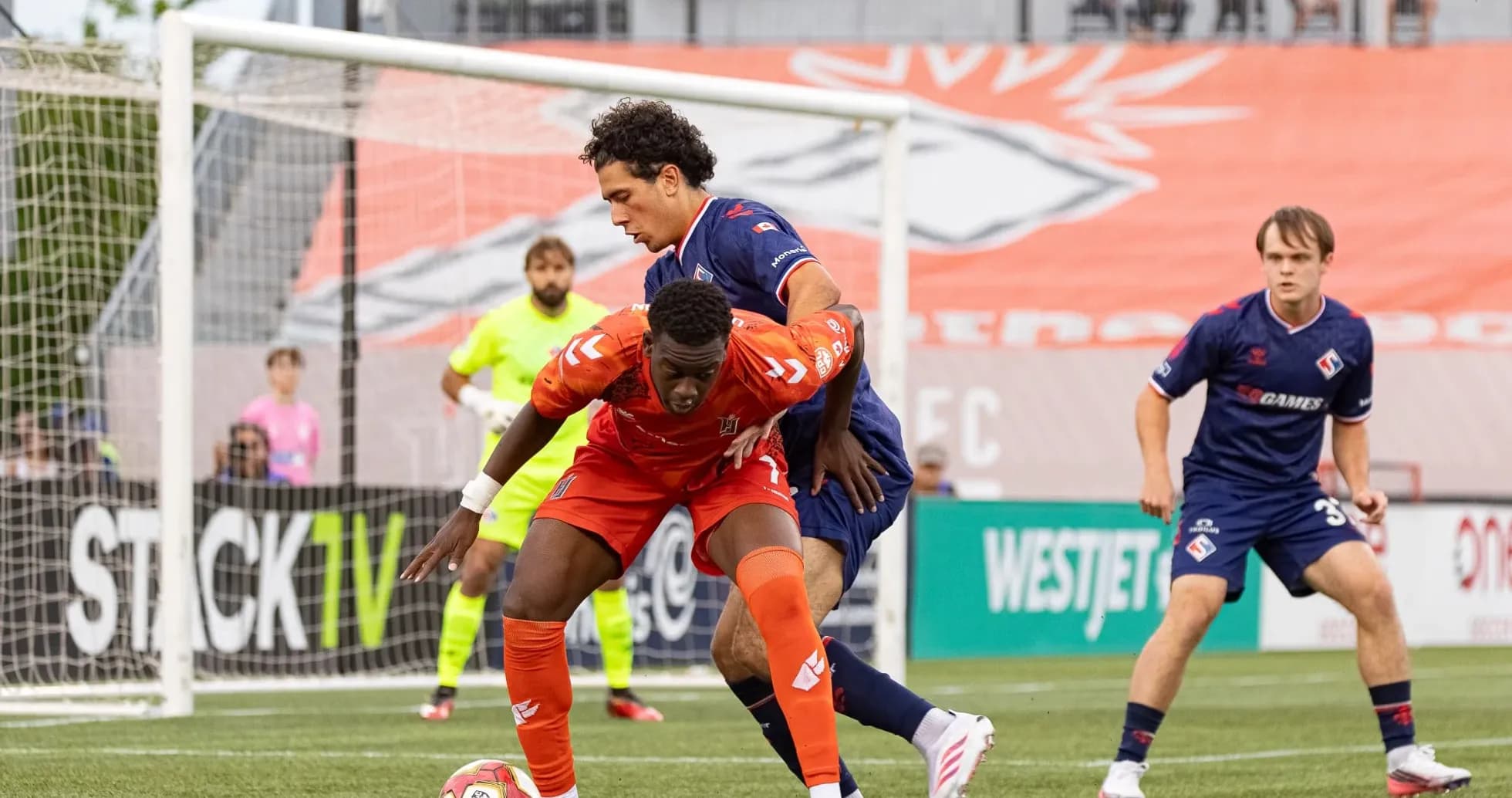
Under the lights at TD Place Stadium, this Group Stage meeting in the Canadian Premier League felt like a snapshot of where both clubs stand in their 2026 journeys. Atlético Ottawa, sitting 3rd with 33 points and a goal difference of 0 (34 scored, 34 conceded overall), overturned a 0-1 half-time deficit to beat York United 2-1, underlining the contrast between their formidable home form and York’s fragile travels.
Heading into this game, Ottawa had been a home machine: 7 wins from 10, just 1 defeat, and 21 goals scored at home at an average of 2.1 per match, against 1.3 conceded. York arrived in Ottawa in 7th place on 18 points, their overall goal difference a troubling -15 (22 scored, 37 conceded), and their away record a warning sign: only 1 win from 9 on their travels, with 7 goals scored and 18 conceded, averaging just 0.8 goals for and 2.0 against away from home.
I. The Big Picture – Structure and Intent
Drew Beckie’s starting XI for Atlético Ottawa hinted at continuity of attacking identity more than rigid formation labels. With C. Kalongo in goal, the outfield core of D. Aguilar, M. Aparicio, G. Antinoro and B. Tabla suggested a fluid, possession-based side, consistent with Ottawa’s season-long preference for shapes like 3-4-3 and 3-4-2-1. The presence of N. Fleuriau Chateau and K. Habibullah gave Beckie options to stretch the game vertically and laterally, echoing a team that averages 1.7 goals per match overall and rarely dies wondering.
Across from them, Mauro Eustaquio’s York United arrived with a side that looked more reactive by necessity than design. I. Pavela anchored a back line in front of which L. Singh, F. Sturing and O. Leon were tasked with stemming the tide of an Ottawa attack that is particularly ruthless at home. In midfield, C. Guzman and S. Yeates had to balance ball progression with emergency defending, while the creative and transitional burden fell heavily on O. Bassett, B. Badibanga and A. Almagro behind S. Gonzales.
York’s seasonal numbers framed their challenge starkly: 2.2 goals conceded per match overall, only 2 clean sheets in 17 fixtures, and a defensive record on their travels that has already seen them ship 5 in a single away defeat. This was always going to be a night of containment and counter for them.
II. Tactical Voids and Discipline
There were no listed absentees, so the “voids” here were more structural than personnel-based. For Ottawa, the main tactical risk has been defensive balance. While they score freely, they also concede at 1.7 goals per match overall, and they have only 3 clean sheets all season. The starting presence of Aguilar and Aparicio – both among the league’s most carded players – underlined the edge in Ottawa’s midfield. Aparicio has 5 yellows this campaign, Aguilar 4, and they sit at the heart of a team whose yellow-card profile spikes dramatically late: 36.36% of Ottawa’s yellows arrive between 76-90 minutes, and another 20.45% come in added time up to 105’. This is a side that finishes games on the edge of the disciplinary cliff.
York’s disciplinary pattern is more spread but still telling. Their yellow cards build through the middle of matches, peaking between 61-75 minutes at 26.53%, and they have already seen a red in that same window. S. Gonzales himself has a red this season, and the broader pattern suggests a team that begins to foul more as fatigue and pressure mount. That dovetails dangerously with Ottawa’s habit of turning matches into late emotional battles.
One more void sits from twelve yards: Ottawa’s penalty record. With 4 penalties awarded, they have scored 2 and missed 2. A 50.00% conversion rate is a vulnerability that can easily turn dominance into frustration in tight matches like this one.
III. Key Matchups – Hunter vs Shield, Engine Room
The headline duel in attack was always going to revolve around Ballou Tabla. With 5 goals and 1 assist in 20 appearances, and 10 shots on target from 16 attempts, he is Ottawa’s clearest cutting edge. His dribbling volume (19 attempts, 9 successful) and 7 key passes show a player who can both break lines off the dribble and combine in tight spaces. Against a York defence that concedes 2.0 goals per away match and has already suffered heavy defeats on the road, Tabla was the “hunter” tasked with exposing a shaky shield.
Supporting him, N. Fleuriau Chateau has been one of the league’s most efficient impact forwards: 3 goals and 2 assists in just 188 minutes, with 4 shots on target from 7 attempts. His dual role as scorer and creator, plus his presence in both the top scorers and top assists lists, makes him a nightmare for defences that struggle with second-phase marking and late runners.
On York’s side, the attacking threat is more distributed. T. Skublak, though not in this starting XI, remains their most complete forward profile this season with 4 goals, 1 assist, 14 shots and a strong duel success rate. In his absence from the lineup, responsibility fell more heavily on the likes of Gonzales and Bassett, and on the creative supply of B. Badibanga. Badibanga’s 3 assists, 10 key passes and 81% passing accuracy in limited minutes mark him as York’s primary conduit between midfield and attack.
In the engine room, the battle between M. Aparicio and the York midfield was always going to shape the match. Aparicio’s 562 passes at 82% accuracy and 11 key passes make him Ottawa’s metronome, but he is also a defensive presence: 22 tackles, 4 blocks and 17 interceptions. His duel with Guzman and Yeates decided whether Ottawa could pin York back or be forced into a more transitional game. Alongside him, G. Antinoro added verticality and dribbling aggression – 39 dribble attempts, 18 successful – but with a red card on his record, he also embodied Ottawa’s risk-reward profile in midfield duels.
IV. Statistical Prognosis and Tactical Reading
From a statistical standpoint, the trajectory of this fixture was always tilted towards an Ottawa win, even if the half-time scoreline told a different story. At home, Ottawa’s average of 2.1 goals for and 1.3 against, combined with York’s away averages of 0.8 for and 2.0 against, pointed to a game in which the hosts would generate the higher xG and sustain territorial pressure.
Ottawa’s late-game card surge and York’s mid-to-late defensive wobble created a predictable intersection: a match likely to open up after the hour, with Ottawa still pushing and York increasingly stretched and fouling. That pattern is consistent with Ottawa turning a 0-1 deficit into a 2-1 full-time score – sustained pressure, attacking depth from the bench (including options like E. García and J. Assi), and York’s inability to protect leads on their travels.
Following this result, Ottawa’s profile as a high-variance contender is reinforced: potent at home, emotionally charged late in games, and still imperfectly balanced. York, meanwhile, remain a side whose structure and numbers scream survival mode – too easy to play through away from home, too reliant on flashes from their creators, and still searching for a defensive platform sturdy enough to support their attacking talent.
Related News

Supra du Quebec's Tactical Triumph Over Forge

Cavalry FC vs Vancouver FC Predicted Lineups and Team News

Cavalry FC vs Vancouver FC: Canadian Premier League Clash Preview

Atlético Ottawa vs York United Predicted Lineups and Team News

Cavalry FC vs Vancouver FC Prediction: Key Stats and Betting Tips
Supra du Quebec vs Forge: Canadian Premier League Clash