
Barcelona's Financial Recovery: From Chaos to Stability
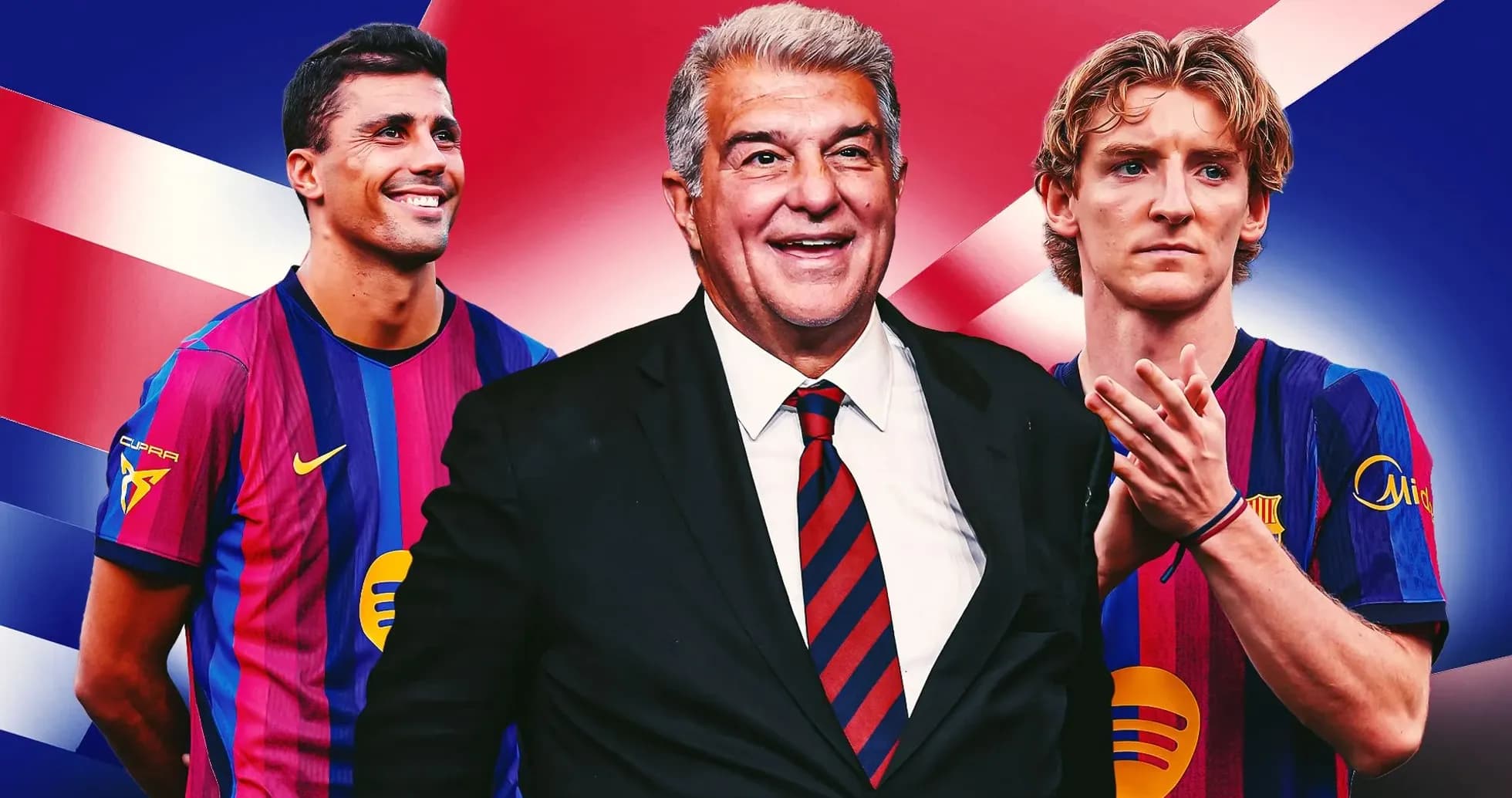
When Josep Maria Bartomeu finally walked away from the presidency in October 2020, Barcelona were not just bruised. They were broken.
The club that had paraded trebles and league titles under his watch stood on the edge of bankruptcy, drowning in debt, bloated wages and sporting chaos. Four Liga crowns and the 2014-15 treble could not disguise the wreckage he left behind.
Bartomeu still points the finger elsewhere. The pandemic, he insists, did it all.
“With the pandemic, we don't have the stadium open, there’s no ticketing, no season tickets, the shop is closed, there's no museum, no football schools,” he told EFE this year, arguing that the collapse in income merely forced Barcelona, like “the vast majority of clubs in Europe”, to borrow their way through a crisis.
But few clubs were hit like Barça. And that was no accident.
Between his re-election in July 2015, on the back of that treble, and his resignation in 2020, Barcelona spent just over €1 billion on 29 signings. Not one turned into an unqualified success. Several became symbols of waste.
Ousmane Dembele, Philippe Coutinho, Antoine Griezmann – huge transfer fees, huge wages, and huge pressure on the books. At the same time, Bartomeu brushed aside La Liga’s warning that clubs should keep salaries under 70 per cent of annual revenue.
“The LFP and UEFA make recommendations but nobody sets a salary cap. We are above what is recommended but the important thing is to be sustainable,” he said. “We can afford it.”
They couldn’t. Not when Covid hit. Not with an ageing squad on colossal contracts that the market simply would not touch.
So when Joan Laporta returned to power in March 2021, he inherited a financial bomb and a sporting dilemma. The biggest name of all became the first casualty.
Lionel Messi, the club’s record scorer and highest earner by a distance, walked away for nothing when his deal expired that summer. Barcelona could not make the numbers work.
“I did what I had to do,” Laporta told El Pais. “Leo was nearing the end of his career and we needed to build a new team. Would I have liked to build the new team with Leo's help? Yes, and we tried. But it wasn't to be.”
Even that brutal cut barely scratched the surface. The crisis ran deeper than one superstar salary, and Laporta knew it.
Two roads out of the wreckage
Marc Menchen Alba, CEO of Barcelona-based 2Playbook, distils Laporta’s choice into two stark paths.
“Laporta basically had two options,” he tells GOAL. “The first would have involved focusing solely on reducing the wage bill and selling players, which would have obviously reduced the competitiveness of the squad and basically meant travelling through the footballing wilderness for two or three years.
“The second option, though, was to try to raise as much revenue as possible, and as quickly as possible, by effectively selling off future assets to start winning again immediately.”
Laporta chose the second road. The risky one.
In the summer of 2022, Barcelona sold 25 per cent of their Liga broadcasting rights for the next 25 years to investment firm Sixth Street, bringing in €582m. It was the biggest of several economic “levers” Laporta pulled to keep the club afloat and competitive.
In essence, he mortgaged tomorrow to survive today, gambling that short-term success would fuel a long-term recovery.
“I remember thinking at the time, this is a bold move,” Menchen says. “But I didn't like it because I thought there were safer ways to go about it.”
On the pitch, the bet seemed inspired. Those levers funded a €45m move for Robert Lewandowski from Bayern Munich, plus deals for Raphinha and Jules Kounde worth a combined €108m. By the end of that season, Barcelona were champions of Spain again, lifting La Liga for the first time in four years.
The price came every summer.
“Laporta's high-risk move led to Barca suffering nearly every summer,” Menchen explains. “We were constantly wondering if the club would be able to register new players.”
The summer of 2024 pushed patience to the limit. Registration sagas, financial contortions and, for many fans, one humiliation too far: the Dani Olmo affair.
Fans turn on the levers
The mood around Camp Nou – and around the club’s never-ending stadium rebuild – darkened. The romance of the levers evaporated. Anger took its place.
Supporters’ group Som un Clam delivered the most ferocious verdict.
“The situation created is inadmissible, and the damage caused to the reputation of the entity is irreparable,” they said in a statement. “The bad image is aggravated by the continuous lies and the deception of members with false promises that are never fulfilled and that end up harming the Club.
“In just four years, FC Barcelona's assets have been decapitalised with various 'levers', selling strategic assets for the future to cover holes derived from chaotic and improvised management.
“Despite promises of recovery, the club still lacks a solid financial plan or a coherent strategy to ensure stability in the medium and long term.
“We demand an end to the unfulfilled promises, constant improvisation and irresponsible sale of assets that are mortgaging the model of collective ownership that makes us unique.
“A change of course is urgent. It is necessary to recover the transparency, planning and values that have made Barca 'more than a club'. The future of Barca depends on us, its members, and we will not sit idly by while the institution degrades.
“Faced with this situation, Som un Clam insists that the vicious circle in which we have entered due to the management of the board endangers the heritage of our club and its ownership model.
“For this reason, we ask for the resignation of the president and the board of directors, while we call on Barca fans to mobilise, reverse this situation and make their voices heard.”
The message was brutal: enough of the levers, enough of the improvisation, enough of Laporta.
He stayed. And the story has started to bend in his favour.
Back to basics: La Masia and restraint
Eighteen months on from that toxic peak, Barcelona look and feel different. Not fixed. But steadier.
Last season brought just one major signing: goalkeeper Joan Garcia, snapped up from Espanyol for €25m, the value of his release clause. For a club used to blockbuster summers, it was a jarring change of pace.
At the same time, Barcelona sold heavily, cashing in on a string of players who had come through La Masia. Those academy products cost nothing to acquire, so every euro banked counted as pure profit.
“You can see with the likes of Lamine Yamal and Pau Cubarsi just how important La Masia is to Barcelona in terms of producing players for the senior squad,” Menchen says. “The players that come through the academy know exactly how to play for the first team, so that reduces the need to spend money on transfers.
“But La Masia also means producing players with a relatively high market value and, very significantly, over the past few windows, we've seen Barca do really well in terms of the sale of academy graduates.
“In the past, a lot of these players left for nothing and that was because Barca was trying to find space for these players in the first team but it wasn't possible, so they ended up leaving for free. Now, we are seeing 18 and 19 year olds that most fans have never even heard of leaving for 5 or 10 million euros, which is very helpful when it comes to meeting budgetary requirements.
“And remember, Real Madrid is doing the same thing, selling a lot of players that came out of La Fabbrica, which is why they were able to pay for Yan Diomande and other big names this summer.
“Every year Barca and Madrid invest 20 to 30 million in their academies, and they're really reaping the rewards of doing so this year.”
This summer, Barcelona have again spent heavily overall, but the outgoings have been just as significant. Paris Saint-Germain paid €48.5m for Ferran Torres. Lewandowski left on a free, removing a huge salary from the books. Liverpool agreed to take on all of Ronald Araujo’s wages during his loan at Anfield.
The wage bill, once wildly out of control, has started to breathe.
The Alvarez question – and the last big shadow
One question lingers over the forward line: how to replace Lewandowski’s goals in the long term. Julian Alvarez has emerged as a dream solution, but not necessarily a realistic one.
“So, could Barca yet bring in Alvarez to fill the significant hole in the attack left by Lewandowski? As things stand, Menchen is not so sure,” the analyst warns.
The route, if it exists, is familiar: sell another academy product for a big fee.
“You always to have to remember that this is a cash-flow business, so if you sell Marc Casado, for example, for thirty million, you could cover the cost of Julian Alvarez for this season, as the cost of a new signing is amortised, meaning it's spread out over the duration of his contract,” Menchen explains.
La Masia sales. A finished Camp Nou. A city once again full of tourists pouring through the club museum. Add those pieces together and the picture changes.
“Selling players from La Masia, combined with the eventual completion of the new Camp Nou, the increase in museum revenue tied to the recovery of tourism in Barcelona, means Barca will probably be able to operate with complete financial freedom next summer for the first time since before the pandemic.”
Are the financial nightmares really over?
“They are for now,” Menchen says. His one caveat is the lingering cost of those levers.
“My one minor concern is the 40 million that Barca continues to pay to Sixth Street for the Liga rights. It might not seem like a lot of money for a club that earns a billion in revenue on an annual basis but it's still a game of small margins and it could prove the difference between Barca signing a player that Madrid also want.
“However, I do think we are seeing the beginning of the end of Barca's most serious financial problems. Laporta made a high-risk move, the kind of decision that a president sometimes has to make, and I think he'll feel with the passing of time that he was right to do so - particularly with Barca winning three of the last four La Liga titles.
“I still believe it would have been better to review the spending and avoid some of the deals that he did. I think avoiding some of the signings he made would have saved Barca some money, and meant that they would haven't have to sell future Liga rights.
“We still don't know exactly what will happen further down the line. But we can say that Barcelona are no longer in a position where they have to pull any more levers.”
For a club run in what Menchen calls a “weird and crazy” way for far too long, that single sentence might be the most radical change of all.
Related News
Transfer Buzz: Haaland's Two Paths; Real Madrid Eyes £75M Premier League Star
Manchester United Targets Premier League Striker Jean-Philippe Mateta for January Reinforcement
Liverpool Eyes 17-Year-Old Mexican Midfielder Gilberto Mora for Summer Transfer
Summer Transfer Window 2026: Manchester United and Tottenham Miss the Mark
Liverpool Maintains Interest in Real Madrid Midfielder Despite Transfer Challenges
Barcelona Watches as Estevao Grows Frustrated with Chelsea Role Under Xabi Alonso