
Barcelona's Transfer Dilemma: The Search for a Centre-Back
Barcelona’s transfer window has been frantic, ambitious, and, in most areas, convincing. Midfield refreshed, attack reinforced, gaps patched all over the pitch. Yet as the clock ticks down on deadline day, one position still glares back at the sporting department: centre-back.
The 5–2 win over Rayo Vallecano summed up the dilemma. Barcelona can blow teams away. They can also be blown open. Rayo found space, found gaps, and reminded everyone that Hansi Flick’s side is still walking a tightrope without a safety net at the heart of the defence.
A thin core at the back
Álvaro Cortés’ departure stripped one more layer from an already thin area. On paper, Barcelona have three senior centre-backs: Pau Cubarsí, Gerard Martín, and Andreas Christensen. That’s it.
Eric García and Jules Koundé are nominally options, but Flick is using both at right-back. In practical terms, they’re no longer part of the core rotation in the middle.
Cubarsí and Martín have become Flick’s go-to pairing for the biggest games. Young, brave on the ball, calm under pressure. Their display against Athletic Club underlined why the coach trusts them: they read danger early, they didn’t panic, they played like veterans.
Christensen sits just behind them in the hierarchy. Reliable when fit, intelligent in his positioning, but with a body that doesn’t always cooperate. That’s the problem. One injury to Cubarsí or Martín, and Barcelona’s central defence starts to look like a house built on matchsticks.
Depth or disaster
Yes, García and Koundé can step inside if required. They’ve done it before, and they can do it again. But with Barça fighting across multiple fronts and the calendar about to get brutal, “they can do a job there” isn’t really a strategy. It’s an emergency plan.
What Flick needs is not a star. Not a marquee signing who demands to start every week. He needs a fourth centre-back who accepts the role, understands the rotation, and can step in without the level collapsing.
Someone to start away to a lower-table side so Cubarsí can rest. Someone to cover a three-week muscle injury without forcing Koundé to shuffle across and unbalance the back line again. Someone cheap, reliable, and physically ready.
That’s the brief Deco is working with as the window closes: find a low-cost defender, or secure a loan, who can plug that hole without blowing up the wage bill or the long-term plan.
Enter Ruud Nijstad
One name has pushed itself to the front of the rumour mill: Ruud Nijstad.
The Dutch defender is just 18, left-footed, and already stands at 195 cm (6'5"). He plays for FC Twente and has built a reputation as a dominant presence in the air, strong in duels, and confident enough on the ball to carry it out from the back. On paper, he looks like the modern centre-back profile every big club chases.
The attraction for Barcelona is obvious. A towering left-footer who can grow with Cubarsí and Martín, offering an aerial edge and long-term upside, not just a short-term patch.
There’s another layer. Nijstad has previously admitted he’d love to play with Cubarsí at Barça. For a club trying to build a young defensive core for the next decade, that kind of ambition fits the project perfectly.
A deal against the clock
The problem? FC Twente don’t want to lose him.
Nijstad only recently signed a contract running until 2029, and Twente see him as a prized asset, not a player to be moved on the final day of the window. Any negotiation this late, with that kind of contract length, becomes complicated and expensive.
Barcelona’s financial reality leaves little room for a bidding war. The club needs a deal that makes sense: a loan, a creative structure, or a low-cost move that doesn’t strangle future plans. Twente, understandably, are under no pressure to play along.
So the question becomes sharper as the hours drain away.
Do Barcelona push for a young prospect like Nijstad, accepting the difficulty and the cost because he fits the long-term vision? Or do they pivot to a more modest, short-term solution—an older, cheaper defender who simply covers minutes and buys time until next summer?
The need is clear. The risk is obvious. The clock is loud.
Barcelona have rebuilt almost everything this summer. Now they have to decide: will they trust three centre-backs to carry a season, or find one more body to protect a title challenge that’s already walking a fine line?
Related News
Tottenham Close in on Mudryk Loan from Chelsea
Victor Osimhen: The Key to Arsenal's Title Challenge
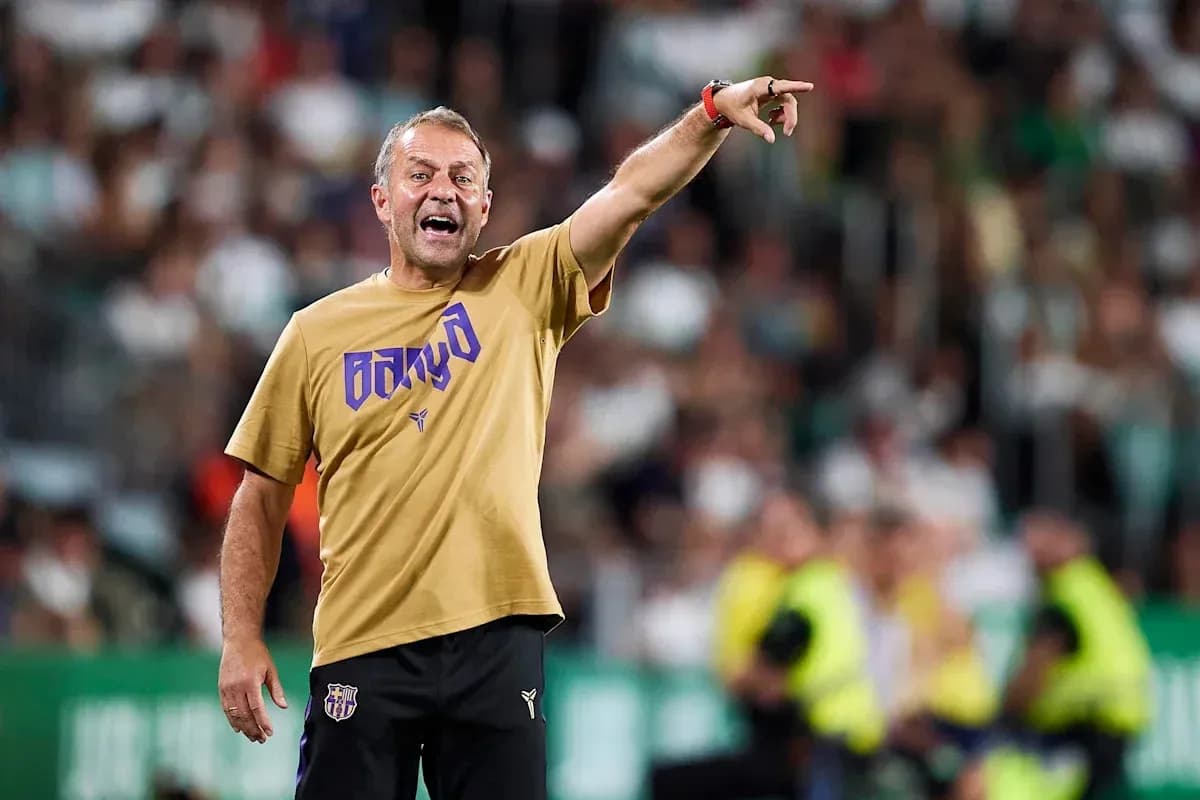
Barcelona's Transfer Dilemma: The Search for a Centre-Back
Marc Guiu Joins RB Leipzig: A New Chapter in His Career
Zeidane Inoussa Joins Portsmouth on Loan from Swansea City
Sam Edozie Requests Transfer from Southampton Before Deadline