
Barcelona's Summer Rebuild: A Bold Squad with a Striker Dilemma
Barcelona’s summer rebuild has been bold, expensive and, in one crucial area, incomplete.
They have stacked the midfield, added speed out wide, brought in one of the game’s most decorated leaders – and yet, as La Liga looms, the champions are staring at a season without a recognised number nine.
A supercharged squad – with a hole in the middle
The headline move was clear. Rodri, prised from Manchester City, arrives as a Ballon d'Or winner and World Cup-winning captain, dropped straight into a midfield already overflowing with technique and control. It is the sort of signing that screams authority.
Around him, Barcelona have tried to stretch the pitch. Anthony Gordon and Karim Adeyemi give Hansi Flick pure pace and direct running in the wide areas. On top of that, 18-year-old Belgian winger Jesse Bisiwu has been brought in as a long-term project, a bet on what he might become rather than what he is now.
On paper, it looks like a squad built to dominate the ball and tear teams apart in transition.
Then you look at the centre-forward position. And there’s… nobody established.
Robert Lewandowski, who carried the number nine role with typical ruthlessness, has gone. At 37, he chose a new chapter with Chicago Fire in Major League Soccer after his contract expired at the end of last season. Ferran Torres, often Lewandowski’s understudy through the middle, has been sold to Paris St-Germain for about 50m euros (£42.7m).
Torres’ 21 goals in 49 appearances last season did not just pad the stats; they gave Flick a reliable alternative focal point. Both exits have ripped out the spine of Barcelona’s attacking structure.
Now, with the first La Liga fixture away to Elche on Sunday, 23 August, Flick heads into the campaign without a single established senior striker in his first-team squad – unless the club moves before the window closes on 1 September.
The Alvarez obsession
Inside the club, the preferred solution has never been a secret. Barcelona want Julian Alvarez from Atletico Madrid.
The 26-year-old Argentina international signalled during the World Cup that he would be open to a move away. That hint was enough to spark interest across Europe, including from Real Madrid.
Atletico’s response was immediate and emphatic. Chief executive Miguel Angel Gil Marin shut the door, publicly insisting the club would not sell Alvarez, “not even for 200m euros” (£170.8m). The message was aimed at everyone, Barcelona included: this is our striker, and he is not on the market.
So Barcelona wait, and hope, and work the phones. But as it stands, Flick has to plan as though Alvarez will not be walking through the door.
Flick’s dilemma: adapt or insist?
Flick has never pretended the situation is ideal.
“We know we have to do something,” he admitted this month, before pointing towards the solutions he can manufacture from within. The German is not short of attacking talent. What he lacks is the classic penalty-box predator who lives between the opposition centre-backs.
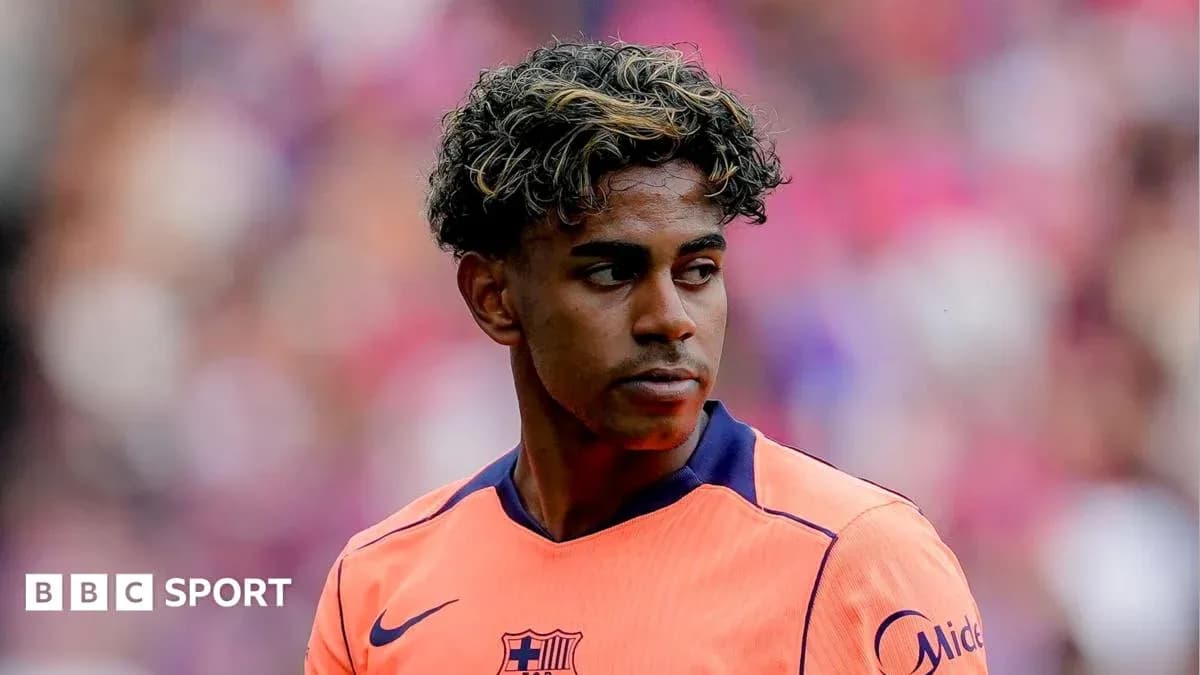
Teenager Lamine Yamal has already become the team’s attacking reference point. He is coming off a staggering season, one in which he scored 24 goals and lifted the World Cup with Spain. Yet even with that output, his game is built on something else: isolating a full-back on the right, cutting inside, bending the pitch to his will and conjuring chances from angles that barely exist.
Flick knows it. His preference remains for Lamine Yamal to start from the right wing, where his one-on-one threat can tilt entire matches.
So the coach looks elsewhere for a “false nine”.
Dani Olmo can play there, dropping into pockets and linking with midfield. Raphinha has been used centrally by Flick as well, offering aggression and work rate between the lines. Fermin Lopez is another who has said he feels comfortable operating as a false nine, ghosting into advanced positions rather than pinning defenders.
Gordon and Adeyemi, meanwhile, bring raw speed and directness. They stretch defences, they force mistakes, they drag centre-backs into wide areas they do not want to visit. But neither is a conventional striker, the type who thrives on crosses, scraps and half-chances in the box.
A shape without a spearhead
One route is obvious: lean into the chaos.
Barcelona could abandon the traditional nine altogether and go with a fully fluid front line, three or four attackers constantly rotating, never allowing defenders a fixed reference point. Lamine Yamal drifting inside, Gordon or Adeyemi attacking from the opposite flank, Olmo or Raphinha popping up between the lines – a carousel of movement rather than a single target.
On their best days, that kind of system becomes a nightmare to defend. Centre-backs are dragged into zones they hate, full-backs are overloaded, holding midfielders are forced to decide who to track and who to leave. With Rodri anchoring midfield and dictating tempo, the structure behind such a front line would be strong.
But it is a gamble. In tight games, in cold away nights, in title run-ins, managers often fall back on the simplest solution: a striker in the box, one chance, one goal.
Flick, like every elite coach, knows this. Barcelona’s recruitment team knows it too. The message from the club is clear: the ideal scenario is still to bring in a specialised striker who fits the profile, someone who can finish the moves this retooled team will create.
Time is ticking. The champions look powerful, refreshed, and loaded with attacking talent. Yet until that number nine question is answered, one doubt will hang over their title defence: can a team this good afford to go without a true striker?
Related News

Kylian Mbappé Leaves Nike for On: A New Era in Football Boots
Liverpool's Deadline Approaches: Morrison's Loan Move
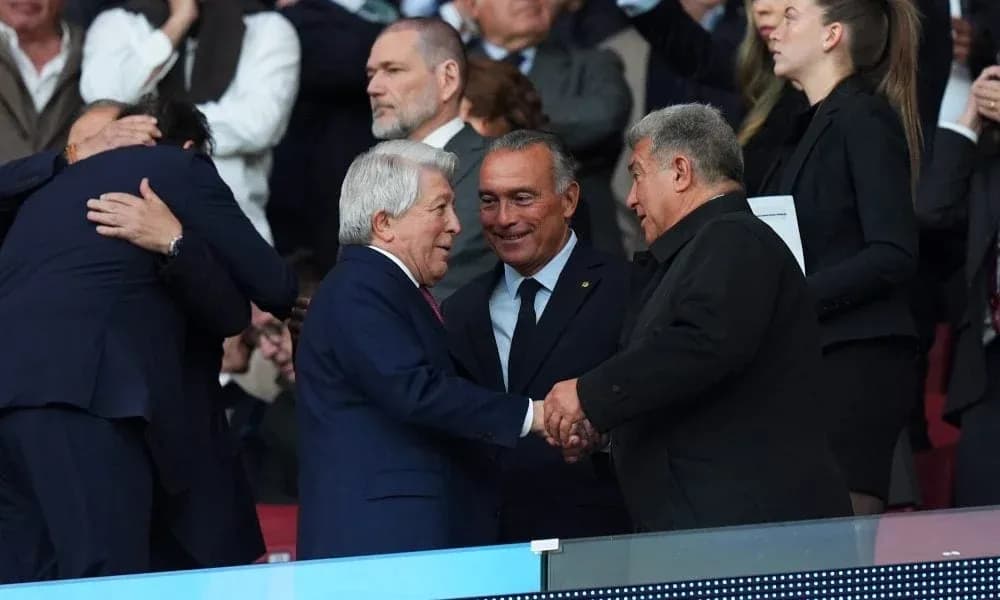
Barcelona's Bid for Julián Álvarez: Yuste Confirms Interest

Joao Cancelo's Awkward Homecoming at Camp Nou
Manchester United Bid for Baleba Amid Midfield Rebuild
Barcelona's Summer Rebuild: A Bold Squad with a Striker Dilemma