
Bay FC and Utah Royals W Play to Tactical 0-0 Draw
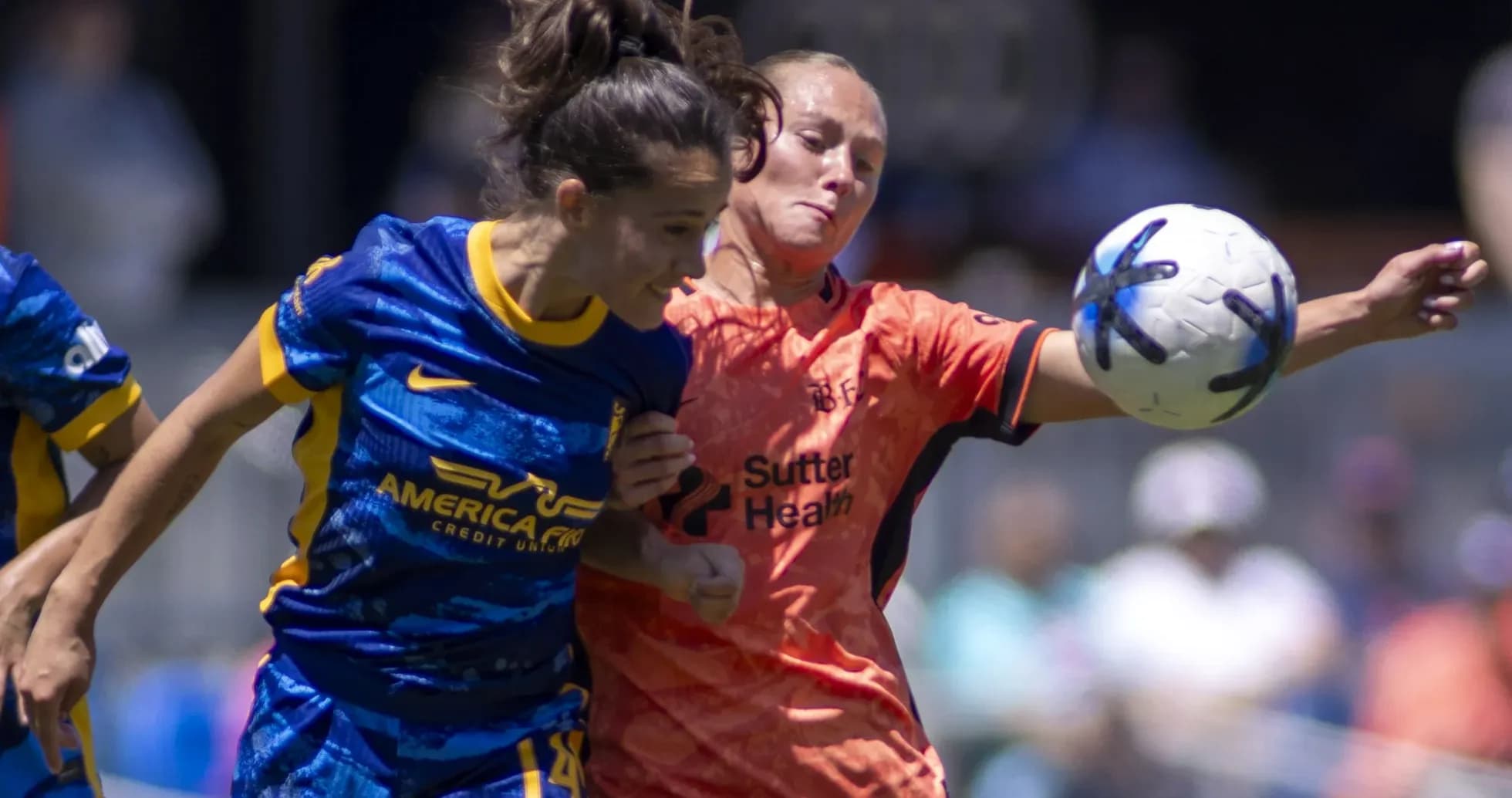
Bay FC and Utah Royals W played out a controlled, tactical 0-0 at PayPal Park, a match defined more by structure and discipline than by chaos in either box. Across 90 minutes, both sides generated exactly eight shots, shared the fouls count at 11 apiece, and split possession almost evenly (Bay FC 52%, Utah Royals W 48%), underlining how finely balanced the contest remained. Where Bay FC tried to construct through midfield and accumulate passes, Utah Royals W focused on direct penetration into the area and compact defensive spacing. The stalemate ultimately reflected two well-organized defensive units and a lack of final-third precision on both sides.
In a match without goals, the key events were substitutions and discipline. Utah Royals W moved first: at 46', Tatumn Milazzo (IN) came on for Janni Thomsen (OUT), immediately signalling an adjustment in the back line and wide defensive coverage. The first disciplinary action arrived at 55', when Claire Hutton (Bay FC) received a yellow card — Foul — reflecting the growing intensity in central areas as Utah tried to break lines.
Bay FC’s first change at 58' was clearly offensive: Caroline Conti (IN) came on for Taylor Huff (OUT), adding fresh legs higher up the pitch. Utah Royals W responded at 61' with Paige Monaghan (IN) for Kiana Palacios (OUT), a like-for-like attacking rotation to maintain pressing energy.
Defensive aggression from Bay FC’s core continued at 65', as Aldana Cometti was booked — Foul — underlining her front-foot defending against Utah’s runners between the lines. Utah’s only yellow followed at 70': Tatumn Milazzo was cautioned — Foul — after her introduction, illustrating the physical edge in duels on Utah’s right side.
Bay FC then introduced more attacking width at 73', with Onyeka Gamero (IN) for Dorian Bailey (OUT), pushing the home side toward a more vertical, transition-oriented approach. Utah Royals W made a double move at 75': Alexa Spaanstra (IN) replaced Cloé Lacasse (OUT), and Aria Nagai (IN) came on for Narumi Miura (OUT), rebalancing their midfield and wide threat for the final phase.
The final Bay FC booking came at 81', when Joelle Anderson received a yellow card — Argument — a rare emotional flash in an otherwise controlled tactical contest. Utah’s last change at 88' saw Brecken Mozingo (IN) for Cecelia Kizer (OUT), adding late attacking spark. Bay FC’s final substitution at 90' brought on Madeline Moreau (IN) for Karlie Lema (OUT), a late defensive recalibration to secure the clean sheet.
Tactical Overview
Tactically, Emma Coates’ Bay FC leaned into ball circulation and territorial control. Their 338 passes, with 248 accurate (73%), illustrate a possession-based approach built through the back four of Sydney Collins, Aldana Cometti, Joelle Anderson, and Anouk Denton, with Jordan Silkowitz providing the reset option. The midfield triangle of Hanna Bebar, Claire Hutton, and Taylor Huff (later supported by Caroline Conti and Onyeka Gamero) tried to create overloads in the middle third, but the shot profile tells a different story: only two attempts inside the box from eight total, and just one shot on goal. Bay FC moved the ball well in front of Utah’s block but struggled to convert possession into high-quality chances.
Defensively, Bay FC’s structure was solid. Utah Royals W were limited to eight shots as well, but seven of those came from inside the box, indicating that when Utah did break through, they reached dangerous zones. Even so, Utah could only place two shots on target, both handled by Silkowitz (two goalkeeper saves). The three Bay FC yellow cards — two for Foul and one for Argument — reflect a side willing to step into duels and occasionally over-commit, but they managed game state without tipping into reckless defending.
Utah Royals W Strategy
For Utah Royals W, Jimmy Coenraets set his side up to be more vertical and penalty-area focused. Their shot map — seven inside the box, one outside — contrasts with Bay FC’s six from range and only two in the area. With 302 passes and 208 accurate (69%), Utah accepted a slightly lower passing accuracy in exchange for more direct progression, particularly through Mina Tanaka and Cecelia Kizer between the lines, supported by wide runs from Cloé Lacasse before her substitution and later Alexa Spaanstra.
Utah’s defensive compactness was notable: Bay FC were held to one shot on goal despite having more of the ball. Mandy McGlynn needed just one save, protected by a back line of Janni Thomsen (then Tatumn Milazzo), Kate Del Fava, Kaleigh Riehl, and Nuria Rábano, who consistently held their line around the edge of the box, forcing Bay into speculative efforts from distance. The lone Utah yellow card to Milazzo — Foul — encapsulated a robust but largely controlled defensive display.
Statistical Summary
Statistically, the draw is well supported. Both teams finished with eight total shots and four corner kicks each, reinforcing the territorial parity. Bay FC’s marginal edge in possession and passing volume reflects their intent to build, while Utah Royals W’s superior share of shots inside the box points to a clearer penetration model, albeit without the finishing to match. With no xG data provided, the shot locations suggest Utah may have carried a slight qualitative edge in chance creation, while Bay FC held the structural and territorial advantage.
From a season-pattern perspective, Bay FC’s 52% possession and 73% passing accuracy align with a side comfortable on the ball but still refining its final-third mechanisms. Utah Royals W’s 69% passing accuracy and emphasis on box entries fit a more transition-friendly profile, where compact defending and direct attacks are prioritized. The disciplinary balance — Bay FC 3 yellow cards, Utah Royals W 1, total 4 — underscores Bay’s more aggressive engagement in duels, contrasted with Utah’s slightly more conservative, shape-first defending.
In the end, PayPal Park witnessed a tactical stalemate: Bay FC’s controlled build-up met by Utah Royals W’s compact, box-focused game plan. Neither side found the precision required in the final action, leaving both coaches with a clean sheet to build from and clear, data-backed clues about where their attacking evolution must focus next.
Related News
Kansas City W vs Denver Summit W: NWSL Women Showdown
Portland Thorns W vs Houston Dash W Prediction: Key Stats and Tips
Washington Spirit W vs Angel City W Prediction: Key Stats and Betting Tips
Racing Louisville W vs San Diego Wave W Predicted Lineups and Team News
Kansas City W vs Denver Summit W Prediction: Key Stats and Betting Tips
Racing Louisville W vs San Diego Wave W: NWSL Clash Preview