
Orlando Pride W Secures Tactical 1-0 Win Over North Carolina Courage W
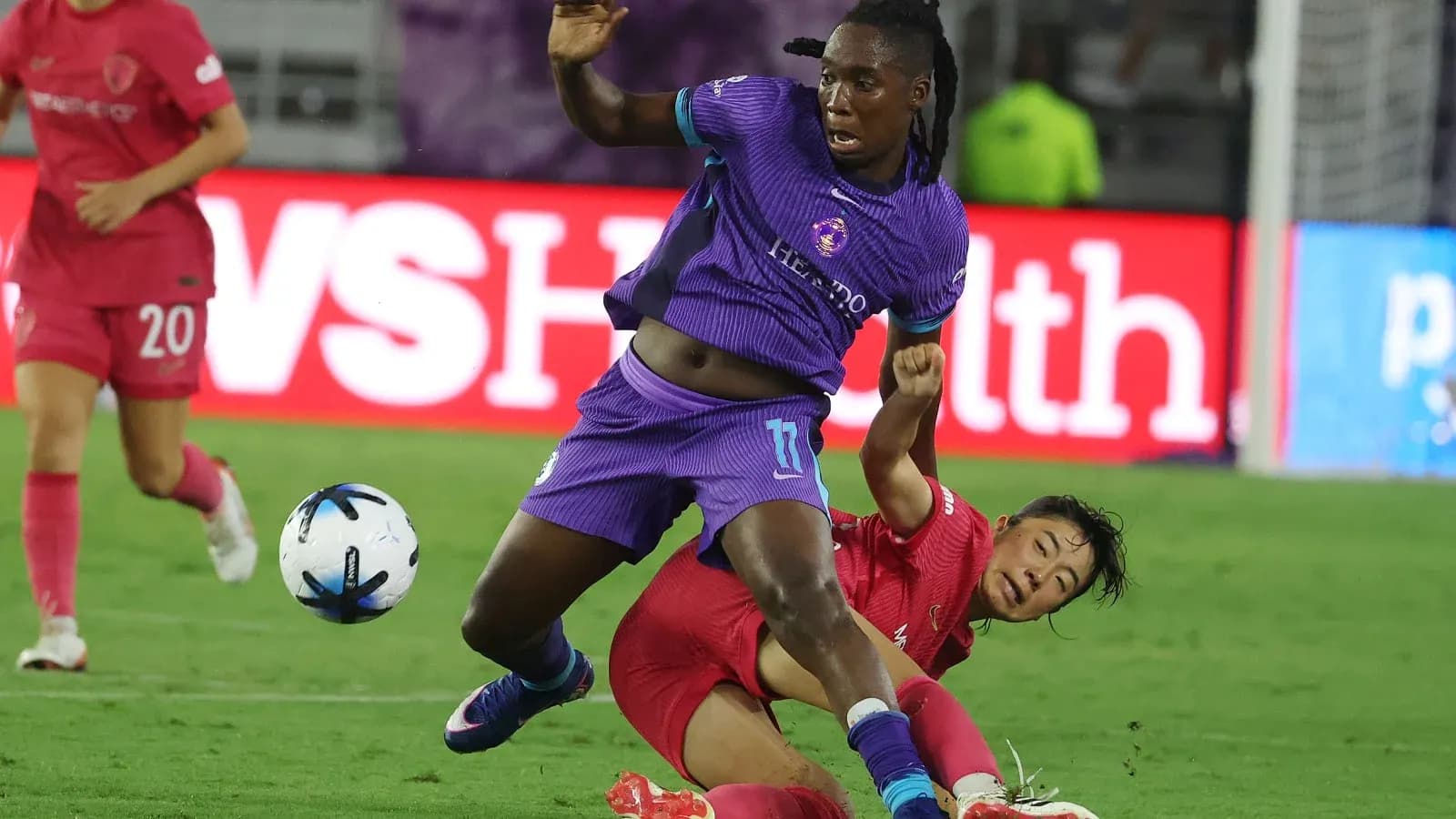
Inter&Co Stadium under the Orlando lights staged a tight, tactical 1-0 home win for Orlando Pride W over North Carolina Courage W, a result that subtly reshapes the early-season picture in the NWSL Women group stage. Following this result, Orlando’s season-long profile looks increasingly coherent: a side built on a stable 4-2-3-1, capable of grinding out narrow margins and leaning on star power at the top of the pitch. North Carolina, meanwhile, leave with familiar questions about cutting edge and risk management.
I. The Big Picture – Identities Taking Shape
Across the campaign overall, Orlando have taken 11 points from 8 matches, with a goal difference of 1 (12 scored, 11 conceded). At home, they have been volatile but dangerous: 5 matches, 2 wins, 1 draw, 2 defeats, with 7 goals for and 8 against. The numbers underline a team that embraces jeopardy at Inter&Co Stadium, averaging 1.4 goals for and 1.6 against at home.
North Carolina arrive in contrast as a team still searching for balance. Overall they sit on 9 points from 8, with a goal difference of -2 (9 for, 11 against). On their travels, they are awkward and stubborn: 4 away games, only 1 defeat, with 3 goals scored and 3 conceded, averaging 0.8 goals both for and against away. That low-scoring away profile framed this as a test of whether Orlando’s attacking ceiling could break a compact Courage side.
Orlando’s season-long tactical DNA is remarkably consistent. Their most-used and almost exclusive shape is 4-2-3-1 (8 matches), and Seb Hines leaned into that again: Anna Moorhouse in goal; a back four of Oihane Hernández, Rafaelle Souza, Coriana Dyke, and Hailie Mace; a double pivot of Haley Hanson and Ally Lemos; a fluid line of three in Solai Washington, Angelina Alonso Costantino, and Summer Yates; with Barbra Banda as the lone striker.
North Carolina’s season has been more experimental. They have alternated between 4-3-3 (3 matches), 3-4-3, 4-4-2, 5-3-2, and 3-4-2-1. Here, Mak Lind opted for a 4-3-3: Kailen Sheridan behind a back four of Ryan Williams, Uno Shiragaki, Natalia Staude, and Dani Weatherholt; a midfield trio of Riley Jackson, Shinomi Koyama, and Manaka Matsukubo; and a front three of Lauryn Thompson, Evelyn Ijeh, and Ashley Sanchez.
II. Tactical Voids and the Discipline Story
There were no listed absentees in the data, so the “voids” were more structural than personnel-based. For Orlando, the absence of Lizbeth Ovalle from the starting XI – despite her 2 assists and strong creative numbers this season – shifted more responsibility onto Washington and Yates between the lines. It made Banda even more central as the reference point for progression and final-third threat.
For North Carolina, the bench presence of Allyson Schlegel and the rotating use of forwards like Chioma Okafor and Cortnee Vine this season hinted at attacking depth, but Lind chose continuity with Sanchez as the primary creative and goal threat.
Disciplinary profiles shaped the tone. Orlando’s yellow-card timing this season shows a clear late-game edge: 30.00% of their yellows arrive between 61-75 minutes, with another 20.00% between 76-90 and 20.00% between 91-105. They are a side that plays on the edge as fatigue and game-state pressure rise.
North Carolina’s card distribution is even more telling. A hefty 40.00% of their yellows fall in the 46-60 minute window, with 20.00% between 76-90 and 10.00% in added time (91-105). Crucially, their only red card this season comes in the 76-90 range, a late-game flashpoint that mirrors their struggle to manage transitions and desperation phases. That red belongs to Schlegel, an impact attacker whose aggression off the bench is a double-edged sword.
III. Key Matchups – Hunter vs Shield, Engine Room Battles
The headline duel was always going to be Barbra Banda versus a Courage defence that, overall, concedes 1.4 goals per game but only 0.8 away. Banda’s season is bordering on dominant: 7 goals in 8 appearances, 30 shots with 19 on target, and an average rating of 7.87. She is not just a finisher but a volume shooter and constant reference point, drawing 19 fouls and winning 1 penalty (even if Orlando have yet to convert from the spot this season).
Against her, the Courage back line is built more on structure than star power. Ryan Williams, a top-assist provider with 3 assists and 283 passes at 85% accuracy, is both a defensive anchor and an outlet. Her forward surges from right-back, however, create the risk corridor Banda loves to exploit: the channel between full-back and centre-back. The tactical puzzle for Lind was simple but brutal – how often could Williams join attacks without leaving Shiragaki and Staude exposed to Banda’s runs and Orlando’s vertical passing?
In midfield, the “engine room” duel pitted Orlando’s double pivot of Hanson and Lemos against a Courage trio headlined by Manaka Matsukubo and Koyama. Orlando’s season-long stability in 4-2-3-1 means their pivot understands spacing, screening, and second-ball recovery. North Carolina’s frequent formation shifts have given them flexibility but less rhythm; Matsukubo is tasked with knitting play while also tracking runners like Washington and Yates between the lines.
Higher up, Ashley Sanchez stands as Courage’s answer to Banda. With 5 goals from midfield and 11 key passes, she is both scorer and creator, operating in the half-spaces. Her duel with Rafaelle Souza and Dyke – stepping out of the back line to meet her – was central to whether North Carolina could break Orlando’s home block, which has produced 1 clean sheet at home and 3 overall.
IV. Statistical Prognosis – Margins, xG Logic, and Future Patterns
Even without explicit xG values, the statistical currents point to a narrow Orlando edge in a low-to-mid event game. Orlando’s overall scoring average of 1.5 goals per match versus North Carolina’s overall concession rate of 1.4 suggests the hosts are likely to find a single breakthrough more often than not, especially at a venue where they score 1.4 per game.
On their travels, North Carolina’s attack averages only 0.8 goals, mirroring Orlando’s overall defensive concession of 1.4. That combination supports a script where the Courage create phases of pressure but struggle to generate repeated, high-quality chances – particularly if Sanchez is isolated or overburdened.
Discipline and late-game trends also tilt the prognosis. Orlando’s cluster of yellows in the final half-hour hints at a team willing to foul to protect a lead, while North Carolina’s late yellow and red-card spikes suggest vulnerability when chasing. In a one-goal game state, that difference in emotional control is decisive.
Following this result, the 1-0 scoreline feels less like an upset and more like the logical intersection of season-long tendencies: Orlando’s stable 4-2-3-1 and Banda’s elite finishing edge narrowly outdueling a Courage side that defends stoutly away but still lacks a reliable second scoring threat behind Sanchez. For future meetings, the blueprint is clear: unless North Carolina can diversify their attack and better manage late-game discipline, Orlando’s structured aggression and star power will continue to tilt tight contests their way.
Related News

Kansas City W vs Denver Summit W: NWSL Women Showdown
Portland Thorns W vs Houston Dash W Prediction: Key Stats and Tips
Washington Spirit W vs Angel City W Prediction: Key Stats and Betting Tips

Racing Louisville W vs San Diego Wave W Predicted Lineups and Team News
Kansas City W vs Denver Summit W Prediction: Key Stats and Betting Tips

Racing Louisville W vs San Diego Wave W: NWSL Clash Preview