
Sevilla vs Espanyol: A Crucial La Liga Showdown

Under the sharp May light of the Estadio Ramón Sánchez Pizjuán, a survival six-pointer between Sevilla and Espanyol unfolded with all the tension of a relegation-adjacent drama. Matchday 35 in La Liga, two sides separated by a single point heading into this game, and a table that framed this as more than a mid-table skirmish: Sevilla in 13th on 40 points, Espanyol in 14th on 39. The final whistle confirmed a 2–1 home win, and following this result Sevilla’s season narrative tilts from anxiety toward consolidation, while Espanyol’s remains precariously unresolved.
Sevilla’s seasonal DNA has been one of volatility. Overall they have 11 wins, 7 draws and 17 defeats from 35 matches, with 43 goals for and 56 against, a goal difference of -13. At home, though, there is a more stable core: 7 wins, 4 draws and 7 losses, 24 scored and 24 conceded. They are not dominant in Nervión, but they are balanced enough to make it a difficult place to visit. Espanyol, by contrast, arrived as a team that had flirted with momentum but never married it: 10 wins, 9 draws and 16 defeats overall, 38 goals scored and 53 conceded for a goal difference of -15. On their travels they have been fragile – 4 wins, 5 draws and 9 losses away, 20 goals for and 30 against – a profile of a side that can threaten but rarely control.
The tactical shapes told their own story. Luis Garcia Plaza rolled Sevilla out in a 4-4-2, a more direct, two-striker structure that underlined the intent to impose themselves at home. O. Vlachodimos anchored the side behind a back four of J. A. Carmona, Castrin, K. Salas and G. Suazo. Across midfield, R. Vargas and C. Ejuke held the flanks, with L. Agoume and N. Gudelj as the central hinge. Up front, N. Maupay and I. Romero formed a partnership designed to stretch Espanyol’s centre-backs and pin their full-backs deeper.
Espanyol, under Manolo Gonzalez, responded with their more familiar 4-2-3-1. M. Dmitrovic stood in goal, shielded by O. El Hilali, F. Calero, L. Cabrera and C. Romero. The double pivot of U. Gonzalez and Exposito was tasked with both screening and progressing, while the trio of R. Sanchez, R. Terrats and T. Dolan operated behind lone striker R. Fernandez Jaen. On paper, it was a structure that could outnumber Sevilla in midfield and exploit spaces between the lines; in practice, Sevilla’s aggression and verticality often turned that advantage into a liability.
Injury absences subtly shaped both squads. Sevilla were without M. Bueno (knee injury) and Marcao (wrist injury), thinning their defensive depth and making the selection of Castrin and K. Salas less of a choice and more of a necessity. For Espanyol, the loss of C. Ngonge and J. Puado, both with knee injuries, blunted their attacking rotation and limited Gonzalez’s options if the starting front four failed to unsettle Sevilla’s back line.
Discipline, always a live wire with these squads, hovered in the background of every duel. Sevilla’s season-long card profile paints them as a side that grows more combustible as matches wear on: their yellow cards peak in the 91–105 minute window at 19.80%, with a sustained rise from 61–75 (16.83%) and 76–90 (18.81%). Espanyol’s pattern is even more dramatic: 29.89% of their yellows arrive between 76–90 minutes, with another 16.09% in added time (91–105). This late-game volatility framed the final stages in Seville as a potential minefield.
Within that context, individuals became fault lines. J. A. Carmona, La Liga’s top yellow-card collector this season with 12 bookings, started at right-back for Sevilla. His profile is that of an aggressive, front-foot defender: 61 tackles, 7 successful blocks and 35 interceptions, but also 47 fouls committed. Every time he stepped out to engage T. Dolan or overlap beyond R. Vargas, there was a trade-off between proactive defending and disciplinary risk.
In the engine room, L. Agoume embodied Sevilla’s attempt to stabilise chaos. With 31 league appearances and 29 starts, 1 goal and 2 assists, and 1,219 completed passes at 80% accuracy, he is the metronome and shield in equal measure. His 62 tackles, 5 blocked shots and 47 interceptions underline his role as the enforcer in front of a back line missing experienced depth. Opposite him, Espanyol’s creative heartbeat was Edu Expósito. With 6 assists and 1 goal, 925 passes and a remarkable 75 key passes, he is one of La Liga’s most productive creators from midfield. His 41 dribble attempts with 30 successes and 40 fouls drawn mark him as a constant source of progression and free-kicks. The duel between Agoume’s containment and Expósito’s incision was the true “engine room” axis of this contest.
On the flanks, O. El Hilali epitomised Espanyol’s “shield” role. With 68 tackles, 13 successful blocks and 38 interceptions, plus 9 yellow cards, he is a high-impact, high-risk defender. Up against C. Ejuke’s direct running and the overlapping threat of G. Suazo, El Hilali’s timing and positioning were always going to be decisive in whether Espanyol could keep Sevilla’s wide supply line to Maupay and Romero under control.
Further forward, Sevilla’s attacking identity this season has been modest but efficient at home: 24 goals in 18 matches, an average of 1.3 per game in their own stadium. Espanyol’s away defensive record – 30 conceded in 18, an average of 1.7 – suggested that if Sevilla could sustain pressure, chances would come. The “hunter vs shield” dynamic therefore tilted towards Sevilla’s front line against Espanyol’s back four and double pivot, particularly given Espanyol’s tendency to unravel late, as reflected in their heavy concentration of cards in the closing quarter-hour.
From a statistical prognosis standpoint, Sevilla’s superior home balance and Espanyol’s away fragility always made a narrow home win the likeliest outcome, even in the absence of explicit xG data. Sevilla’s ability to keep their penalty record perfect this season – 5 scored from 5 overall, with no misses – added another layer of threat whenever they attacked the box. Espanyol, also perfect from the spot with 3 scored and none missed, carried their own set-piece danger, but lacked the territorial control to force the issue consistently in Seville.
Ultimately, the 2–1 scoreline felt like the logical expression of these underlying trends. Sevilla leveraged their more stable home platform, their central steel in Agoume and Gudelj, and the direct running of Ejuke and Romero to edge a contest that always looked likely to be decided by fine margins and late nerves. Espanyol, for all the craft of Expósito and the industry of their back line, were again undone by the same structural fragilities that have defined their travels all season. In the Sánchez Pizjuán sun, the table didn’t just shift; it told a story that had been building for months.
Related News
Barcelona Dominates Sevilla in Tactical Showdown
Atletico Madrid vs Real Madrid: A Tactical Derby Analysis
La Liga Officials Admit Refereeing Mistake in Madrid Derby Over Lee Kang-in's Tackle on Federico Valverde
Elche vs Real Madrid: A Clash of Opposites in La Liga
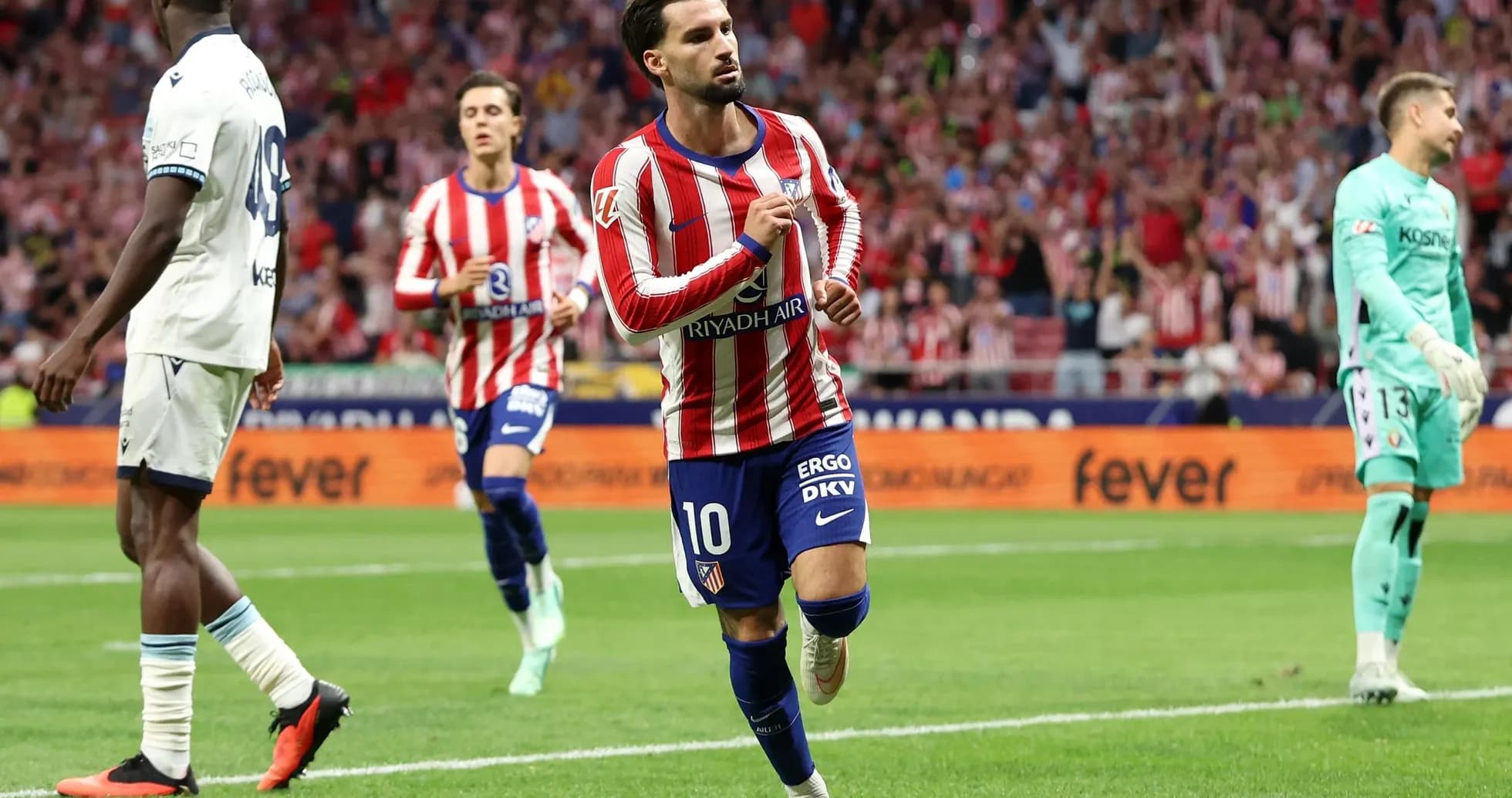
Atletico Madrid Dominates Osasuna 4-0 in La Liga Showdown
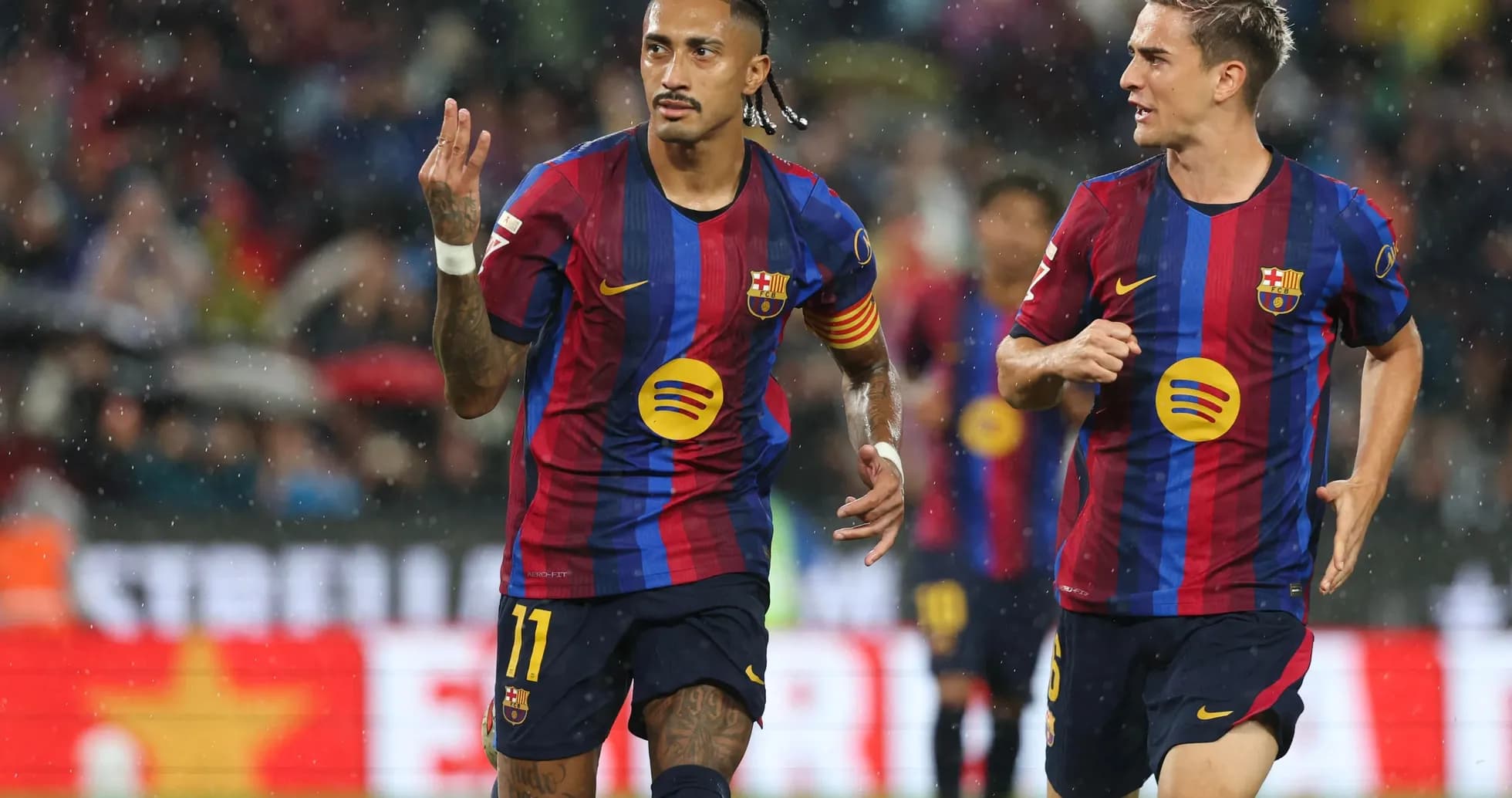
Barcelona's Dominance: 7-2 Triumph Over Racing Santander