
Mallorca vs Villarreal: Tactical Analysis of 1-1 Draw
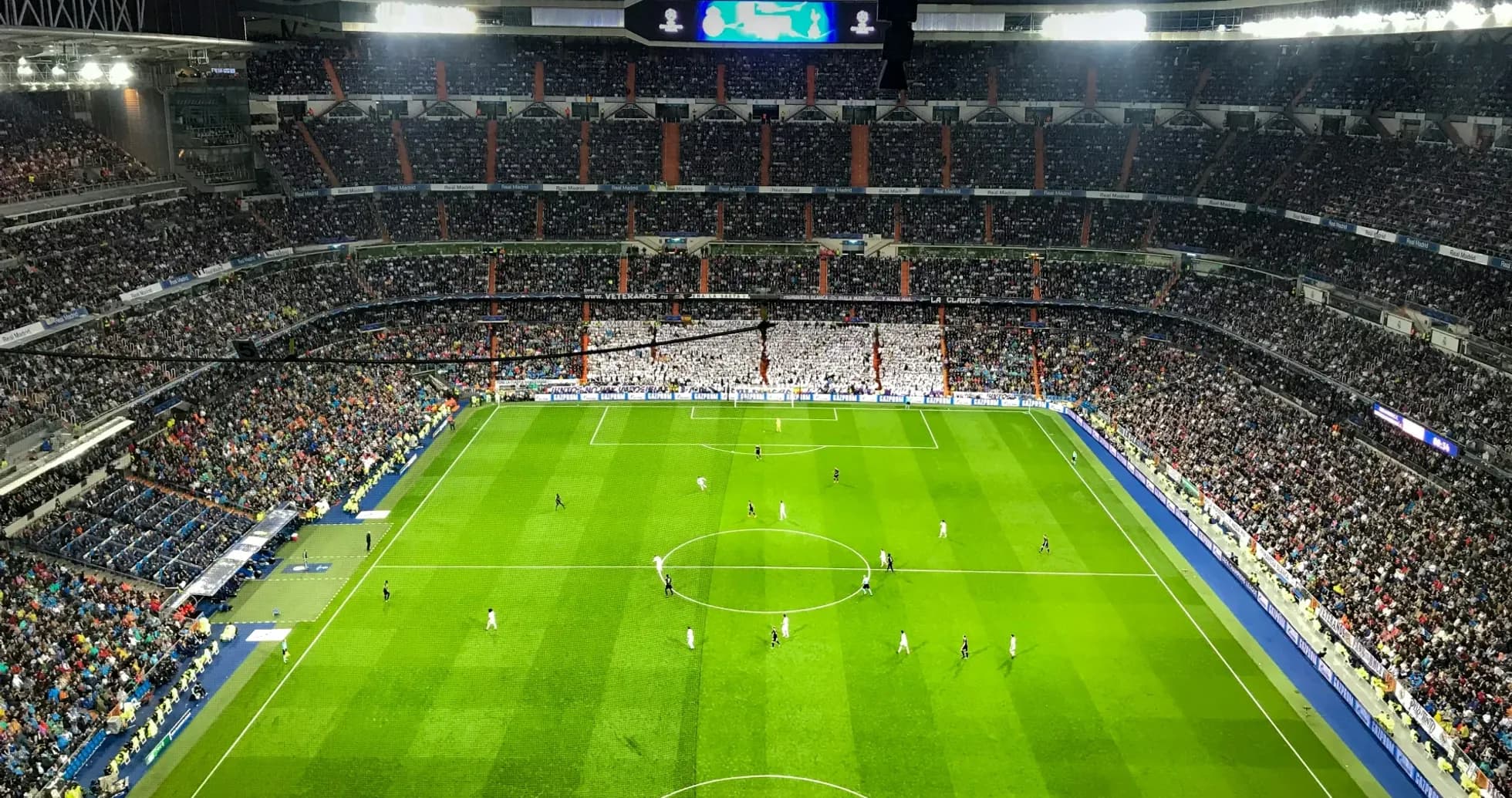
Mallorca and Villarreal shared a 1-1 draw at Estadi Mallorca Son Moix in La Liga’s Regular Season - 35, a match defined by Mallorca’s territorial control against Villarreal’s vertical punch. The hosts overturned an early setback from the spot to reach half-time level and then spent most of the second period probing against a compact 4-4-2 that increasingly protected the point. Statistically and structurally, Mallorca’s 4-3-1-2 gave them more of the ball and better shot volume, while Villarreal’s 4-4-2 relied on efficiency, a penalty and strong goalkeeping to escape with a result.
I. Scoring sequence & disciplinary log
The first decisive moment came on 29', when a potential Villarreal penalty involving Sergi Cardona was checked and “Penalty confirmed” by VAR. Two minutes later, on 31', Ayoze Pérez converted from the spot to put Villarreal 0-1 up, reflecting their willingness to attack quickly when transitions opened.
Mallorca responded just before the interval. On 45', Vedat Muriqi struck a “Normal Goal” to level the score at 1-1, a just reward for Mallorca’s growing pressure and direct use of their target forward. That 1-1 scoreline held to half-time.
The second half opened with structural adjustments. On 62', Toni Lato (IN) came on for Johan Mojica (OUT), slightly rebalancing Mallorca’s left side. Villarreal answered on 63' with a double change: Nicolas Pépé (IN) for Tani Oluwaseyi (OUT) and Alberto Moleiro (IN) for Alfon González (OUT), injecting fresh legs and more technical quality between the lines.
Mallorca’s next reshuffle came on 70', when Jan Virgili (IN) replaced Manu Morlanes (OUT), and Miguel Calatayud (IN) came on for Mateu Morey (OUT), suggesting a push for more energy and width in the last third. Villarreal reacted by introducing Georges Mikautadze (IN) for Ayoze Pérez (OUT) on 70', seeking fresh running up front.
Discipline then became a minor subplot. At 71', Samú Costa (Mallorca) received a yellow card — “Argument”. One minute later, Villarreal changed the right flank with Gerard Moreno (IN) for Tajon Buchanan (OUT) on 71'. On 73', Vedat Muriqi (Mallorca) was booked — “Foul”. Villarreal’s final midfield adjustment arrived on 75', with Dani Parejo (IN) for Santi Comesaña (OUT), giving them more control in possession. Mallorca’s last change at 76' saw David López (IN) replace Pablo Torre (OUT), adding defensive security and aerial presence.
Disciplinary log (all cards):
- 71' Samú Costa (Mallorca) — Argument
- 73' Vedat Muriqi (Mallorca) — Foul
Card totals: Mallorca: 2, Villarreal: 0, Total: 2
II. Tactical breakdown & personnel
Mallorca’s 4-3-1-2 was built around verticality into Muriqi and occupation of central lanes. With Sergi Darder and Manu Morlanes as part of a three-man midfield and Pablo Torre in the advanced role, they created a box in the middle that, combined with dual forwards Muriqi and Zito Luvumbo, consistently overloaded Villarreal’s central defenders. This structure explains Mallorca’s 18 total shots, with 8 on goal, and a strong xG of 1.74. Ten of those shots came from inside the box, reflecting the effectiveness of their direct play and second-ball collection.
Out of possession, Mallorca’s back four of Mateu Morey, Martin Valjent, Omar Mascarell and Johan Mojica (later Toni Lato) held a relatively high line, trusting Leo Román behind them. The home side’s 17 fouls and two yellows show an aggressive counter-pressing approach, especially from Samú Costa, who patrolled in front of the defence, and from Muriqi when leading the press. The “Argument” booking for Costa at 71' underlines the emotional edge as Mallorca chased a winner.
Villarreal’s 4-4-2 under Marcelino was more conservative but well-drilled. Thomas Partey and Santi Comesaña anchored central midfield, with Tajon Buchanan and Alfon González providing width. The front two, Ayoze Pérez and Tani Oluwaseyi, were tasked with attacking quickly once Villarreal recovered the ball. Their modest 7 total shots (2 on goal) and xG of 1.13 show that they produced fewer but reasonably valuable chances, the clearest being the VAR-confirmed penalty.
As the match wore on, Villarreal’s substitutions signalled a shift from transition-based threat to game management. Introducing Pépé and Moleiro on 63' added ball retention and dribbling, while Mikautadze for Ayoze and Gerard Moreno for Buchanan gave them fresh attacking profiles capable of holding the ball higher up. Dani Parejo’s arrival on 75' was particularly important: he slowed the game, recycled possession and helped Villarreal survive Mallorca’s late pressure.
III. Goalkeepers and defensive structures
Leo Román faced only 2 shots on target and made 1 save, yet Villarreal still posted an xG of 1.13. Mallorca’s “goals prevented” value of 2.46 points to the defensive unit — positioning, blocks, pressure on shooters — doing a lot of work in reducing the quality of Villarreal’s finishing beyond the raw shots-on-target count. The back four plus Samú Costa shielded central zones effectively, forcing many Villarreal attacks into less dangerous spaces or into blocked lanes (Mallorca recorded 3 blocked shots).
At the other end, Arnau Tenas was decisive. Villarreal allowed 18 shots, 8 on target, but Tenas produced 7 saves. With Villarreal’s “goals prevented” also listed as 2.46, his shot-stopping and positioning were central to preserving the 1-1 draw, especially as Mallorca increased the tempo in the second half. Villarreal’s back line — Santiago Mouriño, Rafa Marín, Renato Veiga and Sergi Cardona — had to absorb continuous aerial and direct pressure towards Muriqi. Their compactness and Tenas’s reliability meant that despite conceding 56% possession and a higher xG against, they did not concede a second goal.
IV. The statistical verdict
Mallorca’s 56% ball possession, 454 total passes, 391 accurate (86%), and 18-7 shot advantage underline their overall control. Their Overall Form in this match was that of a proactive home side: more territory, more entries into the box, and a higher xG (1.74). Defensively, their index is mixed: only 2 shots on target conceded and strong goals-prevented data, but 17 fouls and two bookings show the cost of sustaining such an aggressive posture.
Villarreal, with 44% possession, 381 passes, 304 accurate (80%), and only 7 shots, leaned on efficiency and structure. Their Defensive Index is strong: 7 saves from Tenas, only 1 goal conceded despite facing 8 shots on target, and no yellow cards. The identical goals-prevented figure (2.46) to Mallorca suggests that, even under pressure, Villarreal’s last line and goalkeeper significantly overperformed the average expectation.
In synthesis, Mallorca’s structure and volume merited more than a point, but Villarreal’s penalty execution, disciplined defending and elite goalkeeping ensured that the tactical balance of power did not translate into a scoreboard advantage.
Related News

Barcelona Dominates Sevilla in Tactical Showdown
Atletico Madrid vs Real Madrid: A Tactical Derby Analysis

La Liga Officials Admit Refereeing Mistake in Madrid Derby Over Lee Kang-in's Tackle on Federico Valverde

Elche vs Real Madrid: A Clash of Opposites in La Liga

Atletico Madrid Dominates Osasuna 4-0 in La Liga Showdown

Barcelona's Dominance: 7-2 Triumph Over Racing Santander