
Fulham vs Bournemouth: Tactical Analysis and Seasonal Identities
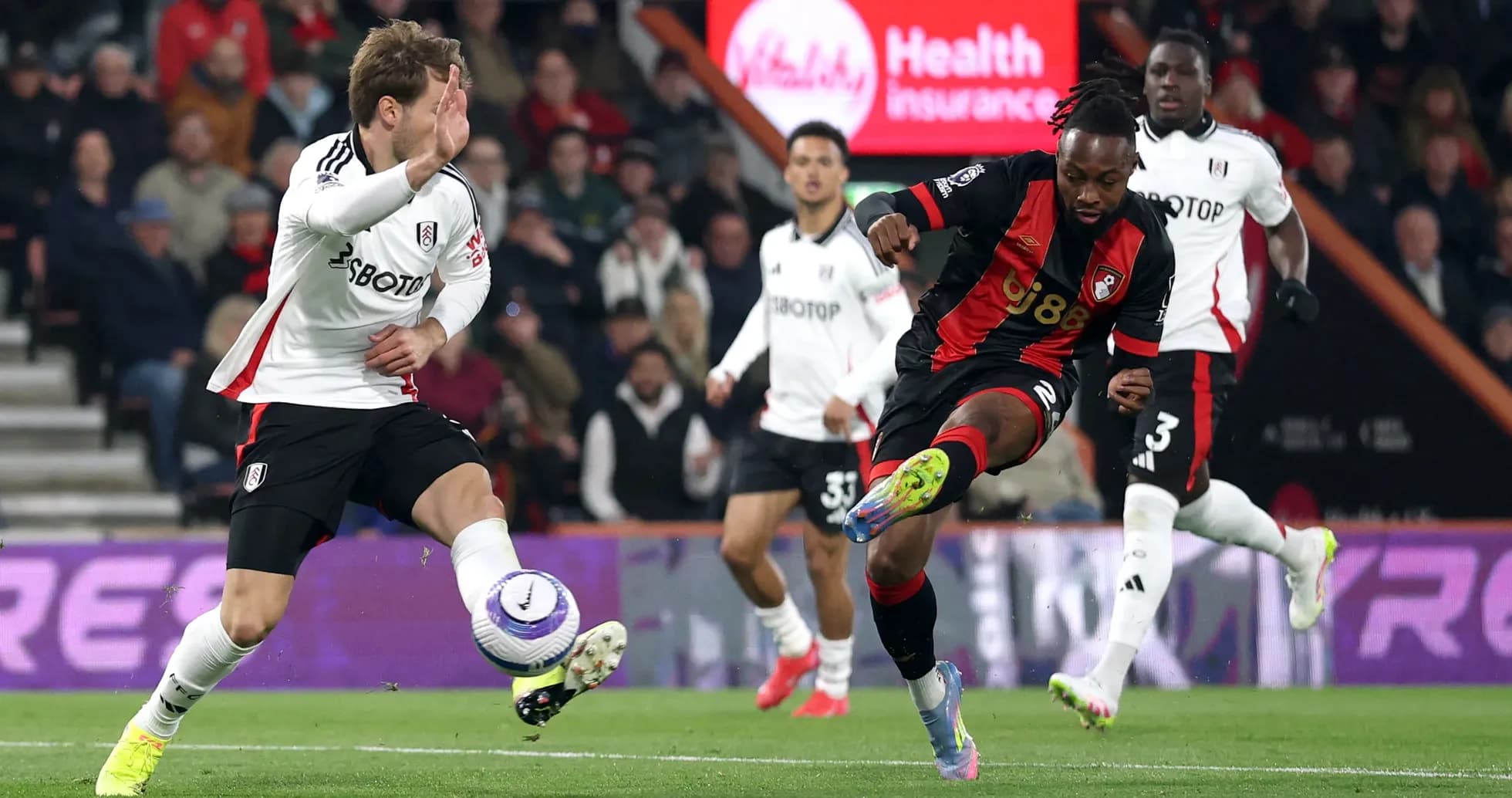
Craven Cottage felt heavy at full time. Under low west London skies, Fulham walked off beaten 0–1 by Bournemouth, a result that crystallised the contrasting seasonal identities of these two sides as the Premier League’s Regular Season - 36 drew to a close.
Following this result, the table tells a blunt story. Fulham sit 11th on 48 points, their overall goal difference of -6 the product of 44 goals scored and 50 conceded in total this campaign. Bournemouth, by contrast, are up in 6th with 55 points and a positive overall goal difference of 4, built from 56 goals for and 52 against. One side is hovering in mid-table, dangerous but inconsistent; the other is grinding its way towards Europa League territory.
I. The Big Picture – Structure and Seasonal DNA
Fulham’s season at Craven Cottage has been defined by sharp edges. At home they have been efficient: 10 wins from 18, with 28 goals scored and only 20 conceded. That works out at 1.6 goals for and 1.1 against at home on average, the profile of a side that usually imposes itself in this stadium. Yet the broader form line – “LLWDL” heading into this game – hinted at a team wobbling at precisely the wrong time.
Bournemouth arrived with a different kind of rhythm. On their travels they have been stubborn and opportunistic: 6 away wins, 7 draws and only 5 defeats from 18, scoring 28 and conceding 33 away. That away average of 1.6 goals scored and 1.8 conceded makes them adventurous and occasionally open, but their overall form streak – “WWDWW” heading into this game – screamed momentum. The 0–1 scoreline felt like the purest expression of those trajectories: Fulham’s bluntness against a side comfortable living on the edge.
Tactically, both coaches leaned into their seasonal blueprints. Marco Silva has built Fulham’s 2025 campaign around a flexible 4-2-3-1 (used 33 times overall), and the starting XI fit that mould: Bernd Leno behind a back four of Timothy Castagne, Joachim Andersen, Calvin Bassey and Antonee Robinson, with Saša Lukić and Tom Cairney anchoring midfield. Ahead of them, Harry Wilson, Emile Smith Rowe and Samuel Chukwueze floated behind lone forward Rodrigo Muniz.
Andoni Iraola mirrored that 4-2-3-1 structure that has defined Bournemouth’s year (34 uses overall), but with a more vertical, transition-minded twist. Đorđe Petrović started in goal, shielded by Adam Smith, James Hill, Marcos Senesi and Adrien Truffert. The midfield unit of Alex Scott and Ryan Christie supported a fluid attacking band of Rayan, Eli Junior Kroupi and Marcus Tavernier, with Evanilson as the reference point up front.
II. Tactical Voids – Absences and Discipline
Both sides came into the afternoon compromised. Fulham were without A. Iwobi and R. Sessegnon, both listed as Missing Fixture through injury, robbing Silva of a direct wide runner and a flexible left-sided option. The result was a heavier creative burden on Wilson and Smith Rowe, and more responsibility on Robinson to provide width.
Bournemouth’s absentees cut just as deep. L. Cook and J. Soler, both out with hamstring injuries, removed ball progression and depth from central midfield. More significantly, Álex Jiménez was suspended – a defender whose season has been marked by 10 yellow cards and a combative edge. Without him, Iraola turned to James Hill and leaned on Marcos Senesi’s experience to hold the line.
Disciplinary trends framed the contest’s risk zones. Fulham’s yellow card profile shows a late-game spike: 23.29% of their yellows have come between 91-105 minutes, with another 21.92% in the 46-60 window and 20.55% from 76-90. Bournemouth’s own yellow distribution is even more volatile late on, with a 27.71% surge between 76-90 minutes and 20.48% from 91-105. Both sides are prone to fraying as fatigue bites, a factor that often turns tight tactical battles into chaos in the closing stretch.
III. Key Matchups – Hunter vs Shield, Engine Room
The “Hunter vs Shield” duel was embodied by Eli Junior Kroupi. Heading into this fixture he had 12 league goals and 2 penalties scored, emerging as Bournemouth’s cutting edge from the line of three behind the striker. Against a Fulham defence whose overall record sits at 50 goals conceded in total, but only 20 at home, his movement between the lines was the key stress test.
That stress concentrated most on Joachim Andersen and Calvin Bassey. Andersen’s season has been defined by authority: 33 appearances, 2,275 completed passes with 86% accuracy, 19 successful blocks and 36 interceptions, plus a red card that underlines how hard he plays on the edge. His ability to step out and win duels against Kroupi and Tavernier was central to Fulham’s structure. Bassey, more aggressive in the front foot, had to balance stepping into midfield with tracking Evanilson’s runs.
In midfield, the “Engine Room” narrative revolved around Saša Lukić and Ryan Christie. Lukić is Fulham’s disciplinary metronome: 50 fouls committed, 9 yellow cards, 44 tackles and 9 blocked shots, the archetypal enforcer in Silva’s double pivot. Christie, meanwhile, is Iraola’s hybrid controller and disruptor. Across 26 league appearances he has produced 547 passes at 78% accuracy, 27 tackles and 4 blocked shots, plus a red card that hints at his own willingness to push the limit.
Behind them, Harry Wilson operated as Fulham’s creative nerve. With 10 goals and 6 assists in total, 38 key passes and 24 shots on target, he is simultaneously their top scorer and top assister in the league. His duel with Bournemouth’s central block – Scott screening, Senesi stepping – defined whether Fulham could break lines or were forced into sterile possession.
IV. Statistical Prognosis – Margins, xG and Defensive Solidity
Strip away the emotion and the numbers sketch a clear tactical prognosis for this kind of matchup. Fulham at home average 1.6 goals for and 1.1 against; Bournemouth away average 1.6 for and 1.8 against. Overlay those profiles and you expect a game tilted towards both attacks, with chances at both ends and an xG landscape shaped by transitions and set pieces.
Yet Bournemouth’s 11 clean sheets overall (5 on their travels) and Fulham’s 8 (5 at home) hint at another layer: both teams, when structurally sound, can compress space and protect their box. In a fixture like this, the marginal gains come from discipline and decision-making in the final third. Bournemouth’s perfect record from the spot this season – 5 penalties taken, 5 scored, 0 missed – underscores a clinical edge in high-leverage moments. Fulham, for their part, have also been flawless from 12 yards with 4 scored and 0 missed, but they never earned that lifeline here.
Following this result, the 0–1 scoreline reads as a tactical verdict as much as a numerical one. Bournemouth’s vertical 4-2-3-1, powered by Kroupi’s cutting runs and Christie’s industry, found a way through; Fulham’s possession-based mirror image, anchored by Andersen and orchestrated by Wilson, could not translate territory into goals. In a season defined by fine margins, this was another afternoon where structure, discipline and a single decisive moment separated a mid-table side from a team pushing Europe.
Related News

Premier League Managers Facing Potential Sackings During International Break

Arsenal's Myles Lewis-Skelly Names Unexpected Tottenham Rival as Toughest Premier League Opponent

Three Premier League Players Shining Early This Season

Premier League Early Season Reactions: Man City’s Strength, Arsenal’s Flaws, United’s Struggles

Premier League Returns October 10 After Extended September-October International Break

Fulham and Manchester United Share Points in 1-1 Draw