
Liverpool and Chelsea: A Tactical Stalemate in Transition
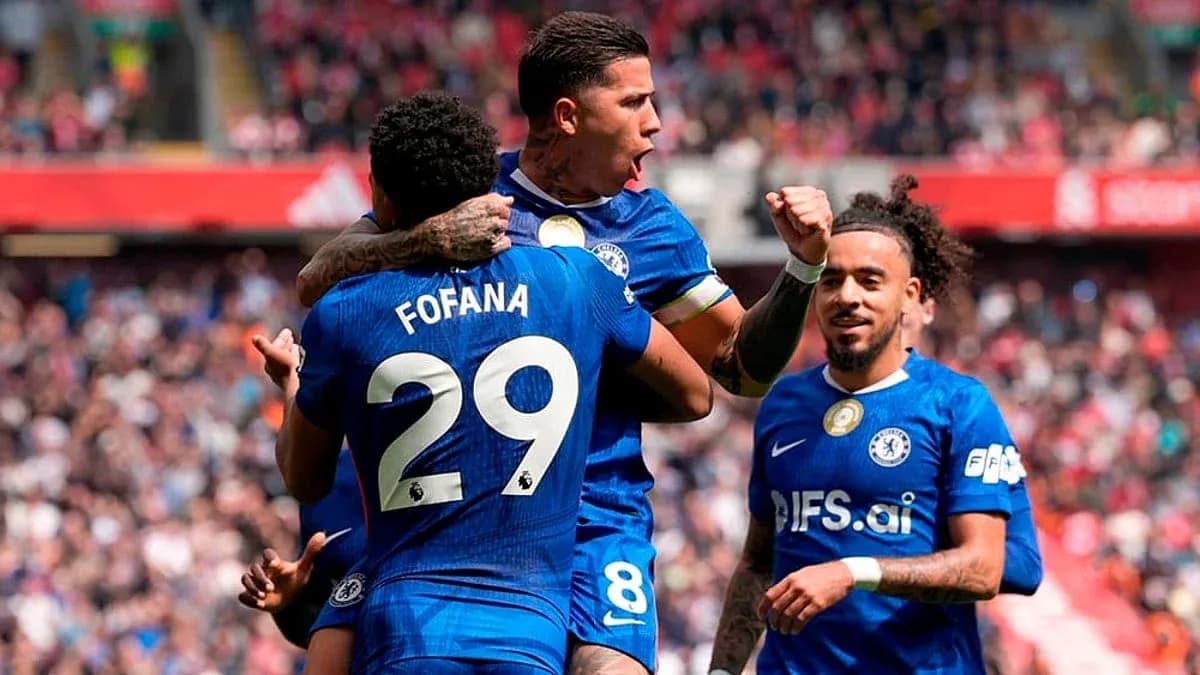
Anfield under grey Merseyside skies has seen title charges, collapses and classics, but this felt like something different: a meeting of two sides in transition, both trying to redefine themselves while still chasing immediate results. Following this result, Liverpool remain 4th on 59 points, Chelsea 9th on 49, and a 1-1 draw in the Premier League’s Round 36 felt like a snapshot of where each project currently stands.
I. The Big Picture – Two New Eras, One Stalemate
The numbers tell us Liverpool are still a top-four side in total, but no longer the relentless machine of old. Across the season they have 17 wins, 8 draws and 11 defeats from 36 matches, with a goal difference of 12 (60 scored, 48 conceded). At Anfield they have been more reliable: 10 wins, 5 draws and only 3 defeats, scoring 33 and conceding 19. Chelsea arrive as a paradox of their own: 13 wins, 10 draws and 13 losses, with a total goal difference of 6 (55 for, 49 against). On their travels, though, they are quietly efficient – 7 away wins, 5 draws, 6 defeats, scoring 31 and conceding 25.
The 1-1 draw fits the statistical profile. Liverpool at home average 1.8 goals for and 1.1 against; Chelsea away average 1.7 for and 1.4 against. A tight, slightly chaotic contest with both sides finding the net but neither able to pull away was almost baked into the data.
Arne Slot’s Liverpool, usually shaped by a 4-2-3-1 across 32 league matches, again leaned into a fluid, high-possession structure. Across the pitch, the XI told its own story: Giorgi Mamardashvili in goal instead of the injured Alisson; Virgil van Dijk and Ibrahima Konaté anchoring the back line with Curtis Jones and Miloš Kerkez as the full-backs; a midfield core of Ryan Gravenberch and Alexis Mac Allister, flanked and layered by Jeremie Frimpong, Dominik Szoboszlai, Rio Ngumoha and Cody Gakpo.
Calum McFarlane’s Chelsea mirrored that shape on paper – they have used a 4-2-3-1 in 31 league games – but their identity is different: more transitional, more dependent on individual sparks. Filip Jørgensen started in goal, protected by a young but athletic back four of Malo Gusto, Wesley Fofana, Levi Colwill and Jorrel Hato. Ahead of them, the double pivot of Andrey Santos and Moisés Caicedo sat behind a technically gifted line of Cole Palmer, Enzo Fernández and Marc Cucurella, with João Pedro as the central forward.
II. Tactical Voids – Absences That Bent the Game
This was a match defined as much by who was missing as by who played. Liverpool were stripped of some of their most decisive figures: Alisson (muscle injury), Wataru Endo (foot injury) and the creative thrust of Florian Wirtz (illness) were all out. Most transformative of all was the absence of Mohamed Salah, missing with a thigh injury despite being one of the league’s top creators this season with 6 assists and 7 goals. Add Hugo Ekitike’s Achilles tendon injury and the forward line was short of its two most ruthless finishers.
The knock-on effect was clear. Without Salah’s gravity on the right or Ekitike’s penalty-box presence, Liverpool’s attack tilted more towards Gakpo’s all-round play and Szoboszlai’s long-range threat. Slot’s side still carried danger – they have failed to score at home only 2 times in total – but lacked that extra half-second of inevitability in the final third.
Chelsea’s absences were different in flavour. Mykhailo Mudryk was suspended, denying McFarlane a pure wide runner to stretch Liverpool’s high line. Robert Sánchez, a goalkeeper with a red card on his record this season, was out with concussion, handing responsibility to Jørgensen. Further up, the creative unpredictability of A. Garnacho and the vertical threat of P. Neto were both marked as inactive, leaving João Pedro as the clear attacking reference.
Discipline, too, hung over the fixture. Liverpool’s season-long card profile shows a pronounced late-game spike: 31.48% of their yellow cards arrive between 76-90 minutes. Chelsea are similarly combustible, with 23.60% of their yellows in the same period and red cards scattered across every 15-minute band from 0-75. It was no surprise that the contest grew more fractured and scrappy as it approached full time, even if the scoreboard froze at 1-1.
III. Key Matchups – Hunter vs Shield, Engine Room vs Enforcer
The “Hunter vs Shield” duel was embodied by João Pedro against Liverpool’s defensive record. Pedro has been one of the league’s most complete forwards: 15 total league goals and 5 assists, underpinned by 50 shots (28 on target) and 29 key passes. His blend of movement and link play was always going to test a Liverpool back line that, in total, concedes 1.3 goals per game and 1.1 at Anfield.
Van Dijk and Konaté coped by compressing space between the lines, trusting Mamardashvili behind them and Jones/Kerkez to recover wide. Pedro still found pockets, drifting into half-spaces to combine with Palmer and Enzo, but Liverpool’s structure – and Mamardashvili’s presence – prevented him from turning those touches into multiple goals.
In midfield, the “Engine Room” battle was ferocious. Szoboszlai, Liverpool’s metronome and line-breaker, arrived with 6 goals, 5 assists and an outstanding passing profile: 2,090 total passes at 87% accuracy, plus 68 key passes. He is also a defensive worker, with 52 tackles, 8 successful blocks and 29 interceptions; he even sits in the league’s upper tier for yellow cards (8) and has 1 red, underlining how often he operates on the edge.
Opposite him, Moisés Caicedo was the pure “Enforcer”. No player in the league has more yellow cards than his 11, and he has also seen red once. But that aggression is functional: 87 tackles, 14 successful blocks and 56 interceptions, wrapped in 1,940 passes at 91% accuracy. His job at Anfield was to smother Liverpool’s central lanes, step out to meet Szoboszlai and Mac Allister, and still protect the spaces in front of Fofana and Colwill.
The duel swung back and forth. When Szoboszlai found rhythm, Liverpool progressed cleanly and pinned Chelsea back. When Caicedo and Enzo timed their presses, Chelsea broke out into transition, feeding Pedro and Palmer. It was a microcosm of two midfields built on very different ideas of control.
IV. Statistical Prognosis – What the 1-1 Draw Says About Both Projects
Following this result, the underlying numbers still lean slightly Liverpool’s way in a repeat scenario at Anfield. They have more home wins (10) than Chelsea have away, a stronger home goal difference of 14 (33 scored, 19 conceded), and a higher home scoring average of 1.8 goals per game. Chelsea’s away profile – 31 scored and 25 conceded, a goal difference of 6 – suggests they will almost always create chances, but rarely dominate.
In Expected Goals terms, the season-long patterns hint at a narrow Liverpool edge: they generate more sustained pressure at home, while Chelsea’s away success is more tied to moments from Pedro, Palmer and Enzo. Defensively, both sides are imperfect, but Liverpool’s structure at Anfield, combined with Mamardashvili’s shot-stopping and van Dijk’s command, should marginally reduce the quality of Chelsea’s looks.
The draw at Anfield, then, felt less like a missed opportunity and more like a waypoint. Liverpool, shorn of Salah and Ekitike, proved they can still trade blows with dangerous opposition and protect their top-four status. Chelsea, despite arriving on a poor run of form (DLLLL heading into this game), showed that their away resilience and individual quality can still trouble elite sides.
If these squads meet again under similar conditions, the data and the tactical dynamics point to another tight contest – Liverpool shading the territory and volume, Chelsea relying on the sharp edge of João Pedro and the steel of Caicedo. The margins will remain thin, and as both teams evolve, it is in these finely balanced duels that their new identities will be truly forged.
Related News
Premier League Managers Facing Potential Sackings During International Break
Arsenal's Myles Lewis-Skelly Names Unexpected Tottenham Rival as Toughest Premier League Opponent

Three Premier League Players Shining Early This Season
Premier League Early Season Reactions: Man City’s Strength, Arsenal’s Flaws, United’s Struggles
Premier League Returns October 10 After Extended September-October International Break

Fulham and Manchester United Share Points in 1-1 Draw