
Crystal Palace vs Everton: Tactical Analysis of the 2-2 Draw
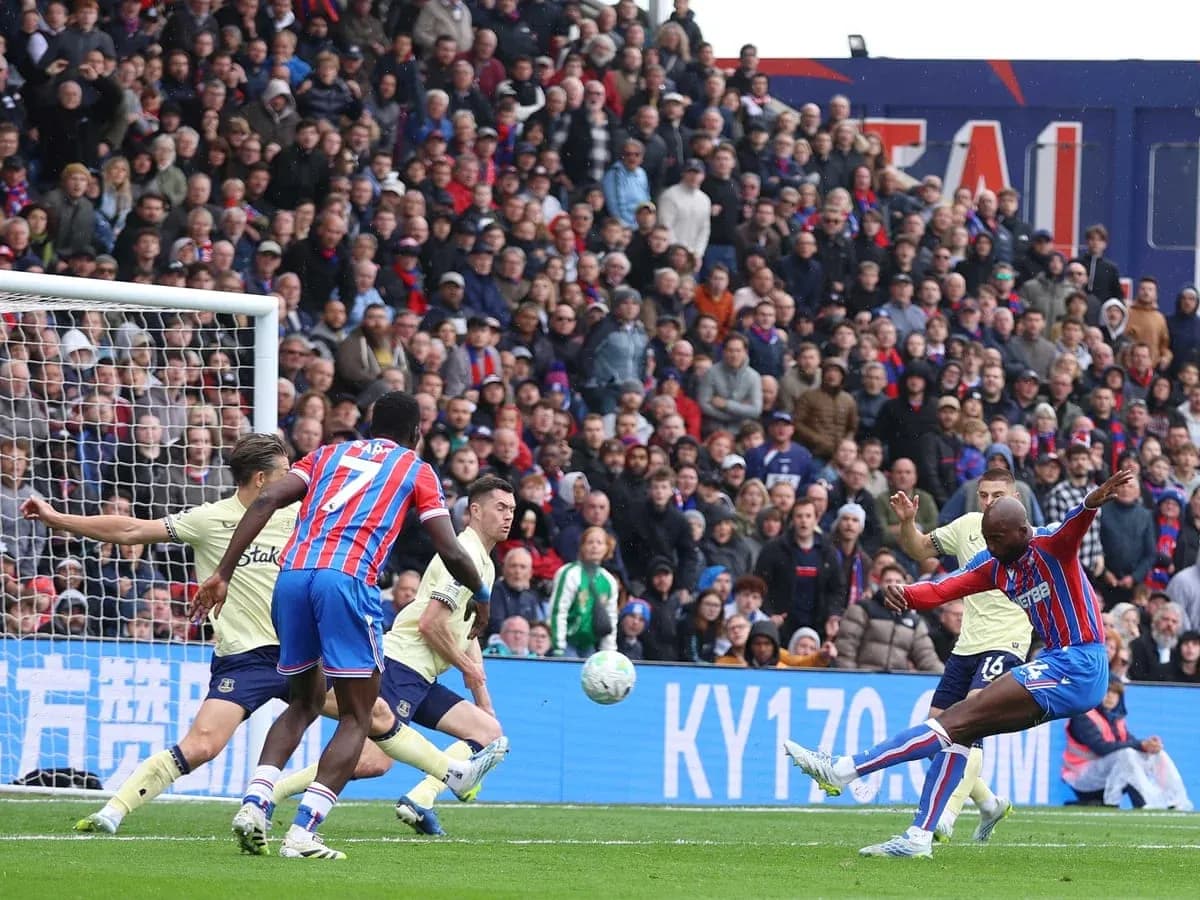
Crystal Palace and Everton shared a 2-2 draw at Selhurst Park in Premier League Regular Season - 36, a match defined by contrasting structures and efficiency in both boxes. Palace, under Oliver Glasner, imposed themselves territorially with a 3-4-2-1 that produced 59% possession, 21 total shots and an xG of 2.66, yet they had to come from behind twice. Everton, in a 4-2-3-1, were more direct and opportunistic, turning 13 shots and 1.44 xG into two goals and repeatedly threatening in transition. The final scoreline reflected Palace’s territorial dominance but also Everton’s resilience and set-piece threat.
The scoring opened on 6' when Everton exploited Palace’s early defensive organisation. From a situation involving James Tarkowski, Everton’s centre-back found space to finish, punishing Palace’s back three before they had settled into their distances. That early goal shaped the tactical tone: Palace’s line stepped higher, with Chris Richards and Maxence Lacroix holding a wide, aggressive stance to lock Everton in.
Discipline was one-sided but controlled. Everton collected both bookings, while Palace finished without a card. The disciplinary log is:
- 30' James Garner (Everton) — Foul
- 45' Vitaliy Mykolenko (Everton) — Foul
Those moments reflected Everton’s need to break Palace’s rhythm in midfield rather than any collapse in control.
Palace’s first equaliser on 34' came through Ismaïla Sarr, a direct reward for their wing-focused attacking. With Tyrick Mitchell high on the left and Daniel Muñoz on the right, Palace repeatedly stretched Everton’s back four. Sarr’s goal underlined how the 3-4-2-1 allowed the wide forwards, Sarr and Brennan Johnson, to attack half-spaces around Jørgen Strand Larsen, pinning the Everton centre-backs and exposing the channels outside the double pivot of Tim Iroegbunam and James Garner.
Just before the interval, Everton’s second yellow, to Vitaliy Mykolenko at 45', was another “Foul” incident, symptomatic of their full-backs being forced into reactive defending against Palace’s wingbacks and wide forwards. Yet Everton emerged from halftime with a decisive adjustment: more direct play into Beto and a greater emphasis on second balls around the Palace box.
That tweak paid off on 47'. Beto restored Everton’s lead, assisted by James Tarkowski. The pattern again highlighted Everton’s strength in aerial and set-piece-like situations: Tarkowski, already a scorer, now became a provider, exploiting Palace’s difficulty in dealing with first-contact duels in central zones. Palace’s three centre-backs were often occupied by the initial target, leaving loose space for late runs or knockdowns.
Glasner’s key in-game adjustment came on 65', when Jean Philippe Mateta (IN) came on for Jørgen Strand Larsen (OUT). This was not just a like-for-like swap at centre-forward; it altered Palace’s reference point. Mateta is more of a penalty-box striker, and Palace began to attack with earlier crosses and more aggressive occupation of the six-yard box. Everton responded on 70' with Thierno Barry (IN) for Beto (OUT), trading a physical focal point for fresher legs to run channels and press.
The decisive tactical swing for Palace arrived on 77', when Mateta justified the change with the 2-2 equaliser. The goal reflected the volume and quality of Palace’s attacking: 15 shots inside the box out of 21 total, a sign of sustained territorial pressure and a structure that consistently created central finishing positions. Palace’s wingbacks and advanced midfielders, Adam Wharton and Daichi Kamada, circulated possession patiently, using their 459 passes, 382 accurate (83%), to keep Everton pinned and force defensive rotations.
Further midfield recalibration came at 80' for both sides. Jefferson Lerma (IN) replaced Brennan Johnson (OUT) for Palace, adding ball-winning and balance behind the front line, effectively turning the shape into more of a 3-5-1-1 in possession with Lerma alongside Wharton and Kamada. For Everton, Tyrique George (IN) came on for Merlin Röhl (OUT), signalling a desire for more vertical threat in transition and fresh energy to press Palace’s build-up. At 90+4', Everton made a final midfield substitution: Carlos Alcaraz (IN) for Kiernan Dewsbury-Hall (OUT), a late attempt to add legs and ball-carrying for any last counter, but by then the structure of the game was set: Palace controlling territory, Everton defending deep and looking for isolated breaks.
Defensively, Dean Henderson’s role was significant. With 5 goalkeeper saves and a goals-prevented value of 1.2, he ensured Palace were not punished even more severely by Everton’s efficiency. His interventions, especially against Everton’s 10 shots inside the box, underpinned Palace’s ability to maintain a high defensive line and commit numbers forward. On the other side, Jordan Pickford matched that impact with 6 saves and the same 1.2 goals prevented, a crucial factor in limiting Palace to just two goals despite their xG of 2.66 and high shot volume.
Structurally, Palace’s 3-4-2-1 delivered clear advantages in possession: 59% of the ball, 459 passes to Everton’s 313, and superior passing accuracy (382 accurate, 83% versus Everton’s 232 accurate, 74%). The back three plus Wharton gave a stable platform to recycle possession, while Kamada and the twin wide threats of Sarr and Johnson (before his withdrawal) constantly asked questions of Everton’s full-backs and wide midfielders. However, the same high, expansive posture left them vulnerable to Everton’s direct play into Beto and later Barry, particularly when Garner and Iroegbunam could clip early passes into the channels.
Everton’s 4-2-3-1 was less about sustained control and more about moments. With only 41% possession and 13 total shots, they relied on set-piece quality, centre-back aggression in both boxes (Tarkowski’s goal and assist), and a compact mid-block that forced Palace into wide circulation. Their 10 corner kicks to Palace’s 5 underline their threat from dead balls and their ability to turn limited possession into territorial spikes.
Statistically, the draw is nuanced. Palace’s higher xG (2.66 vs 1.44), shot volume, and better passing metrics point to a side whose overall form and attacking structure functioned well, especially at home. Yet Everton’s defensive index—anchored by Pickford’s 6 saves, disciplined central defending, and only two bookings despite facing 21 shots—shows a team capable of absorbing pressure and maximising key moments. The 2-2 final score, Crystal Palace 2-2 Everton, ultimately reflects a clash between a possession-dominant system still refining its box defending and a more pragmatic, transition-oriented side that leveraged set-pieces and direct play to full effect.
Related News
Premier League Managers Facing Potential Sackings During International Break
Arsenal's Myles Lewis-Skelly Names Unexpected Tottenham Rival as Toughest Premier League Opponent

Three Premier League Players Shining Early This Season

Premier League Early Season Reactions: Man City’s Strength, Arsenal’s Flaws, United’s Struggles

Premier League Returns October 10 After Extended September-October International Break

Fulham and Manchester United Share Points in 1-1 Draw