
Brighton Dominates Wolves with 3–0 Victory in Premier League Clash
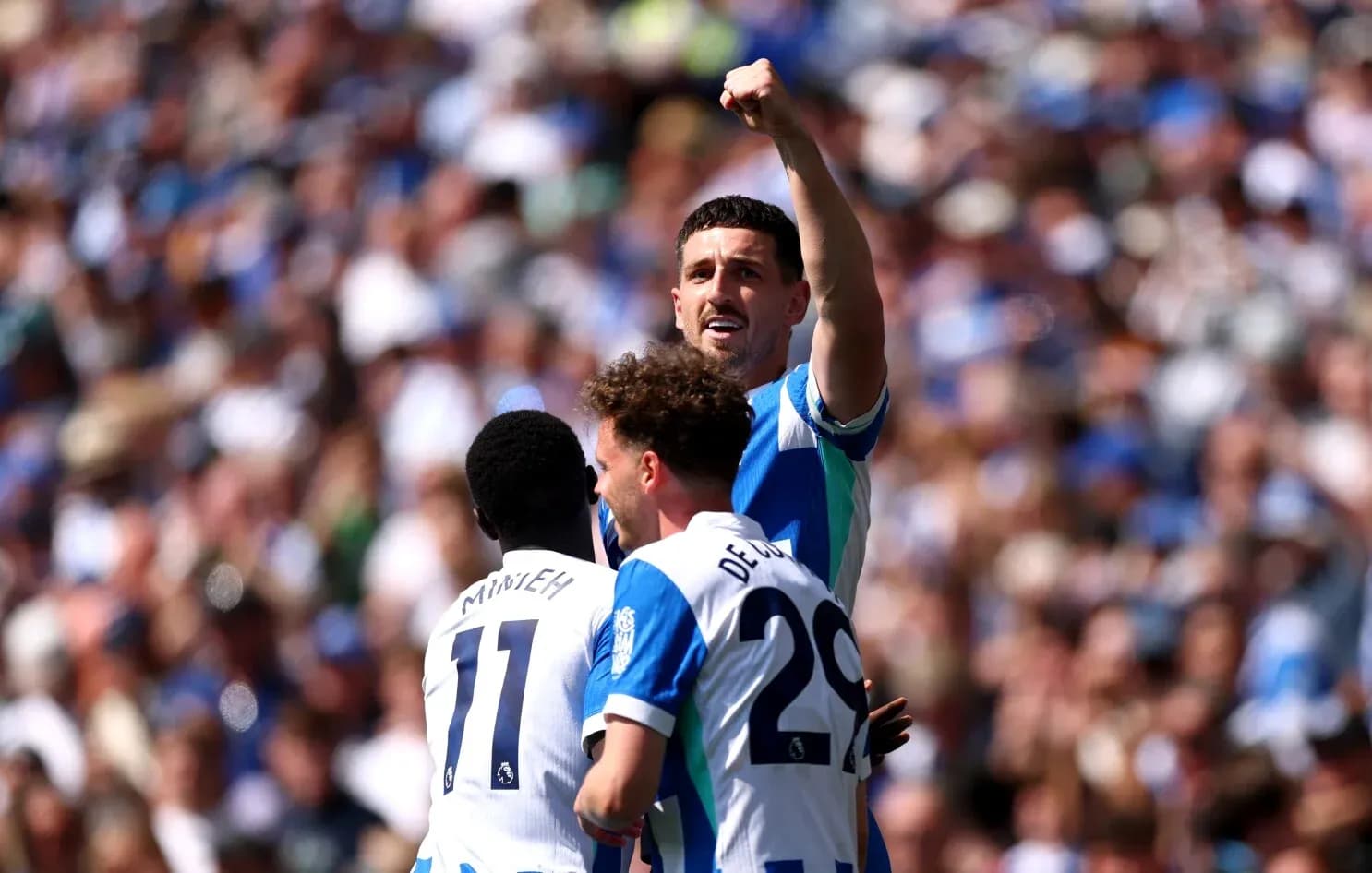
The rain had cleared over the Amex Stadium by the time the final whistle sounded, but for Wolves the clouds over their season only darkened. Following this result, a 3–0 Brighton win in Round 36 of the Premier League, the table told a brutal story: Brighton sitting 7th on 53 points with a goal difference of 10 (52 scored, 42 conceded), Wolves marooned in 20th on 18 points and a goal difference of -41 (25 scored, 66 conceded). The ninety minutes in Brighton felt less like a one-off and more like a crystallisation of each side’s seasonal DNA.
Brighton’s campaign has been built on control and accumulation. Overall they have scored 52 goals in 36 league games, an average of 1.4 per match, and conceded 42, at 1.2 per game. At home, that attacking edge sharpens: 30 goals in 18 matches, an average of 1.7, against only 17 conceded at 0.9. Wolves arrived with the numbers of a side already half relegated: just 25 goals in total at 0.7 per game, and a defence that has leaked 66 at 1.8 per match. On their travels, the story is even harsher: 7 away goals in 18 games, an average of 0.4, with 33 conceded at 1.8. The 3–0 scoreline did not defy the data; it followed it.
And yet this was not a full-strength Brighton. The absences list was long and significant. Diego Gómez, one of the league’s more combative midfielders with 5 goals, 1 assist and 77 tackles this season, was ruled out with a knee injury. His nine yellow cards and relentless duel count (314 duels, 156 won) speak to a player who gives Brighton edge and bite. Alongside him on the treatment table were S. Tzimas and A. Webster, both with knee injuries, and M. Wieffer with an unspecified injury. The loss of Webster in particular strips depth from central defence, where his experience would otherwise rotate with Lewis Dunk and Jan Paul van Hecke.
Wolves, too, were depleted. Up front, L. Chiwome’s knee injury and E. Gonzalez’s similar issue removed attacking options from a squad already short of goals. In goal, the absence of J. Sa with an ankle injury and S. Johnstone with a knock left Daniel Bentley as the man between the posts. For a side conceding 1.8 goals per game overall, being without their first-choice keepers felt less like a detail and more like a structural weakness.
Within that context, the lineups painted a clear tactical picture. Fabian Hurzeler leaned into Brighton’s established identity, anchored by the 4-2-3-1 shape that has been used 31 times this season. Bart Verbruggen started in goal, shielded by a back four of Ferdi Kadıoğlu, van Hecke, Dunk and Maxim De Cuyper. In front of them, Carlos Baleba and Pascal Groß formed the first platform of possession, with a fluid band of Yankuba Minteh, Jack Hinshelwood and Kaoru Mitoma supporting Danny Welbeck up front.
Rob Edwards’ Wolves, by contrast, reflected a season of tactical searching. Across the campaign they have switched between 3-4-2-1 (11 times), 3-5-2, 3-4-3, 4-3-3 and more, a carousel that hints at a coach still trying to solve a structural puzzle. Here, the selection of Yerson Mosquera, Santiago Bueno and Toti Gomes at the back, with Pedro Lima and Hugo Bueno wide and a midfield anchored by André and João Gomes, suggested another attempt to stabilise. Ahead of them, Adam Armstrong, Mateus Mané and Hwang Hee-chan carried the burden of turning meagre attacking averages into something more threatening.
The “Hunter vs Shield” duel was always likely to revolve around Welbeck against a Wolves defence that has conceded heavily in every context. Welbeck’s season — 13 goals and 1 assist, from 45 shots and 27 on target — marks him as one of the league’s more efficient finishers. His penalty record, however, is imperfect: 1 scored but 2 missed from the spot, a reminder that even Brighton’s spearhead carries a human edge. Against a Wolves unit that has conceded four goals in both their heaviest home and away defeats, and that has failed to keep more than 1 clean sheet away from home all season, Welbeck’s movement between the lines was always likely to find space.
Behind him, the “Engine Room” battle was as much about craft as combat. For Brighton, Groß’s metronomic passing and Baleba’s athletic coverage had to compensate for the missing Gómez. On the other side, André and João Gomes brought very different kinds of steel. André’s numbers are those of a deep-lying controller who lives on the disciplinary edge: 11 yellow cards, 76 tackles, 12 blocked shots and 28 interceptions, while still completing 1,251 passes at 91% accuracy. João Gomes adds even more aggression: 108 tackles, 34 interceptions and 10 yellow cards, with 436 duels and 225 won. Together, they form a double-pivot that fights every second ball but, as their card tallies show, often at a cost.
That disciplinary trend is mirrored in Wolves’ season-long card profile. Their yellow card peak comes between 46–60 minutes, with 28.57% of bookings arriving just after half-time — precisely the phase where Brighton, with their preference for sustained possession, often turn control into chances. Brighton’s own bookings spike in the same 46–60 window at 27.91%, suggesting a contest where the middle third of the game is both most intense and most ragged.
From a statistical prognosis standpoint, this match always leaned heavily towards the hosts. Heading into this game, Brighton’s home record of 9 wins, 6 draws and only 3 defeats, with 5 clean sheets and just 3 home matches without scoring, set a high floor. Wolves, away, had yet to win all season: 0 victories, 5 draws and 13 defeats, failing to score in 12 of 18 on their travels. In Expected Goals terms, even without the raw xG values, the shot and goal profiles suggest a Brighton side that regularly generates enough volume to justify their returns, against a Wolves team that creates little and concedes plenty.
Following this result, the numbers and the narrative align. Brighton, even with key absentees, look every inch a side worthy of a European push, their 10-goal positive difference a product of coherent structure and a clear attacking framework. Wolves, burdened by a -41 goal difference and chronic away impotence, resemble a team whose tactical tweaks cannot hide a lack of cutting edge and defensive resilience. At the Amex, the story of their seasons was not rewritten; it was simply told again, more loudly.
Related News
Premier League Managers Facing Potential Sackings During International Break
Arsenal's Myles Lewis-Skelly Names Unexpected Tottenham Rival as Toughest Premier League Opponent

Three Premier League Players Shining Early This Season
Premier League Early Season Reactions: Man City’s Strength, Arsenal’s Flaws, United’s Struggles

Premier League Returns October 10 After Extended September-October International Break

Fulham and Manchester United Share Points in 1-1 Draw