
Bay FC vs Utah Royals W: A Tactical Stalemate
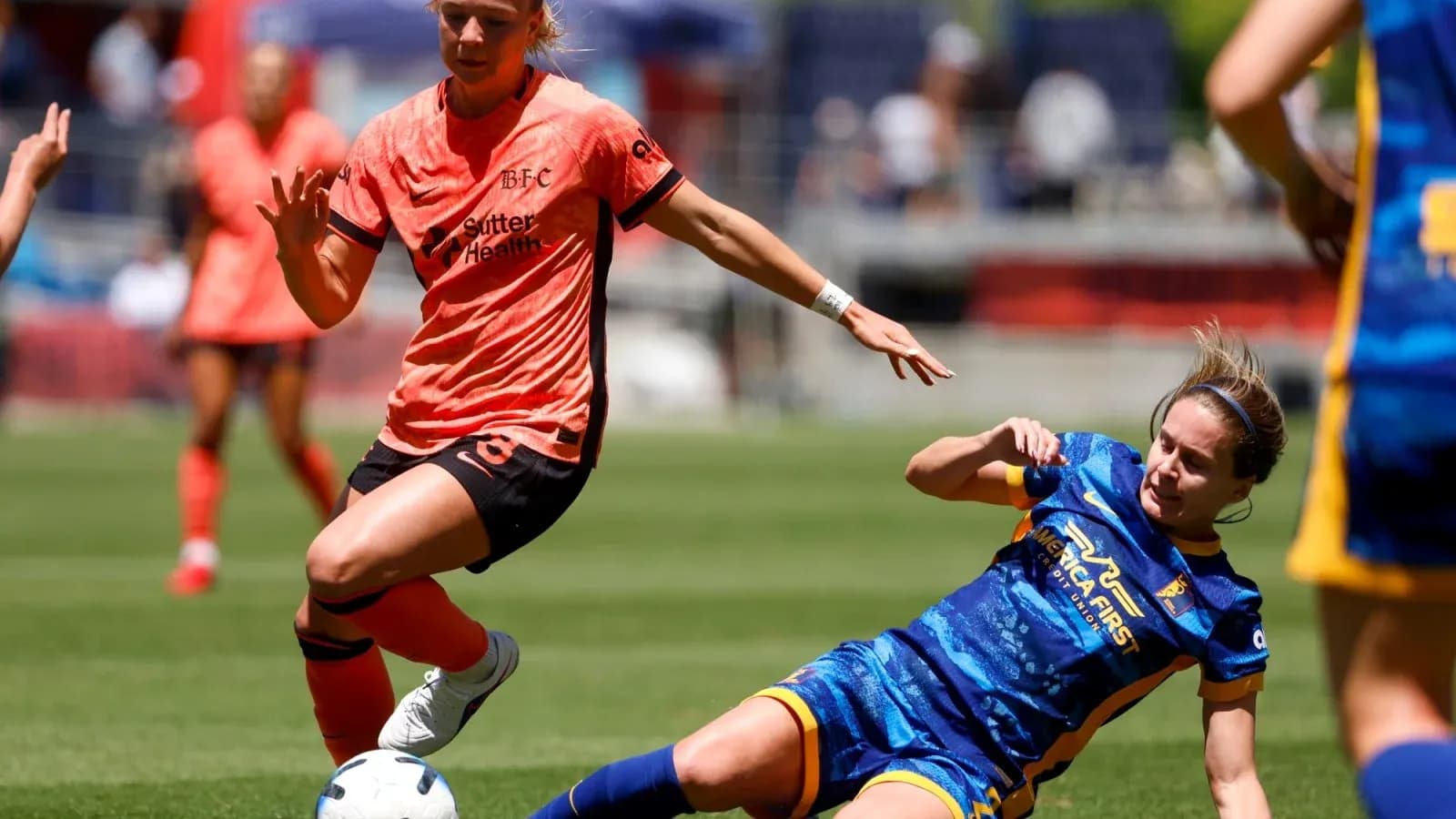
Under the lights at PayPal Park, a goalless draw between Bay FC and Utah Royals W felt less like a stalemate and more like an early statement about identity. In a NWSL Women group-stage campaign still taking shape, this 0–0 offered a tactical mirror: two sides in the same 4‑2‑3‑1, but at very different stages of development.
Heading into this game, Bay FC sat 10th with 10 points from 7 matches, their overall goal difference at -3 after scoring 7 and conceding 10. At home they had been fragile, with 3 goals for and 6 against, averaging 0.8 goals scored and 1.5 conceded at PayPal Park. Utah arrived as one of the league’s early pace-setters: 4th place, 17 points from 9 matches, and a robust overall goal difference of +6 (12 scored, 6 conceded). On their travels, they had been efficient and composed, winning 3 of 6 away fixtures and conceding just 4, an away defensive average of 0.7 goals against.
I. The Big Picture – Two 4‑2‑3‑1s, Two Stories
Both coaches leaned into continuity. Emma Coates kept Bay FC in their familiar 4‑2‑3‑1, a shape they had used in all 7 league outings. J. Silkowitz anchored the side in goal, with a back four of S. Collins, A. Cometti, J. Anderson, and A. Denton. In front of them, the double pivot of H. Bebar and C. Hutton underpinned a fluid attacking band of T. Huff, D. Bailey, and the dynamic R. Kundananji behind lone forward K. Lema.
Utah Royals W mirrored the structure. M. McGlynn started in goal, shielded by a back line of J. Thomsen, K. Del Fava, K. Riehl, and N. Rabano. The midfield spine of A. Tejada Jimenez and N. Miura sat beneath a creative trio: C. Delzer, Minami Tanaka, and C. Lacasse, all feeding into centre-forward K. Palacios.
The symmetry of the formations framed the contest as a test of execution rather than innovation: who could better manipulate the same shape, and who could better hide their structural flaws?
II. Tactical Voids – Risk, Discipline, and Hidden Absences
There were no officially listed absentees, but the tactical “missing pieces” were psychological and structural rather than personnel-based.
For Bay FC, the void was trust in their own attacking risk. Heading into this game they had failed to score in 3 of 7 matches overall, including 2 at home, and their home average of 0.8 goals for underlined a side still learning how to turn territory into threat. The 4‑2‑3‑1 gave them numbers between the lines, but the reluctance to overload the box often left Lema isolated and Kundananji receiving to feet rather than attacking space.
Defensively, Bay’s season profile suggested nervousness late on. They had conceded 10 overall, with an overall average of 1.4 goals against per match and only 2 clean sheets. The coaching staff will quietly take this 0–0 as a significant data point: against one of the league’s most efficient attacks, the back four held their line, and the double pivot kept Utah’s creators away from the most dangerous central zones.
Discipline remains a live issue for Bay. Their yellow-card distribution shows a late-game spike: 23.53% of their yellows arriving between 76–90 minutes and another 23.53% between 91–105. In a tight, tactical contest like this, that profile forces Coates to manage intensity versus composure in the final quarter-hour, especially with combative midfielders like Hutton and Huff on the pitch. The red-card history in the 91–105 window this season (one red, 100.00% of their reds in that period) hovers as a warning.
Utah’s void was different: how to break down a compact mid-block when their season has been built on efficiency and control rather than volume. They came in with an overall scoring average of 1.3 goals per match and a defensive record that allowed just 0.7 per game, but this match demanded extra risk to tilt a tight away fixture. Their disciplinary profile also hints at a side that ramps up aggression after the break: 22.22% of their yellows between 46–60 minutes and 27.78% between 61–75. Managing that edge without tipping into chaos is key for a team that already has a red card between 76–90 (100.00% of their reds in that window).
III. Key Matchups – Hunter vs Shield, Engine Room vs Enforcer
Hunter vs Shield centred on C. Lacasse against Bay’s back four. Lacasse arrived as one of the league’s most complete wide forwards: 3 goals and 2 assists overall, with 8 shots and 6 on target, plus 183 passes at 74% accuracy and 20 key passes. Her duel volume (71 overall, 33 won) underlines a player who relishes physical contact and one‑v‑one scenarios.
Against a Bay defence that had conceded 6 at home before this fixture, Lacasse’s threat was obvious. But Coates’ back line, led by the positioning of Cometti and Anderson, compressed the space between the lines and forced her wider and deeper. Without the numbers to flood the box, Utah’s most dangerous attacker was often receiving in front of the block rather than behind it. For Bay, this was a rare instance of their defensive structure dictating terms to a top-tier attacker.
In the Engine Room, the duel between Minami Tanaka and Bay’s midfield enforcer C. Hutton was decisive. Tanaka came in as the league’s leading creator for Utah: 3 assists and 1 goal, 176 passes at 70% accuracy, and a team-high 19 fouls drawn. She is the rhythm-setter, the one who turns Utah’s 4‑2‑3‑1 from a solid shell into a fluid attacking unit.
Hutton, meanwhile, is Bay’s disruptive core: 262 passes at 75% accuracy, 18 tackles, 2 blocked shots, and 14 interceptions, plus 80 duels with 43 won. Her 3 yellow cards this season speak to the thin line she walks between aggression and overreach. In this match, Bay needed her to sit in the pocket in front of the centre-backs, deny Tanaka the half-spaces, and still offer progression when they recovered the ball.
The stalemate in this zone told the story: Tanaka found pockets but not penetration; Hutton and Bebar closed lanes but could not spring consistent counters. Huff, who has 1 goal and 1 assist this season, often became the bridge, but Bay’s transitional runs from Kundananji and Lema lacked the volume to truly stretch Utah’s well-drilled back line.
IV. Statistical Prognosis – What 0–0 Really Says
Following this result, the numbers reinforce a clear narrative. Utah’s defensive solidity travelled: a side conceding an overall average of 0.7 goals against once again shut the door, collecting what will feel like a “par” clean sheet away from home. Their season-long penalty record remains perfect (2 scored from 2, 100.00% conversion, with no misses), and their ability to manage tight margins on their travels continues to be a defining trait.
For Bay, the draw is both reassurance and warning. They proved they can keep pace with a top‑four side and protect a fragile home defensive record against a high‑end attack. Yet their home scoring average of 0.8 goals for remains a ceiling they must shatter if they are to climb from mid‑table anonymity into contention.
From an xG lens, even without exact figures, the pattern is clear: Utah’s season profile – 12 goals from 9 matches, with only 1 failure to score – suggests they usually generate enough quality to find a breakthrough. Bay’s 7 goals from 7, plus 3 matches without scoring, points to a side that often falls short of turning territory into high‑value chances. A 0–0 between these profiles likely reflects Utah underperforming their usual attacking efficiency and Bay slightly overperforming their defensive baseline.
The tactical takeaway is stark. Utah’s 4‑2‑3‑1 is a mature, system-first machine built on control, clean sheets, and the individual brilliance of Lacasse and Tanaka in the final third. Bay’s identical shape is still in its adolescence: reliant on the energy of Hutton, the drive of Huff, and the potential chaos of Kundananji, but not yet consistently converting structure into goals.
As the group stage unfolds, this match may be remembered less for its lack of goals and more for what it foreshadowed: Utah as a side whose defensive floor keeps them in every knockout-style contest, and Bay as a team on the cusp of becoming far more dangerous if they can finally align their pressing intensity, midfield bite, and attacking risk into a coherent, ruthless whole.
Related News

Kansas City W vs Denver Summit W: NWSL Women Showdown
Portland Thorns W vs Houston Dash W Prediction: Key Stats and Tips
Washington Spirit W vs Angel City W Prediction: Key Stats and Betting Tips
Racing Louisville W vs San Diego Wave W Predicted Lineups and Team News
Kansas City W vs Denver Summit W Prediction: Key Stats and Betting Tips
Racing Louisville W vs San Diego Wave W: NWSL Clash Preview