
San Diego Wave Dominates Chicago Red Stars in 2–0 Victory
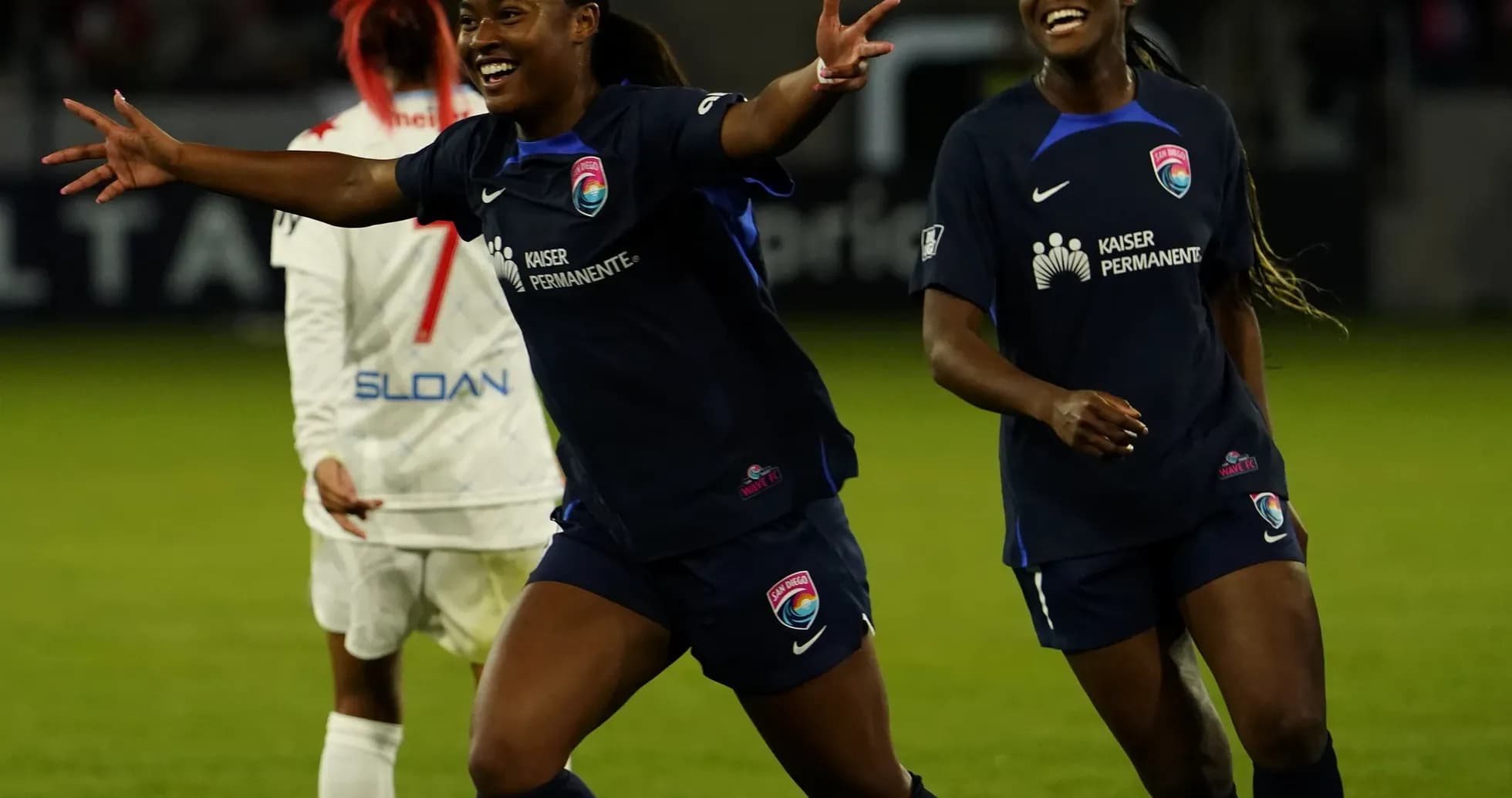
Under a grey Evanston sky at Northwestern Medicine Field at Martin Stadium, the table-topping San Diego Wave W came in as the NWSL Women’s benchmark side and left with a 2–0 win over a Chicago Red Stars W team still searching for an identity. Following this result, the league picture only sharpened: San Diego remain 1st with 25 points from 13 matches, a side whose overall goal difference of 6 (19 scored, 13 conceded) reflects balance and control. Chicago, rooted in 15th with 9 points from 12 games and a goal difference of -19 (5 for, 24 against), are living a very different season, one defined by narrow attacking margins and heavy defensive burdens.
First Half
Martin Sjogren’s decision to go with a 4-1-4-1 underlined Chicago’s caution. With K. Atkinson in goal and a back four of J. Bike, K. Hendrich, S. Staab and N. Gomes, the Red Stars tried to build a compact shell in front of their own box. M. Lopez Millan sat as the single pivot, with a line of four – M. Swanson, B. A. Pinto, J. Grosso and R. Gareis – asked to shuttle between pressing and supporting lone forward J. Huitema.
The tactical void was structural as much as individual. Chicago’s season numbers tell the story: heading into this game they averaged just 0.7 goals at home and 0.4 overall, with 9 total clean sheets in the negative sense – they failed to score in 9 of 12 matches. That chronic lack of punch meant Huitema was often isolated, chasing hopeful balls rather than attacking crafted chances. Without any flagged absences in the squad list, this was less about who was missing and more about what the system could not yet provide: sustained occupation of the final third.
Defensive Struggles
Defensively, Chicago’s fragility is systemic. They had been conceding 1.7 goals per game at home and 2.0 overall, and San Diego’s first-half control fit that pattern. The Red Stars’ card profile this season – with 33.33% of their yellows between 31–45 minutes and another 25.00% from 46–60 – suggests a team that strains as the tempo rises. That tension was visible as Wave rotations pulled Lopez Millan and the back four into constant emergency shuffles, inviting late challenges and positional fouls even if no red cards have marked their campaign so far.
San Diego's Strategy
On the other side, Jonas Eidevall leaned into San Diego’s established 4-2-3-1, a shape that has underpinned 8 wins from 13 league fixtures. D. Haracic anchored a back line of A. D. Van Zanten, K. Wesley, K. McNabb and P. Morroni, with K. Ascanio and K. Dali forming the double pivot. Ahead of them, the trio of M. Barcenas, L. E. Godfrey and Dudinha buzzed behind centre-forward Ludmila.
This is where the “Hunter vs Shield” dynamic tilted decisively. San Diego’s attack on their travels has averaged 1.7 goals per game, and overall they sit at 1.5, facing a Chicago defence that allows 1.7 at home and 2.3 away. Even without minute-by-minute goal distributions, the pattern is clear: a high-functioning, fluid attacking unit against a back line that spends long stretches under siege. The 2–0 scoreline felt like a logical expression of those trends rather than an outlier.
Dudinha's Impact
Within that structure, Dudinha was the game’s natural predator. With 5 goals and 4 assists in 13 appearances, she arrived as one of the league’s most complete attacking threats. Her 19 shots (10 on target) and 44 dribble attempts, 26 successful, frame a player who attacks space relentlessly and thrives between the lines. Here, operating from the left side of the three behind Ludmila, she repeatedly dragged Bike and Hendrich out of shape, either driving inside to shoot or slipping passes into Godfrey’s diagonal runs.
If Dudinha was the hunter, the “Engine Room” duel belonged to L. E. Godfrey and K. Dali against Chicago’s central trio. Godfrey’s season profile – 4 goals, 3 assists, 18 key passes and 80% passing accuracy – underlines a midfielder who can both break lines and finish moves. Her positioning between Chicago’s midfield and defence forced Lopez Millan to choose between stepping out and leaving space behind, or sitting deep and allowing Wave’s midfield to dictate. Dali, with 705 passes at an 85% accuracy and 33 key passes this campaign, orchestrated the tempo, constantly recycling possession and switching play away from pressure.
San Diego's Control
There was an edge to San Diego’s control, too. Morroni, top of the league’s yellow card charts with 5 bookings and 32 tackles plus 2 blocked shots, once again walked the line between aggression and risk. Her duel count (100 total, 55 won) speaks to a defender who engages high and often, and her presence on the left gave Wave an outlet to push Chicago back while still maintaining defensive bite. The disciplinary backdrop matters: San Diego’s yellows are spread, with 23.08% arriving between 16–30 minutes and then evenly across later segments. They can live with a high-intensity press without tipping into chaos.
Statistical Analysis
From a statistical prognosis standpoint, the outcome aligns neatly with the underlying numbers. San Diego’s defensive record – 13 goals conceded in 13 games, 1.0 per match overall and just 1.1 away – combined with Chicago’s meagre 0.7 home goals suggested a low xG return for the hosts. Conversely, Wave’s 12 away goals from 7 matches pointed towards a multi-goal ceiling against a defence that has already shipped 10 at home in 6 outings.
Even without explicit xG values, the expected pattern emerges: San Diego generating higher-quality, more frequent chances through structured possession and the individual quality of Dudinha and Godfrey; Chicago relying on sporadic transitions, with Huitema and Swanson trying to manufacture something from limited service. A 2–0 away win, clean sheet intact, is exactly the sort of controlled, probability-aligned result that keeps a side on top of the table – and leaves a struggling opponent staring hard at the gaps in its own tactical design.
Related News

Kansas City W vs Denver Summit W: NWSL Women Showdown
Portland Thorns W vs Houston Dash W Prediction: Key Stats and Tips
Washington Spirit W vs Angel City W Prediction: Key Stats and Betting Tips
Racing Louisville W vs San Diego Wave W Predicted Lineups and Team News
Kansas City W vs Denver Summit W Prediction: Key Stats and Betting Tips
Racing Louisville W vs San Diego Wave W: NWSL Clash Preview